
July 22, 2026
PSA vs BGS vs CGC grading 2026: Complete Guide
Start your collection journey with our PSA vs BGS vs CGC grading 2026 comparison to find the best card grading service for maximum resale value today.
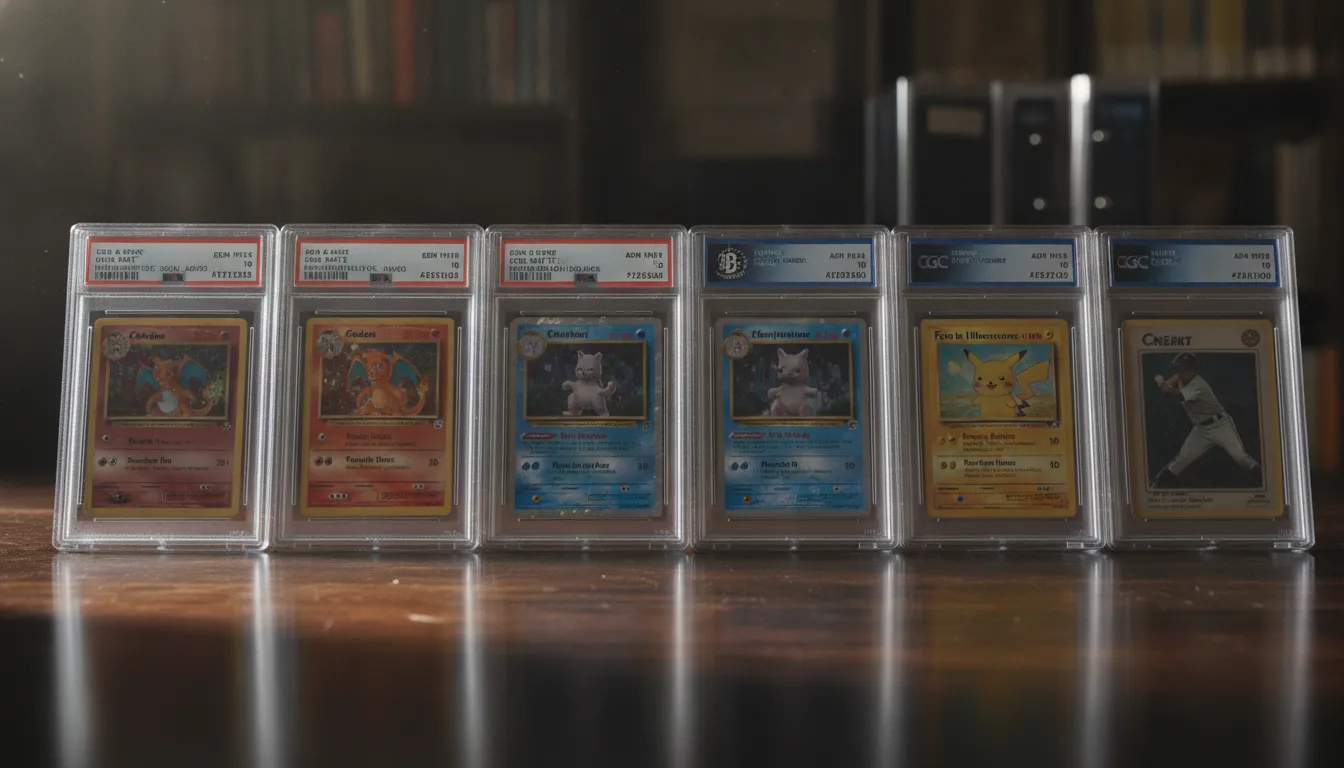
When comparing your options for PSA vs BGS vs CGC grading 2026, card grading is the first step. It is the process of sending your raw sports, Pokémon, or other trading cards to a professional third-party service. This service verifies card authenticity and assigns a numeric grade based on physical condition. Many collectors want to skip the weeks of waiting and high fees of traditional grading. If so, you can instantly buy, collect, and trade pre-graded, authenticated cards directly through Packz mystery packs. Every pack features immediate digital reveals and an instant 100% buyback guarantee.
Ready to pull graded gems instantly? Get started with Packz mystery packs today.
For maximum resale value and liquidity across all cards, PSA remains the industry king in 2026. However, CGC is the fastest and most cost-effective choice for modern Pokémon and sports cards. Beckett (BGS) remains a niche option for collectors chasing pristine subgrades or the highly coveted BGS Black Label.
Psa Vs Bgs Vs Cgc Grading 2026: Which grading company is better: PSA, BGS, or CGC in 2026?
Choosing the right grading service can be the difference between selling a card for a premium or having it sit in your display case. The major players in the market offer different pricing structures, turnaround times, and fee schedules. This makes it essential to match your service of choice to your specific collecting goals.
Are you taking your first steps in the hobby? Our beginner's guide to card grading covers all the essential fundamentals. It explains how third-party grading protects and values your collection. Before choosing a service, identifying cards worth grading is highly recommended. This ensures you avoid wasting grading fees on common or low-grade items. Once you decide on a company, we can help. Follow the detailed steps in our PSA submission process or our CGC submission process to prepare your cards safely.
Let us look at how the three major providers compare on standard rates and processing times in 2026.
| Grading Company | Standard Service Fee (Regular) | Average Turnaround Time | Best For |
|---|---|---|---|
| PSA (Professional Sports Authenticator) | $35 per card | ~20 Days | Maximum resale premium and broad market liquidity |
| Beckett Grading Services (BGS) | ~$30 per card | ~30 Days | Detailed subgrade reporting and thick patch cards |
| CGC Cards (Certified Guaranty Company) | $25 per card | ~25 Days | Cost-effective modern Pokémon and sports grading |
PSA regular service starts at $35 per card. This rate remains the premium pricing model in the hobby. Beckett sits close behind at roughly $30 per card. Meanwhile, CGC Cards presents the most affordable option at $25 per card for standard submissions. If processing speed is your priority, PSA leads the pack with a 20-day standard window. CGC follows at 25 days, and BGS averages 30 days. When you want to submit several modern cards without spending a fortune, CGC is a highly efficient partner. For high-value vintage cards or rare modern rookie cards where every dollar of final value counts, PSA is the standard path.
Section Summary: While PSA costs $35 with a 20-day turnaround, CGC offers a cheaper alternative at $25 and 25 days. Beckett remains the slowest and most expensive option, but offers unique value for thick card grading or collectors seeking specific subgrade details.
How do PSA, BGS, and CGC grading standards compare in 2026?
Each of the major services evaluates cards using strict criteria, but their final labels represent very different physical standards. Understanding these details helps you evaluate your card collection before submitting and set proper expectations for your final grades.
Properly preparing cards for grading is a critical step. Wiping surface smudges and evaluating centering before shipment can prevent major grade drops. Simple handling flaws can ruin a card's value. Once you receive your slabs, performing a graded card certification lookup is easy. Running a search on the grader's database verifies authenticity. It also registers your new asset in your digital collection.
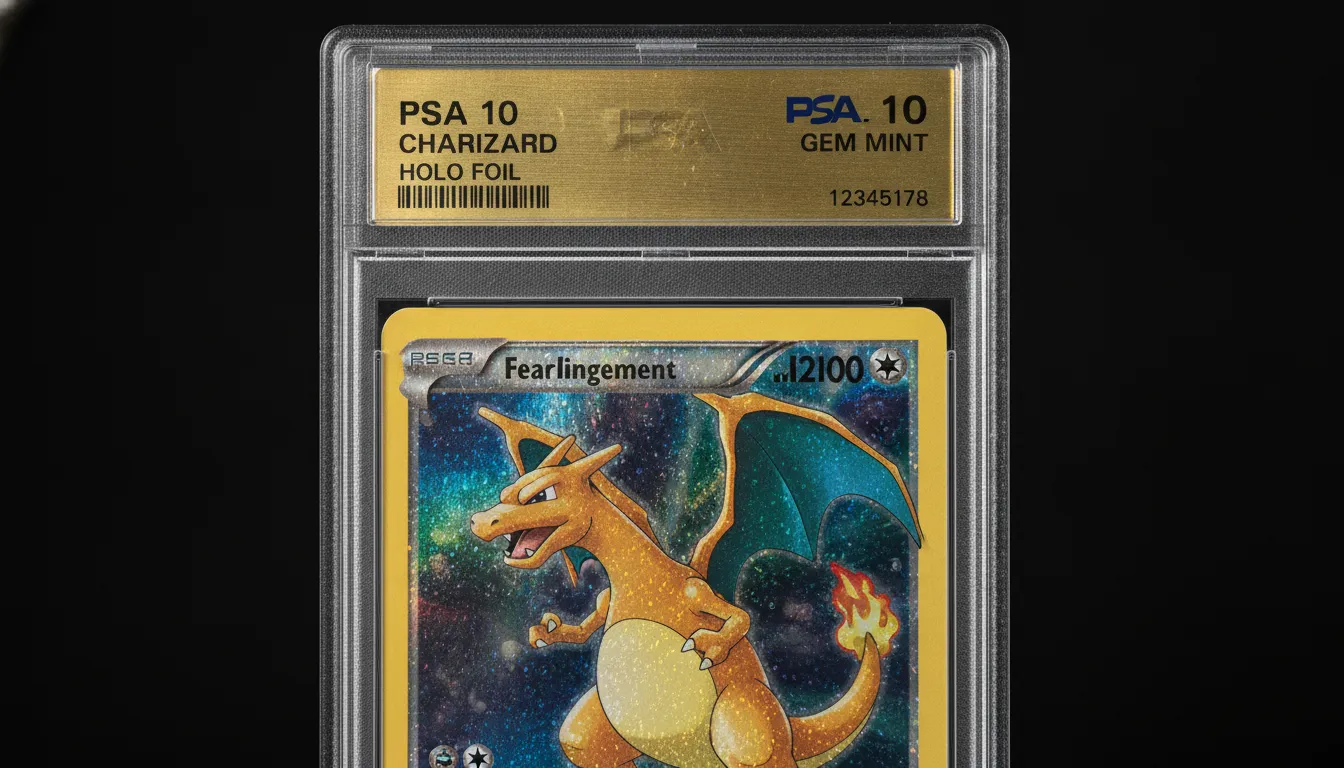
The standard grading criteria focus on four key areas: centering, corners, edges, and surface condition. However, how these grades are calculated and displayed varies significantly:
- PSA (1-10 Scale): PSA uses a simple numeric scale. A PSA 10 Gem Mint requires centering to be 55/45 or better on the front, and 75/25 or better on the back. PSA is slightly more forgiving on minor surface print lines if the centering and corners are flawless.
- BGS (Subgrades and Quad Scale): Beckett is famous for its subgrades, evaluating centering, corners, edges, and surface individually. These four scores are displayed on the label, providing deep transparency. A BGS 10 Pristine requires at least three 10 subgrades and one 9.5, while a BGS Black Label 10 represents a perfect 10 in all four categories.
- CGC (Unified Grading): CGC merged its gaming and sports grading systems into a single streamlined standard. CGC Pristine 10 is its top grade, featuring a gold label. To increase turnaround times and lower costs, CGC eliminated subgrades for its standard service, moving closer to the PSA model.
Does your card have a minor surface scratch? If the corners and centering are perfect, it might still pull a PSA 10 Gem Mint. This is due to PSA's balanced visual evaluation. If you send that same card to Beckett, the surface subgrade will drag the overall grade down. This makes a BGS 10 impossible to achieve. Beckett's centering standards are the most demanding in the industry. They require perfect 50/50 centering on the front for a Pristine 10 grade.
Section Summary: PSA offers a streamlined grading scale focusing on visual appeal, whereas Beckett provides granular subgrade feedback for a premium price. CGC has simplified its modern grading scale to deliver faster processing times while offering its own pristine gold label.
Why does PSA command higher resale prices than BGS and CGC?
The secondary market is where the differences between these services become most apparent. For years, PSA has maintained a strong hold on secondary market premium. This means cards in PSA slabs frequently sell for more than identical grades from competitors.
Are you deciding which sports card packs to buy? Focus on packs that contain high-value rookie cards with strong resale potential. If you pull a raw card from a modern Pokémon release like a Paldean Fates booster pack, CGC is excellent. It offers the most budget-friendly path to grading and quick resale. Additionally, you may acquire an older graded slab from SGC or Beckett. If so, you can use our SGC cert lookup guide to verify its grade. Do you want to avoid shipping altogether? Finding card grading near me through local card shops or card shows can connect you with authorized group submitters.

PSA's dominant market position rests on three primary factors:
- Decades of Brand Equity: Founded in 1991, PSA invented third-party card grading. This head start has built a massive registry database and deep brand loyalty that younger competitors struggle to match.
- The Registry Advantage: The PSA Set Registry allows collectors to compete with others by compiling complete graded sets. This gamified system drives intense demand for PSA-graded cards, as collectors pay premium prices to top the leaderboards.
- Market Liquidity: Because PSA slabs are the most recognized, they sell faster on platforms like eBay and consignment sites. Buyers are more comfortable purchasing a red-labeled PSA slab because they know the market is deep and liquid.
A major shift in the industry occurred in late 2025. PSA's parent company, Collectors Universe, acquired Beckett. This unified ownership consolidates PSA, SGC, and Beckett under one corporate roof. This consolidation gives Collectors Universe roughly a 79% share of the grading market. Beckett continues to operate as an independent brand with its unique subgrade system. Even so, this massive acquisition highlights PSA's complete leadership of the grading market.
Let us look at market premium differences in numbers. A card graded as a BGS 9.5 Gem Mint or a CGC 9.5 frequently sells for 72% to 88% of the price of an identical PSA 10 Gem Mint. This price gap is significant. It explains why high-end investors almost exclusively grade their key assets with PSA. They use BGS and CGC primarily for personal collections, quick grading, or specific modern sets.
Section Summary: PSA leads the resale market due to its decades of brand equity and widespread collector trust. However, the unified ownership of PSA, SGC, and Beckett by Collectors Universe in 2026 highlights the shifting landscape of the hobby, while CGC remains a fast-growing challenger.
Frequently Asked Questions About Card Grading
Which grading company is better: PSA, BGS, or CGC in 2026?
For maximum resale value and market liquidity, PSA remains the gold standard. However, CGC is the fastest and most cost-effective option for modern Pokémon and sports cards. Beckett (BGS) remains a solid choice for thick card grading or collectors chasing subgrade details.
How do PSA, BGS, and CGC grading standards compare in 2026?
PSA grading scales focus on raw visual appeal on a simple 1 to 10 scale. Beckett uses a detailed four-part subgrading system (centering, corners, edges, surface). CGC has streamlined its modern grading scale to focus on pristine gold labels and fast turnaround times.
Why does PSA command higher resale prices than BGS and CGC?
PSA commands higher resale prices due to over three decades of brand equity, industry pioneer status since 1991, and its position as the market share leader. This position was recently reinforced by its parent company acquiring Beckett in late 2025.
Is a BGS 9 equal to a PSA 9?
Generally, a BGS 9 and a PSA 9 represent similar physical condition. However, a PSA 9 frequently commands a slight price premium on the secondary market due to higher collector demand and brand preference.
Is CGC just as good as PSA for Pokémon cards?
Yes, CGC is highly respected in the Pokémon card community. It offers superior optical clarity in its slabs and faster turnaround times at a lower cost. Though PSA 10 cards still command a higher resale premium than CGC Pristine 10s.
How to Choose Between PSA, BGS, and CGC
Your ideal grading service depends on your collection type and goals. For vintage pre-1990 cards and high-value modern rookies, PSA is the safest investment. For Pokémon card collectors who want fast, affordable grading with modern label designs, CGC is the best match. For thick patch cards, printing plates, or any card over 130 points thick, Beckett is the only option among the big three that accepts these items. Many experienced collectors use a hybrid approach. They send high-value cards worth over $300 to PSA for maximum resale returns, and use CGC for bulk grading of modern cards worth under $100. Understanding these tradeoffs ensures you maximize both your collection's grade and its market value.
Conclusion: Which Service Matches Your Goals?
The right card grading service depends on what you want to achieve with your collection. If your primary goal is maximum resale value, liquidity, and long-term investment security, PSA is the clear choice. If you prefer a detailed breakdown of your card's physical condition or are grading thick memorabilia cards, Beckett remains a strong alternative. For collectors looking for the fastest turnaround times, modern styling, and the most affordable bulk rates for modern cards, CGC is a highly practical path.
Ready to upgrade your collection? Explore live mystery packs on Packz today.
Recommended Reading
Cash for Graded Sports Cards: The Fastest Ways to Sell
Get cash for graded sports cards faster. Compare auction houses, marketplaces, and instant buyback options to pick the route that fits your timeline.
How to Compare Value in Sports Card Packs
Learn how to compare sports card packs using card quality, available pulls, pricing clarity, and Packz’s 100% buyback option.
How to Buy Pokemon Packs Online for Ripping
Ready to buy pokemon packs online for ripping? Get transparent pack value and clear pull odds so you never overpay for the thrill of the hunt. Start collecting safely.