
August 12, 2026
Cash for Graded Sports Cards: The Fastest Ways to Sell
Get cash for graded sports cards faster. Compare auction houses, marketplaces, and instant buyback options to pick the route that fits your timeline.
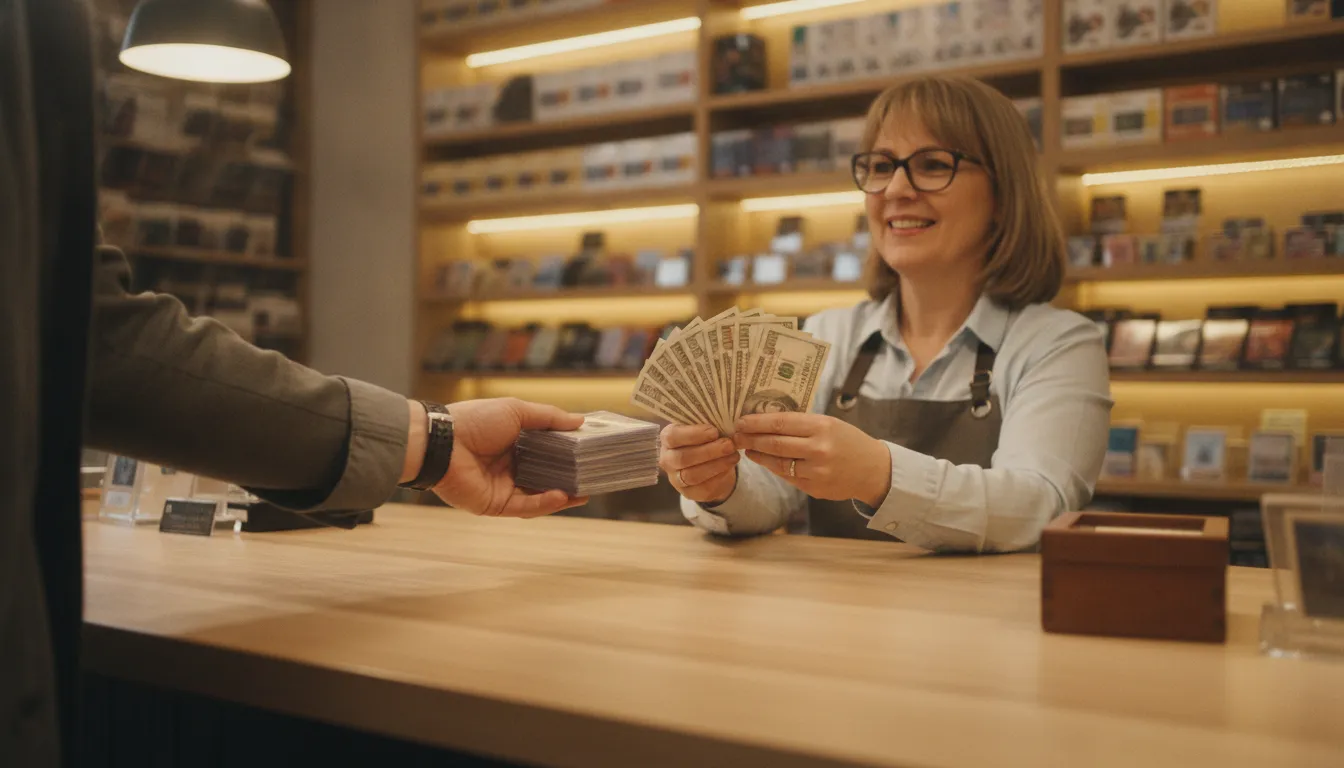
A graded card can be valuable on paper and still take days or weeks to turn into spendable money. Listings need photos, pricing, offers, shipping, and a buyer who is ready to pay. The fastest route is not always the one that produces the highest sale price. So your best choice depends on how urgently you need liquidity and how much work you want to handle.
The right cash for graded sports cards option balances speed, fees, and realized value. Auctions and marketplaces may maximize your payout, direct buyers can simplify the sale, and Packz offers an instant buyback of 100% of a card's value as store credit.
For US collectors, comparing those trade-offs starts with a simple question: are you optimizing for the biggest possible payout, the least effort, or immediate buying power? Once that priority is clear, the differences between each selling route become easier to evaluate.
Turn graded sports cards into store credit with Packz instant buyback.
How a Cash for Graded Sports Cards Comparison Works: Speed vs. Value
Choosing how to sell a graded card is less about finding one universally "best" option and more about deciding what matters most right now. Do you want the highest possible sale price, a quicker payout, or the least amount of work? Every route for getting cash for graded sports cards makes a different trade-off between speed and realized value.
Start by separating the main options into three route families. Auction houses and open marketplaces can provide the strongest shot at maximum market value, but they usually require the most patience. Direct buyers and trade-in programs reduce the waiting, although their offers may account for their resale margin. Instant buyback programs prioritize liquidity, giving you a predictable value quickly rather than asking you to manage a sale.
Auction houses and marketplaces: more upside, more waiting
Listing a card yourself or sending it through an auction process gives multiple buyers a chance to compete. That competition can help a desirable card reach a strong price, especially when the player, set, grade, and timing are all working in your favor. The trade-off is the work involved: you may need to create a listing. Answer questions, wait for the sale, package the card, and account for platform or payment fees.
This route makes sense when maximizing the final sale price matters more than receiving funds immediately. If you are comparing places to sell graded sports cards, include the full timeline and net proceeds, not just the headline price.
Direct buyers and trade-ins: a shorter path to payment
Direct buyers and trading platforms simplify the process by making an offer based on their own pricing models and inventory needs. You may receive cash or credit sooner than you would from a marketplace, with less listing and fulfillment work. However, the offer reflects what the buyer can reasonably resell the card for, so the amount may be below the highest price a patient collector could achieve.
This is often a practical middle ground for collections that need to move without the uncertainty of a public listing. Compare offer terms carefully, including whether payment is cash or store credit and whether shipping, inspection, or processing affects the final amount.
Instant buyback: the fastest value decision
Instant buyback is built for collectors who value a clear, immediate outcome. Packz offers 100% of a card's market value as instant store credit. It is not the same as cash in your bank account. But it turns a card's value into usable buying power without the delays of finding a buyer, negotiating, or waiting for a marketplace transaction to settle.
The choice is straightforward: pursue the potential maximum through a sale, or accept a defined value in exchange for speed and convenience. For collectors who want to keep building a collection, known value plus a bonus chance can make instant credit a useful alternative to a long selling process. Browse Packz to see how that buyback model fits your goals.
Auction Houses and Marketplaces: Maximum Value at the Cost of Speed
If your priority is the highest possible sale price, auction houses and online marketplaces give a sought-after slab the widest stage. A rare rookie card, low-population parallel, or high-grade card with an active collector base can attract multiple buyers instead of relying on one buyer's offer. Competitive bidding may push the final price above a standard buylist quote, especially when the listing reaches collectors around the world.
Auction houses such as Heritage, PWCC, and Goldin are built for cards that can generate serious interest. Their teams may handle photography, cataloging, promotion, and payment collection, which can add credibility and expose your card to established bidders. Consignment can also reduce the amount of hands-on selling work, since the company lists and manages the item for you.
What you gain
- Price discovery: Multiple interested buyers help reveal what the market is willing to pay at that moment.
- Global reach: A specialized auction house or major marketplace can put your card in front of collectors beyond your local area.
- Upside for desirable slabs: Scarcity, player popularity, set demand, and grade can create strong competition when the timing is right.
- Flexible selling formats: You can choose an auction, fixed-price listing, or consignment arrangement based on the card and your risk tolerance.
What it costs in time and certainty
The trade-off is that this route rarely produces settled cash immediately. You need to prepare a listing or submit the card to a consignment program. Wait for an auction date or buyer, then allow time for payment processing and shipping. Depending on the route, the process can take days to weeks, and a consigned item may wait for the next suitable sale window.
Fees also reduce your net proceeds. Account for listing charges, final-value or consignment fees, payment processing, shipping materials, insurance, and possible return-related costs before comparing an expected sale price with a direct offer. The highest visible bid is not the same as the amount you keep.
There is no guarantee that an auction ends at your target price. A weak bidding window, seasonal demand, or an overestimated valuation can leave you with a lower-than-expected result. Fixed-price listings offer more control, but they may sit unsold while you answer questions, adjust pricing, and manage offers.
For a deeper comparison of selling sports cards for cash and a broader look at selling platforms for sports cards, compare the likely net payout with your deadline. Auction houses and marketplaces make the most sense when maximizing value matters more than speed, and you are prepared to do the listing, shipping, and waiting required.
Direct Buyers and Trading Platforms: Faster Cash, Lower Cuts
Direct buyers are often the practical middle ground between a public marketplace and a guaranteed buyback. You submit cards to a retailer or specialist, receive an offer, and avoid the work of creating listings, answering messages, negotiating with buyers, and managing individual shipments. For collectors who need cash for graded sports cards on a predictable timeline, that convenience can matter more than chasing the highest possible sale price.
Retail trade-in programs can be especially straightforward. GameStop, for example, promotes buying and trading in graded cards through its graded trading card program. The key advantage is speed: a qualifying card can move through an established retail process instead of waiting for a collector to discover your listing. Before you go, check the current eligibility rules, accepted grading companies, condition requirements, and whether the offer is paid as cash, credit, or another form of compensation.
Specialized buyers can handle more than one card
Specialist buyers may be a better fit for collections, higher-value singles, or cards that need a more focused audience. DA Card World reports $37,739,255 in global buying spend and 179,650 singles purchased over the last 12 months. Its buying page also says it pays 95% of its buy price when the company picks up the cards to cover its expenses. Those figures show the scale of the route, but they do not mean every card receives the same offer. The buyer still has to want the card, price it against its own inventory needs, and account for acquisition and resale costs.
Selection rules can be just as important as the headline offer. CardsHQ says it generally does not buy most sports cards from 1980 through 2000, with exceptions for graded stars such as Michael Jordan or Kobe Bryant. That kind of restriction is not unusual. A graded slab may be authentic and attractive to collectors, yet still fall outside a buyer's preferred era, player, sport, or price range. Review the buyer's guidelines before spending time preparing a submission.
PSA partner offers add convenience after grading
If your cards are already in the PSA ecosystem, PSA Partner Offers can create another direct-selling path. PSA describes the program as instant selling with zero fees and lists partners including DICK'S Sporting Goods, Fanatics, CardsHQ, Dave & Adam's Card World, and GameStop Power Packs. The network is designed to match cards with partner requests, which can reduce the friction between grading and selling. It is still a selective offer process, so compare the proposed payout with recent market prices and confirm the payment terms before accepting.
Direct buyers trade maximum control for speed. You usually give up some upside compared with a competitive auction, but you gain a defined offer and less administrative work. Get at least one comparable quote, verify what the buyer accepts, and calculate shipping, pickup, fees, and payment type before deciding. For a broader comparison of selling sports cards for cash, evaluate the route that best matches your priority: immediate liquidity, minimal effort, or the highest possible realized value.
Instant Buyback Options: The Fastest Cash for Graded Cards
If your priority is turning a graded card into usable value now, an instant buyback removes the slowest part of the selling process. There is no listing to write, auction to monitor, offer to negotiate, or marketplace buyer waiting on shipping. You choose the buyback option, see the value, and receive store credit immediately.
Packz is built around that faster route. Packz buys back any eligible card at 100% of its market value instantly as store credit. That 10% difference is the cost of liquidity, but it also creates a clear floor: you know the value available before deciding what to do next. Instead of accepting an uncertain final payout after fees and delays, you can move directly from a card you own to credit you can use on the marketplace.
Physical cards or digital fulfillment
There are two ways to use that value. If you want the physical card, Packz can ship it in approximately three days. That option keeps the tangible collecting experience intact while avoiding the extended wait that often comes with selling through a marketplace.
If speed and flexibility matter more than receiving a slab, digital fulfillment can make the economics even simpler. Sellers can take store credit at the card's full market value instead of waiting for physical shipment. In practice, the digital route turns the card's known value into immediate buying power, without asking you to package, insure, and track a shipment.
Known value plus a bonus chance
The important distinction is transparency. Packz is not asking you to treat a mystery pack like a guaranteed investment, and it does not promise a specific high-value pull. The value proposition is clearer: you start with known value, then get a bonus chance to receive a different collectible through the marketplace.
For anyone searching for cash for graded sports cards, the instant buyback route is best understood as a speed-first trade-off. Traditional selling may produce a higher gross price in some cases, but it also transfers the work and timing risk to you. Packz instead gives you an immediate 100% market-value credit option, plus a full-value digital path when you choose digital fulfillment. That makes it useful when you want to keep collecting, rotate inventory, or stop waiting for a buyer.
Where Can You Get Instant Cash Offers for Graded Sports Cards?
The best route depends on whether you want the highest possible sale price, a predictable payout, or usable value without waiting for a listing to close. Auction houses and marketplaces reach more buyers, but add time, negotiation, shipping, and selling costs. Direct buyers simplify the process, while instant buyback trades some upside for speed and clarity.
Here is a practical comparison for collectors looking for cash for graded sports cards. "Realized value" means the amount you keep after the route's normal costs, not the card's headline asking price. Actual offers vary by card, grade, player, season, demand, and buyer inventory.
| Selling route. | Speed. | Typical realized value. | Fees. | Effort. |
|---|---|---|---|---|
| Auction house. | Slow. | Highest potential. | Seller and buyer fees may apply. | High. |
| Marketplace or eBay. | Usually days or longer. | High potential. | Platform fees plus shipping. | High. |
| Direct buyer or trade-in. | Faster. | Often lower than an open auction. | Usually built into the offer. | Low to medium. |
| Instant buyback, such as Packz. | Fastest. | 100% of market value as Packz credit. | Zero marketplace fees. | Low. |
Auction houses and marketplaces
Choose an auction house when the card is rare or likely to benefit from competitive bidding. The trade-off is a longer timeline and a less predictable final result. Account for applicable fees before calculating your net proceeds.
Marketplaces give you more control over price and timing, but you still handle photos, descriptions, messages, packing, shipping, and possible returns. Browse our guide to places to sell graded sports cards before choosing this route.
Direct buyers and instant buyback
A direct buyer can be a middle ground. You send the card details, receive an offer, and avoid building a full listing. The buyer may be selective about sports, grades, eras, or price points. Some retailers and grading-company partner networks also promote instant offers, but eligibility and final terms differ, so read the offer carefully.
Packz is designed for a different kind of liquidity. Its instant buyback option returns 100% of a card's market value as store credit, with no marketplace listing or shipping fee. That credit can be used to choose another pack, where you receive known value plus a bonus chance, rather than waiting for a buyer to discover your listing. It is not a guaranteed investment return, and store credit is different from cash in your bank account.
For a collector who prioritizes speed, that clarity can outweigh the possibility of earning more through an auction. Compare the net result, timeline, and effort instead of judging a route by its advertised price alone.
How to Choose the Right Selling Route for Your Collection
The best route depends on what you are selling, how quickly you need the money, and how much work you are willing to handle. A rare, high-demand slab may justify a marketplace listing and a longer wait. A larger batch of ordinary cards may be better suited to a direct buyer or an instant buyback option. Use this sequence to make the decision before you start listing cards or paying submission fees.
- Inventory your slabs and record the grades. Create a simple list of every graded card, including the player, set, year, certification company, grade, and any obvious condition or display issues. Separate premium cards from common or lower-demand inventory. A PSA 10 or another strong grade in a scarce set may attract competitive marketplace offers. While lower grades and bulk lots are usually easier to move through a buyer that can evaluate several cards at once. Accurate inventory also helps you compare offers without losing track of what is included.
- Estimate current market value. Check recent comparable sales rather than relying on an old purchase price or an optimistic listing. Look for the same card, grading company, and grade whenever possible. Treat market value as a range, since demand, seasonality, player performance, and card liquidity can change the final offer. This estimate gives you a useful baseline for comparing a marketplace price with a direct offer or buyback credit.
- Decide whether speed or maximum value matters more. Marketplaces and auctions can expose a rare, high-value card to more buyers, but listings require photos, descriptions, messages, shipping, and patience. Direct buyers reduce that workload and can provide faster cash, often with a lower expected payout. Instant buyback is the fastest route when convenience and liquidity matter most. There is no universal winner. Choose the trade-off that fits your deadline and the quality of the cards in front of you.
- Pre-screen before spending money on grading. If any cards are still raw, do not submit the entire collection automatically. Inspect centering, corners, edges, and surface, then submit only cards with a credible chance of adding enough value to justify the cost. Professional grading can cost roughly $15 to $80 per card before shipping, insurance, and add-ons. Research from CardGrade.io found that grading fees typically exceed the added value for cards likely to finish below PSA 8. That checkpoint can protect your margin before you commit.
- Match each group to the right route. Use a marketplace for rare cards where competition may improve the final price. Use a direct buyer for bulk, lower-demand, or mixed-grade inventory when reducing effort is more important than maximizing every card. Choose an instant buyback when you want the quickest, clearest path to value. With Packz, the instant buyback option returns 100% of a card's value immediately as store credit. So you can turn graded inventory into usable collecting power without waiting through a listing cycle.
You do not have to use one route for the entire collection. Selling the standout slabs through a marketplace while moving the rest through a faster option can produce a better balance of effort, timing, and realized value.
Is It Worth Grading Sports Cards Before You Sell Them?
Sometimes, but grading is not an automatic upgrade for every card in your collection. The right question is whether a professionally authenticated and graded card is likely to sell for more than the total cost of preparing. Submitting, shipping, insuring, and selling it.
Mass-produced cards are rarely worth grading unless they have unusually strong condition, a meaningful error, a scarce variation, or a buyer audience that specifically wants a slabbed copy. Rare rookies, short prints, autographs, vintage cards, and cards with a realistic chance at a high grade have more room to justify the expense. A PSA 10 or another top-tier grade can create a much wider price difference than a lower grade. But the result depends on the card's actual demand and recent sales.
Start with the likely grade, not the hoped-for grade
Before submitting a card, inspect centering, corners, edges, surface, print quality, and any dents or scratches under strong light. Be conservative. If you would be disappointed by an 8, do not make your financial plan depend on a 10.
Pre-screening matters because grading a large, unfiltered batch can turn small weaknesses into a large avoidable bill. CardGrade.io reports that 18.7% of the cards in its analysis would likely grade below PSA 8. Described as the point where grading fees typically exceed the value they add. Its recommendation is straightforward: filter the batch before paying a submission fee. Read the card grading research for the methodology and additional context.
Calculate the full grading cost
Service fees commonly range from about $15 to $80 per card before shipping, insurance, add-ons, value tiers, and other charges. CardGrade.io lists entry prices from roughly $15 to $79.99 among major services, with turnaround time and service level affecting the final cost. A low submission fee can still become expensive when you include outbound shipping, return shipping, insurance, and the time you spend preparing the order.
Use a simple break-even test: estimate the realistic selling price for the card raw, estimate the price at the likely grade, then subtract every grading and selling expense. If the difference is small, selling raw may be the better choice. If the card has strong demand and the likely grade leaves a comfortable margin, grading can make sense.
Grading can also help buyers trust a card because a third party has authenticated and evaluated it. That added information is especially useful for newer collectors, while experienced buyers may already recognize condition and authenticity signals. Either way, the slab does not create demand by itself. Grade cards selectively, then choose the selling route that fits your desired balance of price, effort, and speed.
Ready to sell fast? Get 100% store credit on eligible graded cards at Packz.
Frequently Asked Questions
Is it worth grading sports cards before selling them?
Sometimes. Grading can help rare, high-value cards by verifying authenticity and condition, but mass-produced cards may not recover the submission cost. Pre-screen the card for centering, corners, edges, and surface issues before paying for grading. One 2026 analysis found that 18.7% of reviewed cards were likely to grade below PSA 8, where grading fees typically exceed the value they add (CardGrade research).
Where can I get instant cash offers for graded sports cards?
You can compare retailer trade-in programs, specialized card buyers, partner networks, and instant buyback platforms. Check whether the offer is cash, store credit, or another form of value, and confirm how the buyer determines market value. For a fast option, Packz offers 100% of a card's value as instant store credit through its buyback option.
What is the difference between selling raw and graded sports cards?
A raw card is sold as-is, so buyers must judge its authenticity and condition from photos or an in-person inspection. A graded card has been authenticated, sealed, and assigned a condition grade by a professional service. That added verification can support a higher price, but grading also adds fees and waiting time, so it is not automatically the better route for every card.
What percentage of value do card buyers typically offer?
There is no universal percentage. Offers depend on the card's recent market price, condition, demand, the buyer's resale costs, and whether you choose cash or credit. Compare the net value and payout speed rather than the headline percentage alone. Packz's published buyback option provides 100% of market value as instant store credit, which can be useful when liquidity matters more than maximizing a marketplace sale.
Ready to Explore Curated Graded Card Packs?
After comparing ways to turn a graded card into value, you already understand the trade-off between speed and realized value. Packz gives you a fast, transparent route to keep collecting: instant buyback at 100% of a card's market value, a full-value digital path, and curated packs built around known value plus a bonus chance.
Shop curated graded sports card packs on Packz.
Start with instant buyback and turn your slabs into cash today.
Recommended Reading
How to Compare Value in Sports Card Packs
Learn how to compare sports card packs using card quality, available pulls, pricing clarity, and Packz’s 100% buyback option.
How to Buy Pokemon Packs Online for Ripping
Ready to buy pokemon packs online for ripping? Get transparent pack value and clear pull odds so you never overpay for the thrill of the hunt. Start collecting safely.
How to Compare NBA Card Pack Value
Compare NBA card packs using player selection, card quality, pricing clarity, and Packz’s 100% buyback option.