
August 5, 2026
Card Grading Explained: What It Means and Why It Matters
Start your collection with confidence. Learn what card grading means, how PSA and Beckett grade cards, and whether submitting cards is worth the investment.
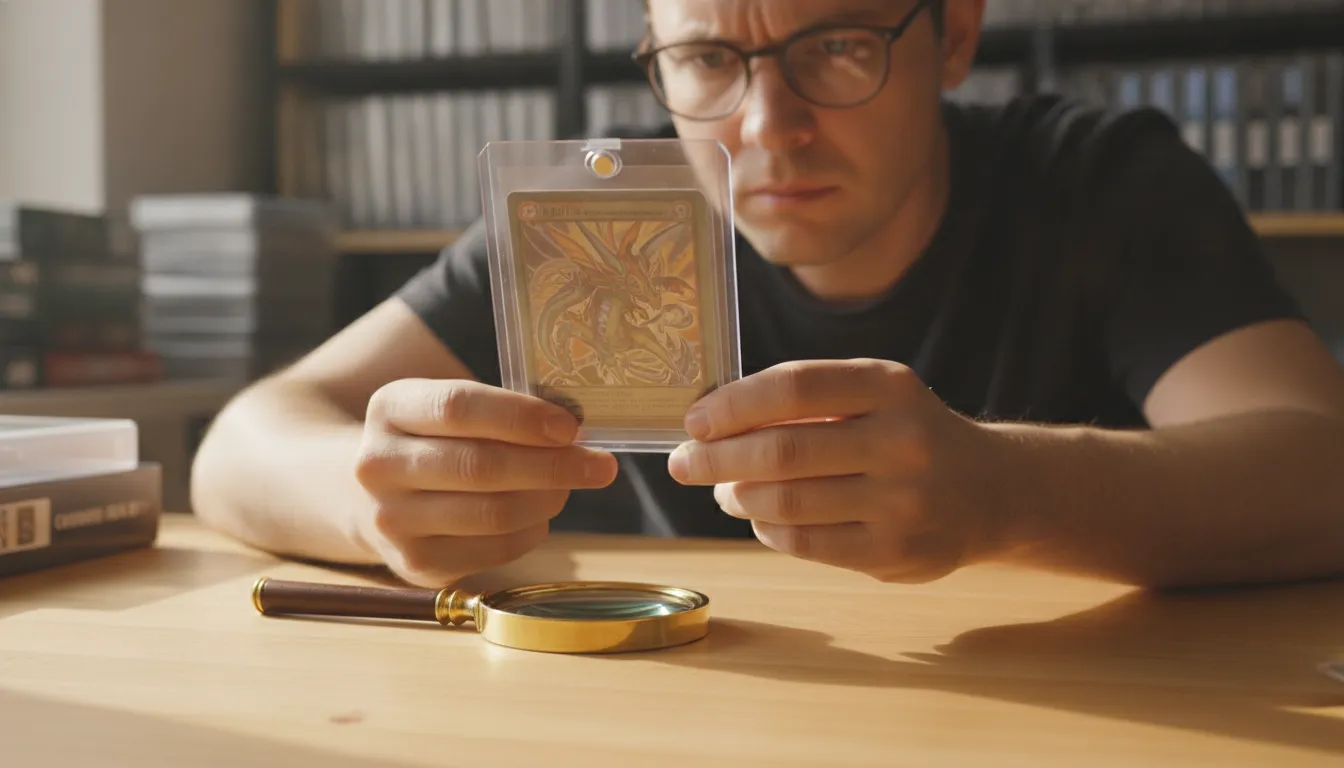
A card can look perfect in a sleeve and still leave buyers wondering about its condition, authenticity, and long-term value. That uncertainty is why professional grading has become such a familiar part of collecting, especially for vintage cards, rookies, and high-value hits.
Card grading is the process of having a professional company authenticate a card, evaluate its condition, and seal it in a protective holder with a score on a 10-point scale. That standardized assessment can make value easier to compare and may help graded cards command a premium, although the cost is not always worthwhile for modern base cards.
The grade on the label is only the starting point. To understand what it means for a card in your collection, it helps to look at what the grading companies actually verify and how that process creates trust between collectors.
What Is Card Grading?
Card grading is the process of having a professional third-party company authenticate a card, assess its physical condition, assign a grade, and seal it in a tamper-evident protective holder. The result is a standardized record of what you own, rather than a seller's personal opinion about whether a card is "mint" or "near mint."
Authentication, condition, and encapsulation
Authentication comes first. The grading company checks whether the card is genuine and looks for signs that it may be a counterfeit, altered card, or reprint. The card is then examined for condition, including details such as centering, corners, edges, and surface quality. Those factors are combined into a single grade based on the company's published standards.
Finally, the card is encapsulated, meaning it is sealed inside a protective holder with a label identifying the card and its grade. That holder helps protect the card from routine handling and gives buyers a consistent way to identify the item. CGC Cards, for example, uses a 10-point grading scale for trading cards, sports cards, and non-sports cards. See CGC's grading scale for its published definitions.
Why grading matters in the secondary market
Unverified condition creates friction between buyers and sellers. One collector may call a card "excellent," while another sees a corner ding that makes the description too generous. Counterfeits add another layer of risk, especially when a buyer cannot inspect the card in person. Professional grading gives both sides a shared reference point and reduces the guesswork involved in a transaction.
That shared standard can also affect price. Collectors often pay premiums for professionally graded and encapsulated cards, particularly when a high grade confirms that the card is unusually well preserved. The difference is not automatic, though. A grade does not guarantee a profit, and the card's player, character, set, rarity, demand, and grading company all influence its market value.
For new collectors, the easiest way to see how the process fits into the hobby is to explore graded sports cards alongside raw, or ungraded, examples. Once you understand what the slab verifies and what it does not, you can make more informed buying decisions instead of paying for a label alone.
How the 10-Point Grading Scale Works
Most major grading companies translate a card's condition into a number from 1 to 10. The higher the grade, the fewer visible flaws the card has, and the easier it is for buyers to compare copies with confidence. PSA's scale is the one many collectors recognize first, but the labels can vary slightly between companies.
What the top grades mean
- 10, Gem Mint: A card in exceptionally sharp condition, with strong centering, clean corners and edges, and a flawless-looking surface. A Gem Mint 10 can still fall short of the stricter requirements for a Pristine 10 because one grading criterion does not meet that higher bar. CGC's grading scale describes this distinction directly.
- 9, Mint: A very clean card with only minor imperfections visible on close inspection. Small issues that keep it from a 10 may be difficult to notice during a quick review.
- 8, Near Mint-Mint (NM-MT): A strong collectible copy with light condition issues that are more apparent under careful examination, but no major damage.
- 7, Near Mint (NM): A presentable card with modest wear or handling flaws. It remains appealing for collecting, although the difference from a 9 or 10 can matter significantly in resale markets.
Grades below 7 indicate progressively more noticeable wear, including issues such as whitening, soft corners, scratches, creases, or other surface defects. The exact descriptions differ by grader, so always read the label and company's published scale rather than treating every number as perfectly interchangeable.
Why a 10 is not always the same 10
At the extreme top of the scale, Pristine 10 is reserved for cards that are virtually flawless, including when inspected under 10x magnification. Beckett's BGS Pristine 10 standard also calls for 50/50 centering on the front, along with an exceptionally clean surface. That helps explain why a Pristine label is harder to earn than a typical Gem Mint 10. Beckett's grading standards outline those requirements.
How BGS and TAG differ
Beckett Grading Services, or BGS, uses half-point increments such as 9.5 and 8.5. It also reports four subgrades for centering, corners, edges, and surface, giving collectors more detail about what drove the final number. TAG takes a different approach by pairing a familiar 1-10 grade with a complementary 1000-point score. These systems add nuance, but the core lesson is the same: inspect the grade, the company, and any supporting detail before comparing prices.
If you want to see graded cards in person before deciding what fits your collection, explore local card grading services and compare their standards and submission options.
What Do Graders Look For?
Professional graders assess four core areas: centering, corners, edges, and surface. They examine the card under controlled lighting and magnification, so flaws that are easy to miss in a binder can still affect the final grade. Understanding these criteria makes it easier to inspect a card before deciding whether to submit it.
Centering: Are the borders balanced?
Centering measures how evenly the artwork sits between the card's borders. A card with noticeably more border on one side is off-center, even if every other part looks clean. The ideal is a 50/50 border split on the front, while lower grades allow wider tolerances. Beckett's Pristine 10 standard, for example, calls for 50/50 centering all around on the front and 60/40 or better on the back.
Corners: Are they sharp and clean?
Graders inspect each corner for sharpness, whitening, bends, and softening. Whitening is the pale edge or corner damage that appears when the colored surface layer has worn away, often from handling or contact with a sleeve. Even a tiny white speck may separate a near-mint card from a higher grade, particularly when it is visible without magnification.
Edges: Is the border intact?
Edges are checked for chipping, roughness, dents, and fraying. Chipping means small pieces of the card's printed edge have broken away. Fraying describes a rough or fuzzy edge caused by handling, cutting, or impact. White edge wear is especially noticeable on dark-bordered cards, where even minor damage creates visible contrast.
Surface: What shows under the light?
Surface inspection covers scratches, dents, print spots, gloss, and printing quality. Surface wear is damage or dulling across the face of the card from friction, storage, or handling. Print lines are thin streaks left by the printing process, while registration defects occur when printed colors do not align precisely. Beckett's Pristine 10 criteria specifically call for no print spots, scratches, registration imperfections, or metallic print lines.
Lighting helps reveal scratches and changes in gloss as the card is tilted, while magnification exposes tiny corner wear, edge chips, and print defects. Beckett displays all four sub-grades on its label, allowing you to see how the card performed in each category, while PSA generally presents one overall grade. For a closer look at how condition affects your next move, explore our guide to grading and selling Pokemon cards.
PSA vs BGS vs CGC vs SGC: Which Card Grading Service Is Best for You?
There is no universal winner in card grading. The right company depends on what you collect, how quickly you need the card back, and whether resale recognition or detailed condition data matters most. PSA is usually the safest choice when broad marketplace demand is the priority. Beckett, CGC, SGC, and TAG each offer a distinct alternative.
| Company | Price range | Turnaround | Specialty | Sub-grade detail |
|---|---|---|---|---|
| PSA | About $15-$599+ | 40-50 business days for Regular; faster premium tiers available | Resale recognition and broad collector demand | Overall grade; no four-part sub-grades on the standard label |
| BGS (Beckett) | From $14.95 | 75+ business days for Base | Collectors who want detailed condition scoring | Centering, corners, edges, and surface shown on the label in 0.5-point increments |
| CGC | Varies by service level | Varies by service level | Trading card games, including Pokemon | 10-point scale, with Pristine 10 and sub-grade options depending on service |
| SGC | Varies by service level | Varies by service level | Vintage cards and an established hobby presence | Overall grade with a straightforward label format |
| TAG | Varies by service level | Varies by service level | Technology-forward, transparent grading reports | Industry-standard 1-10 grade, plus an optional 1000-point TAG Score and digital report |
Choose PSA for the broadest resale market
PSA remains the default for many sellers because buyers recognize its labels and population data across sports cards, Pokemon, and other collectibles. Its published pricing includes a $79.99 Regular tier with an estimated 40-50 business-day turnaround, while Express, Super Express, and Walk-Through tiers cost more and move faster. PSA also lists an economy tier in some service contexts, so confirm current pricing before submitting. See the current PSA service levels for the latest limits and estimates.
Choose BGS for visible condition detail
Beckett is a strong fit when you want the label to explain the grade. It displays centering, corners, edges, and surface scores directly on the card holder, using half-point increments from 1 to 10. That detail can help buyers understand why a card earned its final grade, although the longer Base turnaround, listed at 75 or more business days, may not suit an urgent sale. Pricing starts at $14.95 per card according to Beckett's service page.
Choose CGC, SGC, or TAG for a focused collecting style
CGC is especially prominent in trading card games and uses a 10-point scale with a Pristine 10 designation for virtually flawless cards under 10-times magnification. SGC has been established since 1998 and is a familiar choice for vintage-focused collectors. TAG takes a technology-led approach, offering an industry-standard 1-10 grade, a digital grading report, and an optional 1000-point TAG Score. If your collection centers on graded Pokemon cards, compare label recognition in that specific market before choosing a company.
In practical terms, use PSA when liquidity is your main goal, BGS when sub-grades are central to your decision, CGC for TCG specialization, SGC for vintage familiarity, and TAG when a digital, data-rich report adds value to your collecting experience.
Is Card Grading Worth the Cost?
Card grading can be a smart investment, but it is not automatically the right move for every card. The basic question is simple: will the added value, protection, and buyer confidence outweigh the grading fee, shipping, and time involved?
When grading usually makes sense
Grading is most compelling for vintage cards, rookie cards, rare inserts, and high-value hits. These cards already have meaningful demand, so an authenticated, encapsulated copy can be easier to sell and more appealing to buyers. It is also worth considering when you plan to sell soon and the card appears capable of earning a strong grade.
The potential value gap can be substantial. A PSA 10 may sell for roughly three to ten times the price of an ungraded copy, depending on the card, market demand, and recent sales. That is potential upside, not a guarantee. A 9, 8, or lower grade may not create enough premium to cover your costs.
When keeping a card raw is better
Modern base cards worth less than about $20 are often difficult to justify unless they look like genuine gem-mint candidates. Centering, corners, edges, and surface flaws can all lower the final grade, and a visible defect is a warning to keep the card raw. Grading a damaged card rarely repairs its value.
A personal binder is another sensible reason to skip grading. If you enjoy the card as part of your collection and do not need third-party authentication or resale liquidity, the fee may be better spent on another card. Our graded sports cards beginner guide covers the basics if you are still deciding whether a slab fits your collecting goals.
Calculate the full cost, not just the grading fee
Economy grading can cost around $15 to $25 per card through PSA, before shipping, insurance, supplies, and any applicable taxes or membership costs. PSA also offers higher-priced service levels for cards with greater declared value or faster turnaround, so premium cards can trigger additional costs. Check the current PSA pricing and service details before submitting.
For modern cards, submit only when your condition review suggests a realistic gem-mint outcome. For vintage and high-value cards, authentication and protection may justify grading even when the expected price increase is less dramatic. Grading is especially important for authenticated mystery packs and graded-card marketplaces such as Packz, where a trusted slab gives buyers a clear, standardized reference for what they receive.
Frequently Asked Questions
What is card grading?
Card grading is the professional process of authenticating a card, evaluating its condition, assigning a numerical grade, and sealing it in a protective holder. The grader typically reviews centering, corners, edges, and surface before returning the card with its grade and certification details.
Why does card grading matter?
A trusted grade gives buyers a consistent way to compare condition instead of relying only on personal opinions. Authentication and a tamper-evident holder can also make a card easier to sell and protect it during storage. Collectors often pay more for professionally graded cards, although the premium depends on the card, grade, demand, and grading company.
How does the card grading scale work?
Most major services use a 1-to-10 scale, with higher numbers representing stronger condition. A Gem Mint 10 is an overall 10, while a Pristine 10 has especially strict requirements, such as near-flawless details under magnification. Beckett also uses half-point increments and displays sub-grades for centering, corners, edges, and surface, while CGC uses a 10-point scale. Sources: CGC grading scale and Beckett grading scale.
Is card grading worth the cost?
It can be worthwhile when a card is rare, vintage, high-value, or likely to earn a strong grade. For inexpensive modern base cards, grading fees and shipping may outweigh any increase in value unless the card has a realistic chance of receiving a top grade. Compare recent raw and graded sales, estimate the likely grade, and decide whether authentication, protection, or resale potential justifies the expense.
Ready to explore graded cards?
Grading can make a card's condition and value easier to understand, especially when you are building a collection with confidence. Get started by browsing graded cards and mystery packs on Packz, then find a pack that fits your collecting style.
Recommended Reading
Cash for Graded Sports Cards: The Fastest Ways to Sell
Get cash for graded sports cards faster. Compare auction houses, marketplaces, and instant buyback options to pick the route that fits your timeline.
How to Compare Value in Sports Card Packs
Learn how to compare sports card packs using card quality, available pulls, pricing clarity, and Packz’s 100% buyback option.
How to Buy Pokemon Packs Online for Ripping
Ready to buy pokemon packs online for ripping? Get transparent pack value and clear pull odds so you never overpay for the thrill of the hunt. Start collecting safely.