
July 23, 2026
A Graded Sports Cards Beginner Guide: How to Start Collecting
Start your graded sports cards collection today. This graded sports cards beginner guide covers grading, budget tips, and buying with confidence on modern...
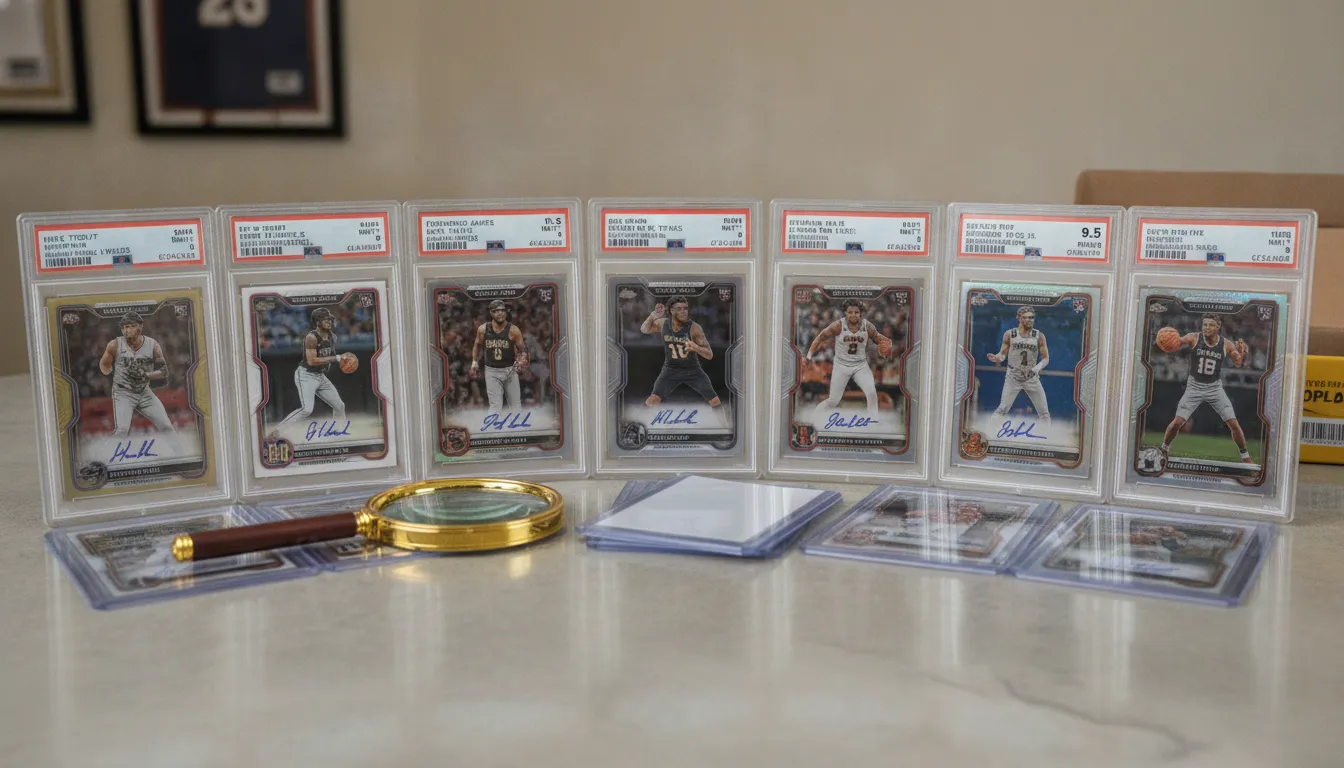
Start your journey into graded sports cards with a clear plan to avoid costly raw card traps. Many beginners lose hundreds of dollars on damaged raw cards before realizing that professionally graded slabs offer real security. A smart strategy on Packz keeps your hobby budget safe.
This graded sports cards beginner guide helps collectors use the modern marketplace of professional card grading, authentication, and long-term card value. By choosing certified slabs from top industry giants like PSA, BGS, and SGC, you protect your growing collection from fakes and trimmed cards. New collectors must learn how to check the four key physical parts of centering, sharp corners, clean edges, and flawless surface quality. You should study public population reports from these top grading brands to discover the exact rarity and market supply of any slab. This knowledge helps you find fair deals on secondary markets and other card sites. This smart approach ensures that every dollar of your budget goes toward secure, liquid card assets that will keep their real market value over time.
You probably want to know how slabbed cards differ from the raw cards in your closet. To help you understand this major shift, our guide dives into What Makes Graded Sports Card Collecting Different? Our comparison of raw and graded cards begins with
Graded Sports Cards Beginner Guide: What Makes Graded Sports Card Collecting Different?
Raw sports cards are sold just as they came out of a pack. Graded cards are different. They go through a professional review to check their quality and genuineness. According to a study on the economics of sports cards, card collecting grew fast in the 1980s. This growth made authenticity vital for collectors. Buying raw cards can be risky for beginners because a card might have hidden flaws or be a fake.
The Role of Authentication and Grading
There is a big difference between authentication and grading. Authentication verifies the originality or genuineness of a trading card. On the other hand, grading assesses its quality and condition. This means you do not have to worry about fraud when you buy graded cards. This protection is a great help when you are verifying your card's authenticity. Beginners can buy with confidence knowing a trusted expert checked the card first.
When you buy raw cards, you must judge the condition on your own. It is easy to make a bad deal if you do not know what to look for. Graded cards have clear grades from one to ten. A high grade means the card is in top shape, which keeps its value high. If you want to learn more, you can read our Card Grading 101 guide for a deeper dive into the process.
The Four Core Grading Criteria
To grade a card, experts look at four key parts of its physical shape. These are centering, corners, edges, and surface quality. Centering measures how well the image is lined up on the front and back of the card. Corners must be sharp and free of wear. Edges must be smooth and clean without any chipping. Lastly, the surface must be free of scratches, scuffs, or stains. You should spend time evaluating card condition before grading any of your own raw cards.
The Top Sports Card Grading Companies
There are three main grading companies that collectors trust the most. These are Professional Sports Authenticator (PSA), Beckett Grading Services (BGS), and Sportscard Guaranty (SGC). Each of these companies has its own slab style and grading scale. PSA is the most popular company and has a large share of the market. BGS is known for its subgrades, which show the score for each of the four criteria. SGC is famous for its clean black slabs, which make the cards stand out. Buying cards from these top companies ensures your collection has real market value.
For a beginner, choosing the right company can seem hard. PSA cards often sell for the highest prices on the market. SGC is usually faster and costs less, making it great for lower-budget cards. BGS is a strong choice for high-end modern cards because their subgrades give a clear look. No matter which brand you choose, staying with these top three companies will protect your investment over time.
| Company | Best For | Grade Scale | Turnaround | Cost Range | Unique Feature |
|---|---|---|---|---|---|
| PSA | Long-term value and resale | 1-10 (whole numbers) | 30-65 days | $25-$100+ | Highest market recognition |
| BGS | High-end modern cards | 1-10 (with halves) | 40-80 days | $30-$150+ | Subgrades for each criterion |
| SGC | Budget-friendly submissions | 1-10 (converted from 100) | 10-20 days | $15-$30 | Fastest service, clean black slabs |
Which Sports Cards Should Beginners Focus On?
Choosing your era
Choosing the right era is your first step as a collector. A collecting strategy guide defines vintage cards as those printed before 1980, while modern cards date from 1980 to the present. Vintage sports cards feature iconic players from past eras. The Library of Congress shows that late 19th-century baseball cards were the forerunners of modern cards. These older cards are rare and have deep value. But they are hard to find in clean condition. Modern cards feature current stars and future Hall of Famers. They often have shiny finishes, serial numbers, and game-worn jersey patches.
Sport-by-sport tips
Each sport has its own unique market. For basketball, finding rookie cards of global icons is key. You can start by looking for PSA graded basketball cards of top draft picks. In football, quarterbacks drive the most interest and value. Many collectors buy PSA 10 graded football cards of star players. Baseball has a deep history, making its vintage market strong. Hockey and soccer are growing fast and offer great options for fans everywhere. Each sport has a different season, which can cause card prices to rise and fall during the year.
- Baseball: A deep history drives a strong vintage market.
- Basketball: Global appeal makes rookie cards of top stars key.
- Football: Quarterback play heavily guides market value.
- Other sports: Hockey and soccer offer unique entry points.
Player focus and condition standards
Many beginners choose player-focused collecting over set building. Instead of collecting whole sets, you focus on a single star athlete. This approach helps you build a clean, meaningful portfolio. You can select players you love to watch or those with strong value. Some collectors follow rookies, while others stick to top legends. Focusing on players makes it easier to track market trends and card values. It also keeps your budget focused on assets you truly care about. This strategy helps new collectors avoid getting lost.
When buying modern cards, condition is everything. According to the PSA grading standards, a PSA Gem Mint 10 card is a virtually perfect card. It must feature four perfectly sharp corners, sharp focus, and full original gloss. Even a tiny flaw can drop a card's grade and value. Graded cards protect the card and provide trust. Beginners should study population reports to see how many cards of a certain grade exist. A low population means the card is rare, which can boost its appeal. These reports are free to view online.
How to Start Collecting Graded Cards on a Budget
Starting your journey in this hobby does not have to cost a fortune. Many new collectors think they need thousands of dollars to buy rare slabs. But you can build a great collection with smart, budget-friendly sports card packs and direct card buys. Using a clear plan is the best way to get started without spending too much. This graded sports cards beginner guide will show you how to buy smart from day one.
Mystery packs as a low-cost entry point
One fun and cheap way to start is by opening mystery packs. These packs bundle different cards together for a set price. For example, Packz packs start at around $25. They let you get graded cards and raw cards without paying top dollar for single items. This path gives you many options and helps you find out what sports or players you like best.
Opening these packs also teaches you about card values and conditions. You get to see different card brands and card designs up close. This hands-on practice is key when you are building a sports card portfolio from scratch. It is a safe way to grow your knowledge while keeping your budget secure.
Targeting single cards and mid-tier grades
Buying single cards on the open market is another smart move. Instead of buying packs with random cards, you buy the exact card you want. A study from the University of Michigan shows how supply and demand drive the sports card market. When you buy singles, you pay only for cards that fit your personal goals. This helps you avoid wasting your cash on cards that will not hold their value.
To save money, look for graded cards in the PSA 7 or PSA 8 range. A PSA 10 card is perfect, but it sells for a high price. A PSA 8 card looks almost as good to the eye but costs much less money. Buying these mid-tier slabs lets you own great cards without the high cost. This plan helps you build a strong collection for cheap.
Venture into modern cards and trade up
Focusing on modern cards is a great option for new collectors. Modern cards are much easier to find in clean shape than vintage cards. In fact, about 80% of modern sports cards grade at PSA 8 or higher. This high rate means you have a good chance of finding a clean card for cheap. You can buy raw modern cards of young players and hold them as they grow.
Once you have some cards, you can build your collection through trading. Card shows and online groups are great places to trade with other fans. You can trade two or three smaller cards for one better slab. This trade-up method helps you slowly get higher-value cards without spending new cash. It is a fun, social way to reach your collecting goals.
How to Store and Protect Your Graded Card Collection
Once you start to build your card set, you must know how to store your graded slabs. A graded slab is a hard plastic case that keeps the card safe. But slabs can still scratch. The card inside can also fade if you do not care for it. This graded sports cards beginner guide will show you how to keep your cards safe.
Climate and air control
Your cards are made of paper and ink. This means they can break down over time. Light, heat, and wet air are the biggest threats to your cards. The Library of Congress says that keeping paper items in a cool, dry, and dark place stops decay. You should keep your cards where the room heat is steady.
Damp air is a silent killer for paper. If the air is too wet, cards can bend or grow mold. If the air is too dry, they get brittle. You should keep your storage room around fifty percent humidity. You can use a cheap card tool or meter to track this level.
Slab cases and storage boxes
A graded slab gives great safety, but the plastic outer shell can still get scuffed. Scratch marks will ruin the look of your slabs. To stop this, you can buy thin plastic sleeves that fit right over the slab. These sleeves act like a shield against dust and light marks.
For larger sets, you should use storage boxes made for graded cards. Heavy cardboard or hard plastic boxes with custom slots are the best choice. Slabs stay upright so they do not slide. Stacking them in a loose pile will only lead to damage.
Handling and display rules
How you handle your slabs is also vital. Always wash your hands before you touch them. This keeps skin oils off the plastic. If you buy a slab, you should always verify your card first before you show it. If you plan to hang your cards, use UV-resistant glass to block sun damage.
Even though graded slabs protect the card, you must still handle them with care. Before you submit raw cards for grading, you must protect them. Use a penny sleeve and a semi-rigid holder. You can read more about these rules on the PSA get started page. Once you own slabs, you can log in to your account and manage your cards online.
Your First Steps Into Graded Collecting: A Quick Checklist
Starting your new hobby with slabbed cards can feel a bit hard. Fortunately, this graded sports cards beginner guide will show you how to start in a safe way. Card collecting is a very old hobby. The Library of Congress shows its history dates back to the late nineteenth century. Today, modern tools make it easier than ever to build a great collection.
Actionable steps for new collectors
- Choose your focus sport or player: Decide on a sport, team, or player. If you love basketball, focus on building a set of PSA graded basketball cards of your favorite stars. This keeps your goals clear.
- Learn to read grading labels: Look at the grading label on the plastic slab. It displays the card brand, year, grade, and unique serial number. You must check these details to make sure you get what you pay for.
- Set a strict monthly budget: Do not spend more than you can lose. Graded cards can have big price swings, so set a clear budget each month. This keeps the hobby fun and low-risk.
- Start with one or two graded cards: Buy one or two low-cost cards to start. Getting them in your hands helps you learn how they look and feel. Do not rush to buy a massive pile of cards on day one.
- Buy only from trusted sources: Use safe shops, major card shows, or top online sellers. Before you spend your money, protect yourself by verifying your card's authenticity using the company's online database. This simple check prevents fraud.
- Learn to use population reports: Grading companies publish data on how many copies of a card exist in each grade. This is called a population report. It tells you if a card is rare or common before you buy.
- Join sport card collecting communities: Talk to other collectors online or in person. You can learn a lot from their wins and losses. Finding a good community helps you grow as a smart collector.
Safe buying practices
The modern sports card market is a massive hobby, as shown in research by the Michigan Journal of Economics. With so much money moving in the hobby, new collectors must be smart. Always focus on safety, budget, and learning. By following these basic steps, you can avoid common mistakes and enjoy the thrill of collecting over the long term.
Frequently Asked Questions About Collecting Graded Sports Cards
What is the best way to start grading sports cards?
The best way to start is by picking cards that are already in excellent condition with sharp corners, centered images, clean edges, and smooth surfaces. Beginners should practice evaluating these four criteria before submitting raw cards for grading. Start with modern cards from 2000 onward, as they tend to grade higher. Choose a reputable grading company like PSA, BGS, or SGC based on your budget and goals. PSA is the standard for long-term value, while SGC offers faster and cheaper service for budget-friendly submissions.
How much does it cost to grade sports cards?
Card grading costs typically range from $15 to $100+ per card depending on the declared value of the card, the service level chosen, and the grading company. Economy tiers at PSA start around $25 per card for cards valued under $500. SGC offers some of the most affordable options at around $15 per card with fast turnaround. Bulk submissions can bring the per-card cost down significantly. Factor in shipping, insurance, and return postage when budgeting for grading. For beginners, submitting through a group submission service can reduce costs while learning the process.
What should a beginner look for before grading a card?
Before grading a card, examine the four main criteria: centering (the image should be evenly balanced on the card). Corners (sharp with no fraying or dings), edges (smooth with no chipping or roughness), and surface (no scratches, stains, or print defects). A card with obvious flaws will receive a low grade that may not be worth the grading fee. Beginners should use a magnifying glass and bright light to inspect cards thoroughly. Cards of star players, rare inserts, or limited-print runs are usually worth grading even at lower grades due to their inherent demand.
Which grading company is best for beginners?
PSA (Professional Sports Authenticator) is the most widely recognized grading company and commands the highest resale values, making it a strong choice for long-term collectors. SGC (Sportscard Guaranty) is excellent for beginners on a budget, offering lower fees, faster turnaround, and highly readable labels on black slabs. BGS (Beckett Grading Services) is best for modern high-end cards because its subgrades provide detailed scoring on each of the four criteria. Many beginners start with SGC for affordable submissions and transition to PSA for higher-value cards.
Ready to start building your graded card collection?
If you wait to buy your first slab, card prices may rise and key rookie cards could quickly become too costly for your budget. Starting your card hobby today lets you grab these rare cards before other active fans can find them and buy them all up. When you act now, you get a clear and safe path to own authentic, graded cards that will hold their value well over time.
Packz offers a 100% buyback option on eligible pulls, subject to current terms.
Recommended Reading
Cash for Graded Sports Cards: The Fastest Ways to Sell
Get cash for graded sports cards faster. Compare auction houses, marketplaces, and instant buyback options to pick the route that fits your timeline.
How to Compare Value in Sports Card Packs
Learn how to compare sports card packs using card quality, available pulls, pricing clarity, and Packz’s 100% buyback option.
How to Buy Pokemon Packs Online for Ripping
Ready to buy pokemon packs online for ripping? Get transparent pack value and clear pull odds so you never overpay for the thrill of the hunt. Start collecting safely.