
July 30, 2026
Pokémon TCG Pocket vs Physical Cards: Collector's Guide
Start comparing Pokémon TCG Pocket vs physical cards to find your best fit. See how value, ownership, and grading differ between digital and real cards.
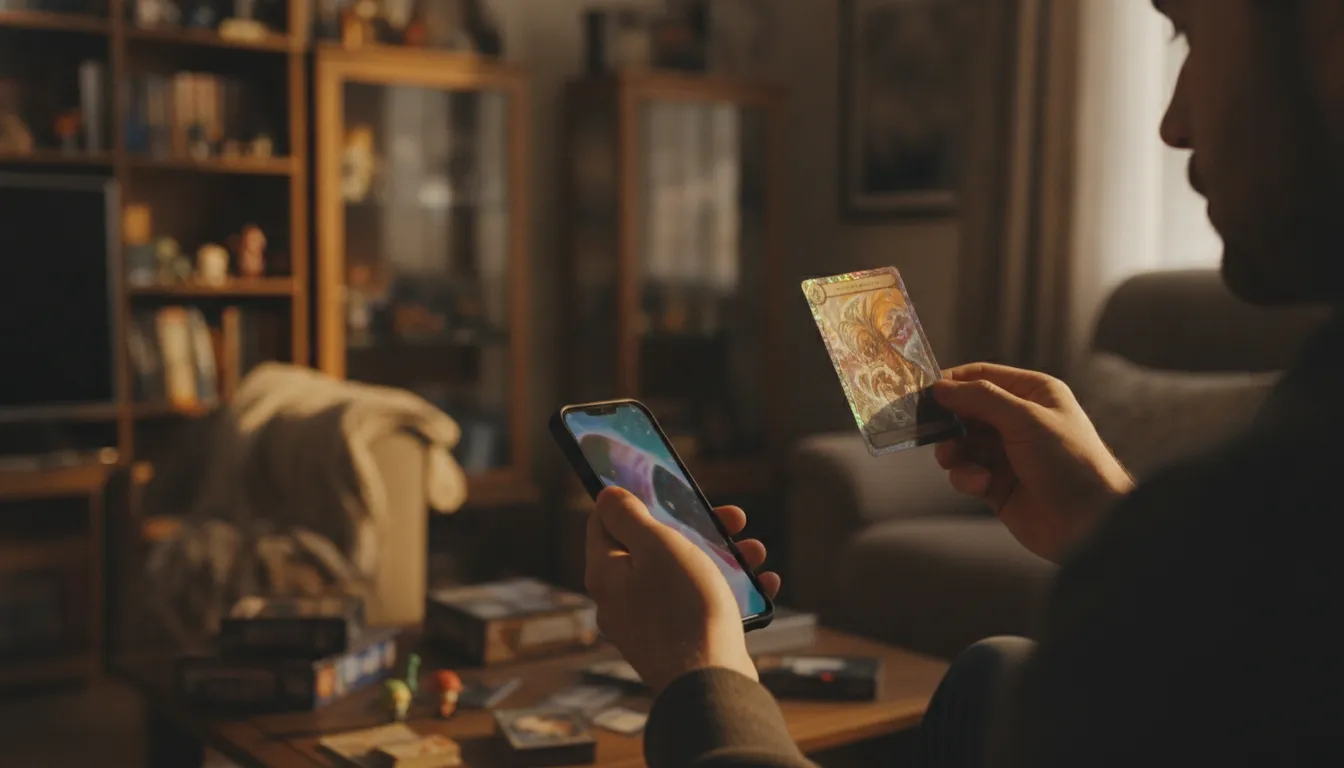
Digital collecting has made it easier than ever to open packs, complete sets, and enjoy Pokémon wherever you are. Physical cards, meanwhile, still offer something a screen cannot: a card you can hold, protect, display, trade, or submit for grading. Since launching on mobile in October 2024, Pokémon TCG Pocket has become a major collecting experience, with more than 100 million downloads reported across its early growth. That scale has brought new fans into the wider hobby, even though the app and the physical game remain separate ecosystems.
Pokémon TCG Pocket vs physical cards comes down to the kind of collecting experience you want. Digital cards deliver speed, organization, and easy access. Physical cards add ownership, condition, tradeability, grading potential, and the emotion of a real pack opening.
To compare them fairly, it helps to start with what Pocket actually is. How it is designed to be played, and why its streamlined format feels so different from a tabletop collection.
What Is Pokemon TCG Pocket?
Pokemon TCG Pocket is a free-to-play mobile app from DeNA and The Pokemon Company. It launched in October 2024 as a digital collecting and battling experience built around opening packs, completing sets, and playing quick matches. It is not a digital version of the physical Pokemon Trading Card Game. The two experiences share the Pokemon TCG universe, but Pocket has its own rules, card pool, and collecting systems.
The app's scale shows how quickly digital collecting found an audience. Pokemon TCG Pocket passed 100 million downloads, and industry coverage estimates that it generated $1.25 billion during its first year. The app has also helped introduce new collectors to Pokemon cards, while giving existing fans a convenient way to collect between in-person games and store visits.
How the daily packs work
Pocket gives players two complimentary booster packs each day. An in-game timer and hourglasses help replenish the pack-opening allowance, so you can build a collection without buying every pack. These are digital cards stored in the app, not physical products shipped to your door. The app also includes features such as Wonder Picks and automatic set organization, which can make tracking a digital collection simpler than sorting physical cards. For a primer on the basics of digital Pokemon trading cards, start there.
A faster, smaller version of the game
Pocket streamlines the traditional game for short mobile sessions. A Pocket deck contains 20 cards, compared with 60 cards in the physical Pokemon TCG. Winning also requires three Prize Points rather than six Prize Cards. Pocket decks do not use Energy cards, which removes one familiar deck-building step and helps matches move faster. A typical Pocket match takes about 5 to 8 minutes, while a physical game often takes 15 to 30 minutes, according to the comparison research.
Its own digital card universe
Pocket's cards are digital-only and belong to app-specific expansions, including Genetic Apex and Mythical Island. Some rare cards add animations and other effects that cannot appear on cardboard. That gives the app its own appeal, but it also creates an important distinction in the Pokemon TCG Pocket vs physical cards conversation. Opening a digital pack delivers convenience and interactive features, while opening a physical pack gives you an object you can hold, store, trade, grade, or display.
What Pokémon TCG Pocket vs Physical Cards Actually Means for Collectors
The choice is less about which format is "better" and more about what you want your collection to do. Digital cards are convenient, interactive, and easy to organize. Physical cards give you something you can own, preserve, display, and exchange beyond the app.
| Dimension | Digital cards | Physical cards |
|---|---|---|
| Value | Useful within the app, but no real-world market value or cash value. | Can participate in a secondary market. Rarity, demand, condition, and grading can all affect value. |
| Ownership | You access an app-based license or collection tied to the digital platform. | You hold a tangible asset that can be stored, protected, and passed to someone else. |
| Tradability | There is no conventional trading, selling, or gifting of cards for real-world value. | You can trade, sell, or gift individual cards through the collector community and secondary market. |
| Condition and preservation | Every card stays effectively pack fresh. There are no centering issues, surface scratches, or handling wear. | Condition matters. Centering, corners, edges, and surface wear can change how collectors value a card. |
| Display | Your collection lives in an in-app viewer and may include digital-only animations for rare cards. | You can display cards in a binder, protective slab, or shelf collection and enjoy the physical artwork and texture. |
| Availability | Digital cards can be available through the app without a physical supply limit or out-of-print inventory. | Physical cards can become scarce, especially when a set is out of print or a sought-after card is hard to find. |
Why grading changes the physical-card equation
Grading is the professional evaluation and encapsulation of a card's condition. Services such as PSA, BGS, and CGC assess details including centering, corners, edges, and surface. A strong grade can act as a value multiplier because it gives buyers a consistent condition reference and helps distinguish a carefully preserved card from an ordinary copy.
That does not make every graded card a guaranteed investment. It simply gives physical collecting a layer of authentication, condition evidence, and market activity that a digital collection does not have. If you are new to the hobby, this guide to graded Pokémon cards explains what the major grading services evaluate and when grading may make sense.
Digital cards win on speed and convenience. Physical cards win when ownership, scarcity, and the satisfaction of holding the collection matter. Many collectors enjoy both: Pocket for quick collecting and play, and physical cards for a collection that exists outside a screen.
Can Pokémon TCG Pocket Cards Replace Physical Collecting?
No. Pokémon TCG Pocket is a convenient digital collecting experience, but it does not reproduce the ownership, scarcity, or social rituals that make physical cards meaningful. The better way to think about the two is as complementary hobbies: Pocket makes collecting easy to access, while physical cards give the collection a real-world presence.
The first difference is ownership. A Pocket card exists inside the app. You can collect it, view it, and use it within the app's features. But you cannot take it out of that ecosystem, transfer it to another collector, or sell it through a normal secondary market. That means a digital pull does not become a tradable physical asset simply because it is rare in the app.
Digital rarity is not physical scarcity
Physical collecting has variables that digital cards do not. A card can be centered well or poorly, preserved near-mint or damaged through handling, and printed with differences that collectors notice. Those details create condition scarcity. Professional grading can then document a physical card's condition and help buyers compare examples. A digital card does not wear, arrive off-center, or qualify for the same grading market. As the available research notes, Pocket cards lack the real-world market value and physical supply constraints that shape physical TCG collecting (source comparison of Pocket and physical TCG cards).
Convenience cannot replace the tactile experience
Pocket wins on convenience. Your collection is always in your pocket, digital set organization is automatic, and opening packs does not require storage space or protective supplies. That is a genuine advantage, especially for someone discovering Pokémon collecting for the first time.
Physical cards offer a different kind of satisfaction. You can feel the card stock and foil, inspect the artwork without a screen. Display a favorite pull, trade it face to face, or share the moment with other collectors. Gem Mint Sleeve reaches a similar conclusion: Pocket wins the convenience round, while physical cards preserve tactile art and real ownership. The app can make you want to collect more, but it cannot replace those experiences.
For a practical look at the cost comparison of digital and physical packs, compare what each purchase actually gives you. Pocket is ideal for low-friction digital collecting. Physical cards are the better choice when ownership, display, condition, grading, and community exchange matter. Together, they cover more of the hobby than either one alone.
The Emotional Side: Screen vs Sleeve
Collecting is not only about completing a set. It is also about how a card feels when you find it, hold it, and share it with someone else. That is where digital and physical collecting begin to separate.
A physical card has a tactile identity. You can feel the card stock, notice the edge profile, and watch foil shift as you tilt it under the light. Even small imperfections, such as centering or a print line, make one copy distinguishable from another. Those details matter to collectors because condition gives the card a history and a sense of individuality. Professional grading and the secondary market build on that physical condition, while a digital card has no comparable surface to inspect or preserve.
The ritual of opening a physical pack
There is also a sensory weight to opening a real pack. The wrapper tears. The cards slide into your hand. You can feel the stack before you see the artwork, then slow down as you reveal each card. The smell of fresh card stock and the small pause before a rare pull are part of the ritual. It is a physical experience that a screen cannot fully reproduce.
That is why collectors often say physical pulls hit different. A digital pull can be visually impressive, but the moment lives inside an app. A physical pull can go into a sleeve, a binder, or a display case. It can be shown across a table, traded with another collector, or remembered as the card you opened with a friend.
Digital pulls create a different kind of excitement
Pokémon TCG Pocket should not be dismissed as emotionless. Its immersive rares and animated cards create visual moments that physical cards cannot deliver in the same way. The app can bring a scene to life, organize a collection automatically, and make sharing or community play easy. Digital collecting is immediate, portable, and designed for short moments whenever you have your phone nearby.
For many players, that convenience becomes a gateway rather than a replacement. After seeing a favorite Pokémon appear on-screen, they may want to own a real version with texture, foil, and a place in their collection. If that sounds familiar, explore our best physical Pokémon card packs and choose a pack that turns a digital interest into a hands-on collecting moment.
How TCG Pocket Creates New Physical Collectors
The most useful way to think about Pokémon TCG Pocket is not as a replacement for physical cards, but as an introduction to the hobby. The app removes much of the friction involved in starting: there is no binder to organize. No local store to find, and no need to learn a full deck-building system before playing. A player can open free digital packs, recognize favorite Pokémon, and begin forming preferences almost immediately.
That low-friction entry point has created a digital-to-physical pipeline. Pokémon TCG Pocket generated a reported $1.25 billion in its first year and is active in 150 countries, giving the wider Pokémon card ecosystem an enormous new audience. The scale matters because even a small percentage of players becoming interested in tangible cards represents a meaningful stream of new collectors. Industry analysis of Pocket's impact on collecting identifies this movement from digital discovery to physical interest as one of the app's most important effects.
From digital favorites to cards in hand
Digital collecting gives players a reason to care about specific Pokémon, artwork, and rarities before they ever buy a physical pack. Once a player has chased a card in the app, seeing that Pokémon in a local shop can feel like a natural next step. Card stores have reported new visitors naming Pocket as their entry point. And many players graduate from opening digital packs to buying cards, sleeves, binders, or sealed products in person.
Physical collecting also answers needs the app cannot. A real card can be displayed, traded face to face, graded, and used in the full 60-card Pokémon TCG. Pocket offers a quicker, more accessible daily experience, while physical cards provide ownership, condition, scarcity, and a collection that exists outside a device. Readers ready to move from digital interest to a tangible collection can start with this beginner's guide to collecting Pokémon cards.
Two formats, one expanding hobby
Thoughtful collectors do not have to choose a side in the Pokémon TCG Pocket vs physical cards debate. Pocket can provide a daily collecting fix and quick matches during spare moments. Physical cards can support competitive play, local events, and the slower satisfaction of building a carefully chosen collection. Used together, the formats give newcomers multiple ways to participate and give experienced collectors another reason to stay engaged with Pokémon cards.
How Packz Brings Digital Convenience to Real Pokémon Cards
Digital collecting makes it easy to open a pack, organize a collection, and keep exploring without waiting for shipping or searching through listings. Physical cards offer something an app cannot: a real object you can hold, display, grade, trade, and pass on. Packz brings those experiences together with curated mystery packs built around physical graded Pokémon cards.
That distinction matters when comparing Pokémon TCG Pocket vs physical cards. Pocket is designed for fast, accessible digital collecting. Its cards are convenient to manage, but they do not have the established secondary-market value, condition differences, or professional authentication associated with physical cards. Graded cards from services such as PSA and Beckett give collectors a documented way to evaluate authenticity and condition. Our guide to graded Pokémon cards explains why those details matter.
Transparent value from the moment you open
Choose the outcome that fits your collection
After opening, you can choose to receive the physical card or take full-value digital store credit. Shipping gives you the tangible collecting experience, whether you want to sleeve the card, add it to a display, or build a graded collection. Store credit keeps the value within Packz and lets you explore another pack without managing a separate marketplace listing.
Packz also offers a 100% instant buyback option for cards, paid as store credit. That gives collectors a clear way to continue exploring when a card is not the right fit. Instead of leaving it unused in a digital binder or waiting for a buyer. For a closer look at how the two formats compare financially, read our cost comparison of digital and physical packs.
The result is the convenience of digital collecting with the reality of physical cards: quick discovery, visible value, and something real at the end of the pack.
Frequently Asked Questions
Are Pokémon TCG Pocket cards the same as physical cards?
No. Pokémon TCG Pocket cards are digital-only collectibles inside the app, while physical cards are printed objects you can store, display, trade, authenticate, and grade. The two collections may feature related Pokémon and artwork, but a card in Pocket does not represent ownership of a matching card in the physical market. Learn more about the separate ecosystems.
Are Pokémon TCG Pocket cards worth money?
Pocket cards do not have the same real-world market value as physical cards because they cannot be sold for currency or assessed for physical scarcity and condition. Physical cards can develop collectible value based on factors such as rarity, condition, authenticity, and professional grading, but no card's future value is guaranteed.
How does gameplay differ between Pocket and the physical Pokémon TCG?
Pocket is built for shorter, more streamlined matches. It uses 20-card decks and a three-point win condition, while the physical game uses 60-card decks and six Prize Cards. That makes Pocket convenient for quick sessions, whereas the tabletop game offers a broader deck-building and in-person play experience. Typical Pocket matches last about 5 to 8 minutes, compared with roughly 15 to 30 minutes for physical games, according to this gameplay comparison.
Can you use physical cards in Pokémon TCG Pocket?
No. You cannot scan a physical collection into Pocket or use printed cards as playable digital assets. The app and the physical trading card game are independent, so choosing Pocket does not replace building a binder, displaying favorite cards, or playing with a tabletop deck.
Which is better for collecting, Pokémon TCG Pocket or physical cards?
It depends on what you want from the hobby. Pocket suits collectors who value portability, automatic organization, frequent digital collecting, and quick access. Physical cards are the better fit if you enjoy the feel of a card in hand, displaying a collection, trading with other collectors, or owning graded pieces. Many fans use both: Pocket for convenience and physical cards for the tangible, social side of collecting.
Ready to Explore Physical Pokémon Packs?
If Pokémon TCG Pocket has made you curious about holding, collecting, and sharing real cards, Packz offers a simple way to take that next step. Browse Pokémon packs on Packz to find a physical collecting experience that complements the convenience of digital cards. When you are ready, browse Pokémon packs on Packz and start exploring.
Recommended Reading

Cash for Graded Sports Cards: The Fastest Ways to Sell
Get cash for graded sports cards faster. Compare auction houses, marketplaces, and instant buyback options to pick the route that fits your timeline.
How to Compare Value in Sports Card Packs
Learn how to compare sports card packs using card quality, available pulls, pricing clarity, and Packz’s 100% buyback option.
How to Buy Pokemon Packs Online for Ripping
Ready to buy pokemon packs online for ripping? Get transparent pack value and clear pull odds so you never overpay for the thrill of the hunt. Start collecting safely.