
July 13, 2026
Are Graded Pokémon Cards a Good Investment? Here's the Truth
Wondering are graded Pokémon cards a good investment? Get clear, practical advice on value, risks, and smart strategies for collectors and investors.
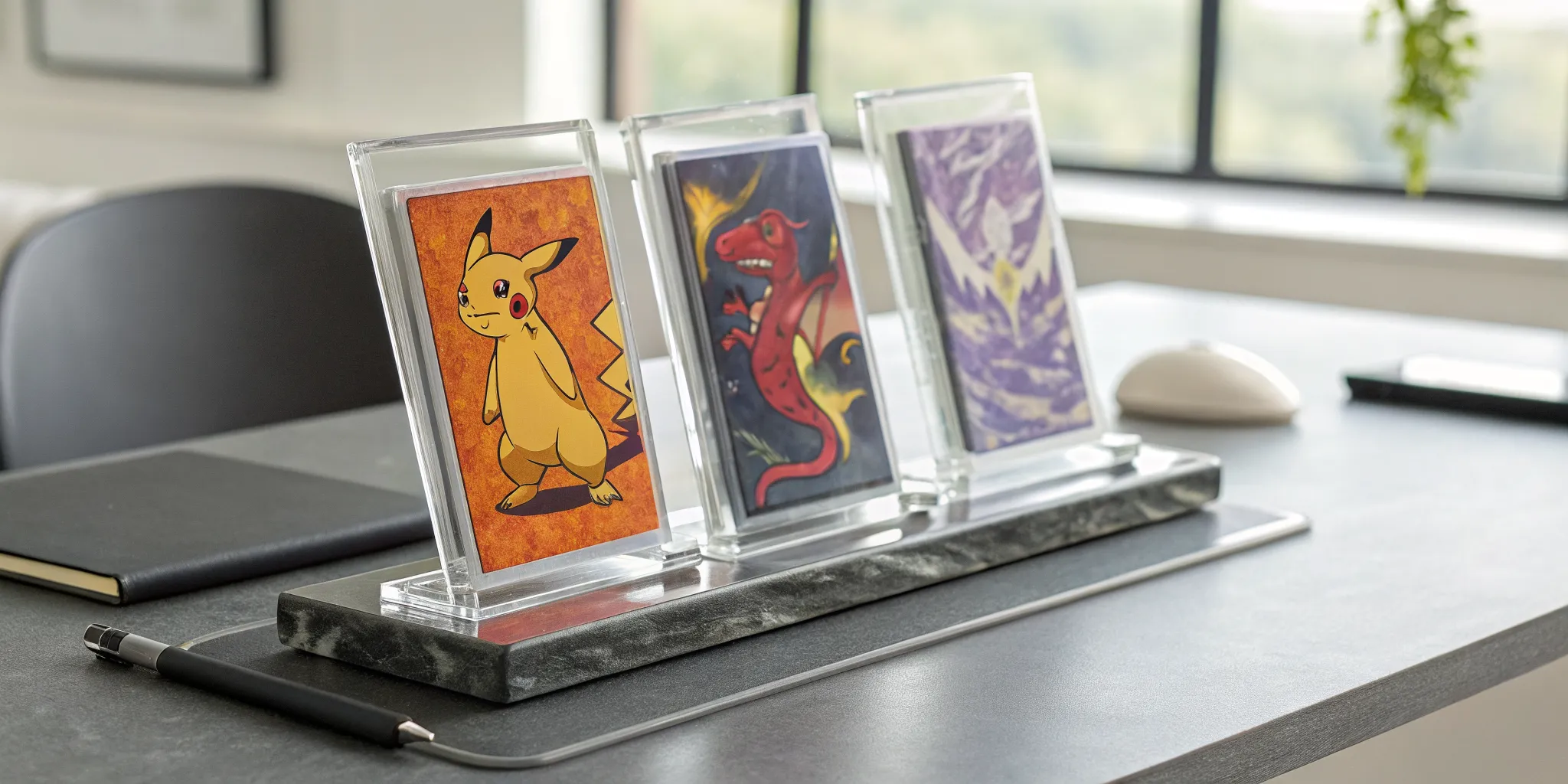
That old shoebox of Pokémon cards in your parents' attic might be more than just a nostalgic trip. You’ve probably heard the wild stories: a Charizard card selling for the price of a house, or a rare Blastoise fetching thousands. It’s enough to make anyone wonder if their childhood hobby could become a serious asset. This naturally leads to the big question: are graded Pokémon cards a good investment? The answer is more complex than just owning a rare card. It involves understanding market trends, grading costs, and the difference between a good card and a great investment. This guide will walk you through the essentials, helping you build a strategy that turns your passion into a smarter portfolio.
Key Takeaways
- Value is more than just the grade: A card's grade is important, but its true worth comes from a mix of rarity, demand, and its population count. Always check a grading company's population report to see how many high-grade copies exist before you buy.
- The best grade depends on your strategy: A perfect PSA 10 is often the target for modern card investors seeking top returns. However, a PSA 8 or 9 can be a smarter, more affordable purchase when you are collecting valuable vintage cards.
- Always calculate the hidden costs: Getting cards graded yourself involves fees, shipping, and insurance that can eat into your profits. Do the math beforehand to decide if it's better to grade a raw card or buy one that is already slabbed.
What Is a Graded Pokémon Card?
If you’ve spent any time in the Pokémon card world, you’ve probably heard the term “graded card.” Simply put, a graded card is one that has been professionally evaluated for its authenticity and condition. Think of it like getting a diamond certified. This process takes a regular card and turns it into a verified collectible, complete with a protective case and an official score.
For investors and serious collectors, grading is a non-negotiable step. It provides a universal standard for a card's quality, which directly influences its market value. When you see a card in one of our Packz mystery packs, it has already gone through this rigorous process, so you know you're getting a genuine, quality-assessed item. Understanding what that grade means is the first step to making smart decisions with your collection.
How does the grading process work?
Grading involves sending a card to a specialized third-party company where experts give it a thorough inspection. They examine four key criteria: the corners, the edges, the surface, and the centering of the artwork. Based on this assessment, the card receives a numerical grade from 1 (Poor) to 10 (Gem Mint). A 10 is the holy grail, representing a card that is virtually perfect.
After grading, the card is encapsulated in a tamper-proof plastic holder, often called a "slab." This slab not only protects the card from damage but also displays the grade and a unique certification number. This entire process validates a card's condition and authenticity, giving buyers and sellers a shared language for its quality.
PSA vs. Beckett vs. CGC: Does the grader really matter?
Yes, the grading company absolutely matters. While several companies offer grading services, the "big three" in the industry are PSA (Professional Sports Authenticator), Beckett (BGS), and CGC (Certified Guaranty Company). Each has its own reputation and grading scale nuances, but all are highly respected in the community.
PSA is the largest and most recognized grader, especially for Pokémon cards. Their slabs are often considered the industry standard, making them highly liquid and easy to sell. Beckett is famous for its BGS 10 "Black Label," a pristine grade that is even harder to get than a PSA 10. CGC has also become a major player, known for its detailed grading and sturdy slabs. The company that grades a card can influence its value, as many collectors have a preferred slab.
How a grade affects a card’s value
A high grade can significantly increase a card's value, but it’s not a guarantee for every card. The biggest jumps in value happen when a card is already desirable. Think vintage cards from the original sets, rare holographic cards, or cards featuring iconic Pokémon like Charizard and Pikachu. For these cards, the difference between a grade of 8 and a 10 can mean thousands of dollars.
Why? Because a grade provides trust. Buyers feel more confident purchasing a card that has been verified as authentic and accurately assessed by a professional. A high grade confirms the card is in excellent shape, free of the bends, scratches, and whitening that can bring down its value. It removes the guesswork and helps establish a card's market price.
The real cost of grading (and why it matters)
Getting your cards graded isn't free, and it's not always fast. The cost can range from around $15 to hundreds of dollars per card, depending on the grading company, the card's declared value, and how quickly you want it back. Turnaround times can also be lengthy, sometimes taking several months due to high demand and the logistics of shipping.
These factors are important to consider if you're thinking about grading cards yourself. The costs can eat into your potential profits, especially if a card doesn't receive the high grade you were hoping for. This is another reason why buying already-graded cards can be a more straightforward strategy. It allows you to bypass the time, cost, and uncertainty of the grading process and focus on acquiring the cards you want for your collection.
What Makes a Graded Pokémon Card Valuable?
So, you’ve got a graded card, or you’re thinking of buying one. What actually makes it valuable? While the grade itself is a huge piece of the puzzle, it’s not the only thing that matters. A card’s worth is really a mix of four key ingredients: its rarity, its physical condition, its population at high grades, and the simple power of demand. Understanding how these factors work together is your secret weapon for making smarter buys and recognizing a truly special card when you see one. Let's get into what you should be looking for.
Rarity: The hunt for 1st Editions and secret rares
First up is rarity. Some cards are just harder to find than others, and that scarcity is a primary driver of value. The most famous example is the “1st Edition” stamp on early Pokémon sets, indicating it was from the very first print run. But rarity isn’t just a thing of the past. Modern sets have their own chase cards, like stunning alternate arts, rainbow cards, and gold cards. You can often identify these by their card number; if you see a number like 120/115, you’ve found one of the secret rares that exist beyond the standard set list. These are intentionally printed in smaller quantities, making them the treasures everyone is hoping to pull from a pack.
Condition: What to look for in corners, edges, and centering
Condition is king. A super rare card can lose most of its value if it’s creased, scuffed, or stained. This is where grading becomes so important, as it provides an objective assessment of a card’s physical state. Graders look at four main things: corners, edges, surface, and centering. Perfectly preserved cards have sharp corners, clean edges without any whitening, a flawless surface free of scratches, and artwork that is perfectly centered within the borders. Even tiny imperfections can be the difference between a Gem Mint 10 and a 9, which can translate to thousands of dollars in value. Before you submit a card for grading, always inspect it closely under a bright light to check for these details.
Pop reports: Why scarcity at high grades is key
Here’s a pro tip: look up the population report. A “pop report” is a census provided by grading companies like PSA that shows exactly how many copies of a specific card have received each grade. This is where you can find the true scarcity of a card in a high-grade condition. For example, a vintage card might be relatively common, but the pop report might show that only a tiny handful have ever earned a PSA 10. This is what collectors call a "low pop" card, and that scarcity at the top grade makes it incredibly desirable. Doing your homework with population reports helps you understand if that PSA 10 you’re eyeing is one of a dozen or one of a thousand.
The power of demand, nostalgia, and hype
Finally, don’t underestimate the human element. A card is only worth what someone is willing to pay for it, and demand is heavily influenced by popularity and nostalgia. Pokémon like Charizard, Blastoise, and Pikachu are franchise icons, so their cards almost always command higher prices. Many collectors are also adults who grew up with Pokémon and now have the money to buy back a piece of their childhood, which keeps demand for vintage cards strong. Hype from new games, movies, or even social media trends can also cause prices to spike. A card’s value isn’t just in the cardboard; it’s in the shared love for the brand and the stories we attach to it.
Are Graded Pokémon Cards a Good Investment?
So, you're wondering if putting money into graded Pokémon cards is a smart move. The short answer is: it can be, but it’s not a simple get-rich-quick scheme. Like any investment, it comes with both exciting potential and real risks. Success depends on your knowledge, strategy, and a little bit of luck. Let's break down what you need to consider before you start building your collection.
The upside: Exploring the profit potential
Let's start with the exciting part: the money. Yes, Pokémon cards can be a fantastic investment. We’ve all heard the stories, like a 1st Edition Base Set Charizard going from around $50 to fetching six-figure sums. These aren't just fairy tales; certain cards have shown incredible growth, turning a childhood hobby into a serious asset. The key is knowing that not all cards are created equal. The real value lies in specific, rare cards in top condition. With the right knowledge, you can identify cards that have the potential for significant returns over time, making it a rewarding venture for dedicated collectors.
The downsides: Weighing market risks and hidden costs
Now for a reality check. The Pokémon card market can be volatile, heavily influenced by nostalgia, pop culture trends, and general hype. A card that’s hot today might cool off tomorrow, and prices can see major corrections. Beyond market swings, you also have to account for the costs. Getting a card graded isn’t free; you can expect to pay anywhere from $15 to over $50 per card, not including shipping and insurance. These grading fees can quickly add up, especially if you’re submitting multiple cards, and they can eat into your potential profits if you decide to sell.
Pokémon cards vs. other collectibles as an investment
How do Pokémon cards stack up against other investments like sports cards or comics? They’ve certainly earned their place as a serious asset class. The market is no longer just for kids; it’s a growing space for collectors and investors alike. However, it’s important to have realistic expectations. Unlike some traditional investments, the Pokémon market can be unpredictable, and you might need to wait a long time to see significant profits. It’s an investment that requires patience and a genuine interest in the hobby, as the journey is often as important as the destination.
Long-term holds vs. short-term flips: Find your strategy
Your approach will define your experience. Are you looking to buy and sell quickly for a small profit (a short-term flip), or are you in it for the long haul? Many seasoned collectors will tell you the best strategy is to buy cards you genuinely like and plan to keep them. This long-term hold strategy allows value to appreciate over time and takes some pressure off watching daily market swings. For a personal collection, a PSA 8 might be a great fit, especially for a vintage card. It lets you own a piece of history without paying the top-tier price for a PSA 10, making it a more accessible investment strategy.
PSA 8 vs. PSA 10: Which Grade Is the Better Buy?
One of the biggest questions you'll face as a collector or investor is whether to spring for a perfect PSA 10 or save some cash with a PSA 8 or 9. The truth is, there’s no single right answer. The "better buy" really depends on your budget, your goals, and the specific card you’re eyeing. A PSA 10 might be the crown jewel of a modern collection, but a PSA 8 can be a savvy pickup for a rare vintage card.
Think of it this way: are you looking for the absolute peak of quality with the highest potential return, or are you building a broader collection with solid, valuable cards that are easier to buy and sell? Understanding the distinct advantages of each grade tier is key to making a smart purchase. We’ll also look at how this choice stacks up against buying sealed products, giving you a full picture of your options.
The case for buying PSA 8s and 9s
While everyone dreams of a collection full of perfect 10s, there’s a strong argument for focusing on PSA 8s and 9s. These grades hit a sweet spot for many collectors, offering excellent condition at a much more accessible entry price. Because they are more affordable, they often have better liquidity, meaning it’s easier to find a buyer when you decide to sell.
This is especially true for vintage cards. Finding a 1st Edition Base Set Charizard in a PSA 10 holder is next to impossible for most people, but a PSA 8 is still a stunning, high-value card that’s much more attainable. For older sets where cards are notoriously hard to find in perfect condition, grades like 8 and 9 are highly respected and hold their value well.
When to pay the premium for a PSA 10
If you’re focused on modern Pokémon cards, paying the premium for a PSA 10 is often the right move for investment purposes. With modern printing technology, pulling a card in pristine condition is more common, so the market expects perfection. A PSA 10 grade on a modern card can have a massive premium multiplier, making it worth significantly more than a PSA 9 of the same card. A 9 is a great grade, but for modern investing, it’s a distant second.
Chasing a PSA 10 is a high-budget strategy aimed at maximizing potential returns. It’s for the investor who wants the best of the best and is willing to pay for it. If a modern card is your target, aiming for that Gem Mint 10 grade is how you position yourself for the highest possible growth.
Sealed boxes vs. graded singles: Which is right for you?
The debate between grades also brings up a related question: should you buy graded single cards or invest in sealed booster boxes? Each has its own appeal. Sealed boxes are attractive because they are guaranteed to be real and rare as long as they remain unopened. They carry a strong nostalgia factor and the exciting potential of what could be inside. It’s a bet on future scarcity.
On the other hand, buying a graded single offers certainty. You know exactly what card you’re getting and its precise condition, verified by a trusted third party like PSA. You skip the gamble of opening packs and buy a known asset directly. Your choice comes down to your risk tolerance: do you prefer the guaranteed value of a graded card or the thrill and potential of a sealed box?
How to Invest in Graded Pokémon Cards Smarter
Turning your passion for Pokémon cards into a smart investment strategy is about more than just buying cards you like. It requires a bit of research, a clear plan, and a healthy dose of patience. While the thrill of the hunt is a huge part of the fun, making informed decisions will protect your wallet and help you build a collection you’re truly proud of. Think of it as leveling up your collector game. Instead of chasing every shiny new release, you’ll learn to spot real value, manage your risks, and use clever tools to your advantage. The following tips will help you move from simply collecting cards to strategically investing in them, setting you up for long-term success in the hobby. Let’s get you started on the right path.
Research market trends and pop reports
Before you spend a single dollar, your first move should always be research. A great place to start is with grading company population reports. These reports tell you exactly how many cards of a specific type have received a certain grade. For example, a PSA 10 grade is only special if it’s genuinely rare. If thousands of other collectors also have a PSA 10 of that same card, its value won't be nearly as high. You can check the official PSA Population Report to see the scarcity of high grades for any card you’re considering. This data is your secret weapon for understanding a card’s true rarity and avoiding overpaying for something that just seems scarce.
Diversify your Pokémon card portfolio
Just like with traditional stocks, you don’t want to put all your eggs in one basket. Focusing your entire budget on a single Pokémon or set can be risky if its popularity suddenly drops. A smarter approach is to diversify. This could mean collecting top-tier cards from a mix of vintage and modern sets. It could also mean branching out beyond graded singles. Many long-term investors add sealed Pokémon products, like booster boxes and Elite Trainer Boxes, to their portfolios. These items often appreciate steadily over time as the available supply dwindles, offering a different and sometimes more stable path to growth compared to the volatility of single cards.
Don't forget to factor in all costs
It’s easy to get excited about a card’s potential selling price, but it’s crucial to remember the costs involved in getting there. If you plan on submitting raw cards for grading yourself, you need to account for the grading fees, which can range from $15 to over $50 per card. You also have to pay for insured shipping to and from the grading company. These expenses add up quickly and can easily erase your potential profit, especially if the card doesn’t receive the high grade you were hoping for. Always do the math beforehand to make sure the potential return justifies the upfront investment and risk.
Avoid these common first-time investor mistakes
Many new investors make the same handful of mistakes, but you can easily sidestep them with a little foresight. First, avoid chasing every new set that comes out; it’s a surefire way to drain your budget. Instead, be selective. Second, never ignore a card’s condition, even if you’re buying it raw to grade later. A tiny bit of whitening or a soft corner can be the difference between a 10 and an 8. Also, don’t assume every modern card is a guaranteed investment. Finally, make sure you protect your cards properly from day one. Simple tools like penny sleeves and top loaders are inexpensive and essential for preserving their value.
How to use Packz in your investment strategy
Packz offers a unique way to build your graded card collection without the usual friction. Instead of buying raw cards and waiting months for them to be graded, you can open a mystery pack and instantly own a graded card. This allows you to bypass the high costs and long turnaround times associated with grading services. The platform is also a fantastic tool for pivoting your strategy on the fly. If you pull a card that doesn’t fit your collection goals, you can use the buyback feature to sell it back to Packz for 100% of its value. The credit goes directly to your account, allowing you to open more packs and hunt for the specific cards you truly want.
Related Articles
- Pokémon Card Pricing: Find Your Card's True Worth | Packz Blog
- Cards Worth Grading: A Step-by-Step Guide | Packz Blog
- 7 Best Places to Buy PSA Graded Pokémon Cards | Packz Blog
Frequently Asked Questions
Why would anyone buy a PSA 8 or 9 instead of a perfect 10? While a PSA 10 is the pinnacle of quality, PSA 8s and 9s are often the smarter buy, especially for vintage cards. These grades represent cards in excellent, near-mint condition but at a much more accessible price point. This affordability makes them easier to buy and sell, giving you more flexibility in your collection. Think of it as getting a stunning piece of Pokémon history that you can actually afford, rather than paying a massive premium for the flawless perfection required for a 10.
I have an old binder of Pokémon cards. How do I know if any are worth grading? First, look for rarity. Check for a small "1st Edition" stamp, holographic patterns, or cards featuring iconic characters like Charizard. Next, be brutally honest about the condition. Use a bright light to inspect the corners for sharpness, the edges for any white specks, and the surface for scratches. Finally, do a quick search on a site like PriceCharting to see what the card sells for both raw and in various grades. If the potential value of a graded version significantly outweighs the grading fees and the card is in great shape, you might have a winner.
Is it better to invest in new, sealed booster boxes or older, graded single cards? This really comes down to your personal strategy and tolerance for risk. Buying a graded single gives you certainty; you know exactly what card you are getting and its professionally verified condition. It's a known asset. Investing in sealed boxes is a bet on future scarcity and nostalgia. You have the potential for huge returns if the set becomes popular, but you don't know the condition of the cards inside. One strategy offers a sure thing, while the other offers a gamble with an exciting potential payoff.
What's a 'pop report' and why should I care about it? A population report, or "pop report," is a census published by grading companies that shows exactly how many copies of a card have received each specific grade. You should care because it reveals the true scarcity of a card in top condition. A card might seem common, but the pop report could show that only a tiny number have ever earned a PSA 10. This "low pop" at a high grade is what makes a card truly rare and valuable to serious collectors, so checking the report helps you understand if you're buying a common gem or a genuinely scarce treasure.
How can I start collecting graded cards without the high cost and long wait times of grading them myself? The traditional grading process can be slow and expensive, which is a major barrier for many collectors. Platforms like Packz offer a more direct path. Instead of buying a raw card and sending it away for months, you can open a digital pack and instantly acquire a card that has already been professionally graded. If you pull a card that doesn't fit your collection goals, you can use the buyback feature to immediately reinvest its value into opening more packs, allowing you to build your desired collection much more efficiently.
Recommended Reading
Cash for Graded Sports Cards: The Fastest Ways to Sell
Get cash for graded sports cards faster. Compare auction houses, marketplaces, and instant buyback options to pick the route that fits your timeline.
How to Compare Value in Sports Card Packs
Learn how to compare sports card packs using card quality, available pulls, pricing clarity, and Packz’s 100% buyback option.
How to Buy Pokemon Packs Online for Ripping
Ready to buy pokemon packs online for ripping? Get transparent pack value and clear pull odds so you never overpay for the thrill of the hunt. Start collecting safely.