
June 5, 2026
5 Best Places for Topps PSA Graded Baseball Cards for Sale
Find the 5 best places for Topps PSA graded baseball cards for sale, with tips on trusted sellers, smart buying strategies, and what to look for as a collector.
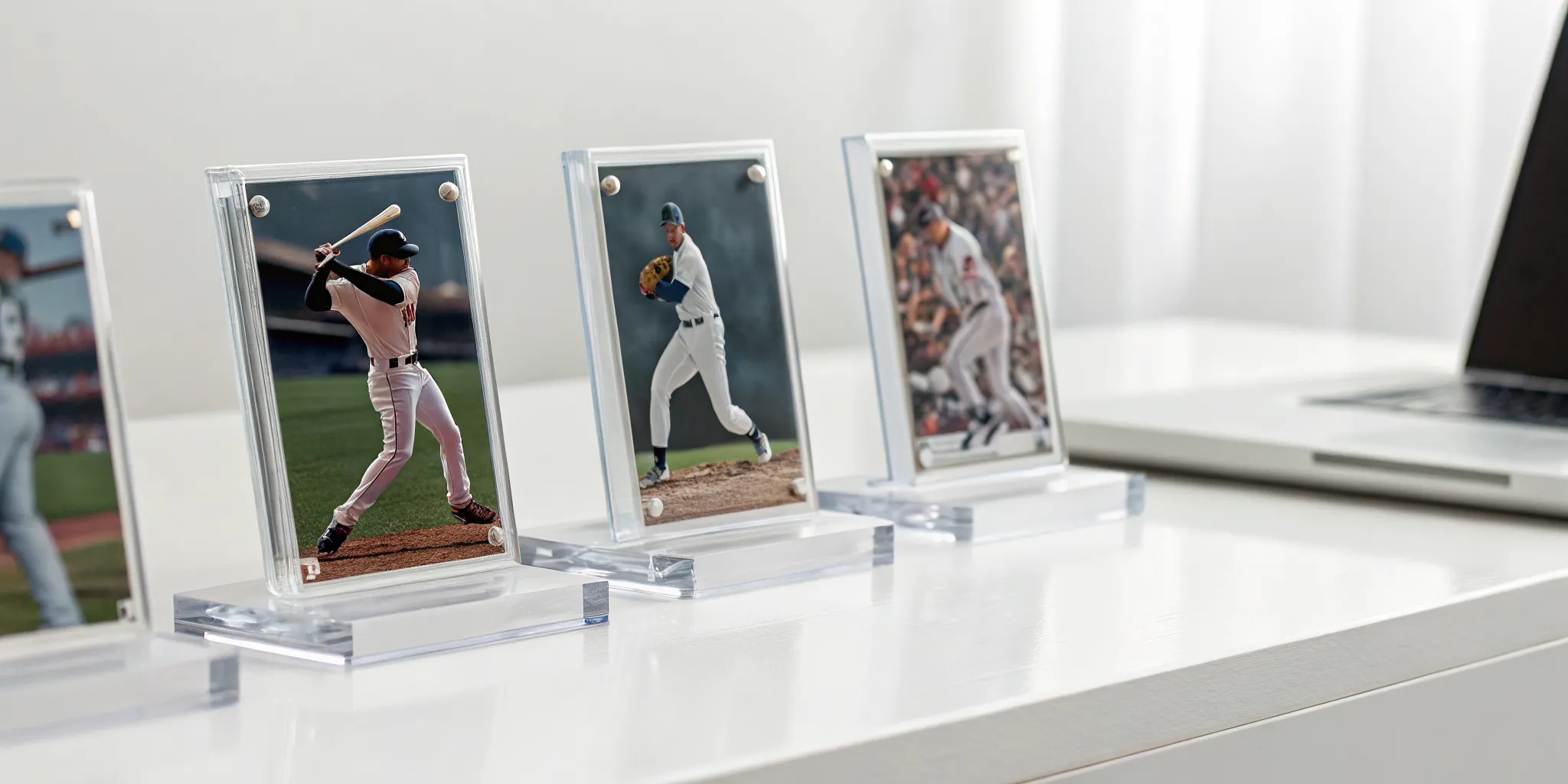
There’s a unique thrill that comes with adding the perfect card to your collection. It’s a feeling of finding exactly what you were looking for. For many collectors, that search ends with a Topps card sealed in a PSA slab. This combination represents the best of the best: a card from a legendary brand with a professionally certified grade. The hunt for rare Topps PSA graded baseball cards for sale is a core part of the modern hobby. This article is designed to make your hunt more successful. We’ll cover which cards are most popular, how to get the best deal, and how to vet sellers so you can buy with confidence.
Key Takeaways
- The Grade Is the Biggest Factor in a Card's Value: A card's PSA grade directly impacts its price, with top grades like PSA 9 (Mint) and 10 (Gem Mint) commanding premium prices because of their confirmed quality and scarcity.
- Protect Your Purchase by Doing Your Homework: Before buying, always check a card's recent sale prices to understand its market value. You should also vet the seller by reading their reviews and verify the card's authenticity using the PSA certification number online.
- A Card's Story Also Drives Its Worth: While the grade is crucial, a card's value is also influenced by other factors. A player's on-field performance, rookie card status, and overall rarity (like short prints or autographs) all play a huge part in its desirability and market price.
What Is a Topps PSA Graded Baseball Card?
When you see a card listed as a "Topps PSA Graded Baseball Card," it’s a sign of quality and authenticity. This label tells you two key things: the card was made by Topps, a legendary name in the hobby, and it has been professionally evaluated by PSA, one of the most trusted grading companies. Understanding these two elements is the first step to becoming a savvy collector.
A Brief History of Topps Baseball Cards
Topps has been a cornerstone of the sports card world since it began producing baseball cards in 1951. The company’s 1952 set is legendary, and for decades, the Topps brand has been synonymous with baseball itself. They were pioneers, adding player stats and professional photography to the back of their cards, which changed the game for collectors. For many, the history of Topps baseball cards is the history of the hobby, capturing iconic players and moments in American culture. When you hold a Topps card, you’re holding a piece of that legacy.
How Does PSA Grading Work?
PSA, or Professional Sports Authenticator, is a company that verifies a card's authenticity and assesses its physical condition. Think of them as the official inspectors of the trading card world. During the grading process, experts meticulously examine four key areas: the centering of the image, the sharpness of the corners, the smoothness of the edges, and the quality of the surface. Based on this review, the card receives a score from 1 (Poor) to 10 (Gem Mint). This grade is then sealed with the card in a protective case, or "slab," which preserves its condition and displays its official score. This process is why a higher PSA grade can dramatically increase a card's value.
Understanding the PSA Grading Scale
When you see "PSA 10" on a card, you know it's special. But what does that number really mean? The Professional Sports Authenticator (PSA) uses a 10-point scale to grade the condition of trading cards, and this number is one of the biggest factors in determining a card's value. Think of it as a report card for your baseball card. A higher grade means a better-preserved card, which almost always translates to a higher price tag.
Getting familiar with this scale is one of the most important first steps you can take as a collector. It helps you understand what you're buying, what your collection is worth, and why two identical cards can have wildly different prices. Whether you're hunting for a rookie card or a vintage classic, the PSA grade tells a story about the card's past and its potential future value. Let's break down what each range on the scale means for you.
PSA 1–4: The Lower Grades
Cards in the PSA 1 to 4 range are considered to be in poor to very good condition. A card with a low grade might have noticeable issues like rounded corners, surface scuffs, or even creases. While they aren't in perfect shape, you shouldn't dismiss them. For very old or rare cards, a low-grade copy might be the only one you can find or afford. Many collectors specifically seek out these cards because they value the history and rarity over pristine condition. A card that has clearly been loved and handled has a certain charm, and owning a piece of history, regardless of its grade, is a great feeling.
PSA 5–7: The Mid-Range Grades
This is often the sweet spot for many collectors. Cards graded PSA 5 (Excellent), PSA 6 (Excellent-Mint), and PSA 7 (Near Mint) offer a fantastic balance between condition and cost. These cards look great to the naked eye, with only minor flaws like slight corner wear or a bit of off-centering. They are a huge step up in quality from the lower grades without commanding the top-tier prices of PSA 8s and above. If your goal is to build an impressive collection that looks amazing without breaking the bank, focusing on this mid-range is a smart strategy. You get a solid, attractive card that holds its value well.
PSA 8–10: Why High Grades Command Premium Prices
Welcome to the top tier. Cards graded PSA 8 (Near Mint-Mint), PSA 9 (Mint), and the coveted PSA 10 (Gem Mint) are the best of the best. These cards are nearly flawless, with sharp corners, clean surfaces, and perfect centering. The demand for these high-grade cards has grown significantly as more people view card collecting as a serious investment. A PSA 10 is essentially a perfect specimen, and collectors are willing to pay a major premium for that perfection. Pulling a high-grade card from a pack is the ultimate thrill, and it's why they are so sought after in the market.
How Does a PSA Grade Affect a Card's Price?
Think of a PSA grade as a report card for your baseball card. It’s one of the single most important factors in determining what a card is worth. PSA (Professional Sports Authenticator) is a trusted third-party company that evaluates the condition of trading cards on a scale from 1 to 10. A grade of 10, or Gem Mint, represents a virtually perfect card. Because collectors and investors prize condition above almost everything else, they are willing to pay a significant premium for cards with higher grades.
When you see a card encased in a PSA slab, you’re not just looking at a piece of cardboard; you’re looking at an asset with a verified condition. This verification removes guesswork and builds confidence in the market. A raw, ungraded card might look perfect to the naked eye, but hidden flaws like microscopic scratches, off-centering, or soft corners can only be identified by a professional grader. The final grade assigned to a card provides a universal standard that directly influences its market value, making it easier for everyone to buy and sell with certainty.
High-Grade vs. Low-Grade: The Price Impact
The price difference between grades isn't a simple step-up; it's often exponential. The jump in value from a PSA 9 to a PSA 10 can be staggering, sometimes multiplying a card's price several times over. Why the huge leap? It comes down to rarity. While a card might be common, a Gem Mint 10 version of it can be incredibly scarce. This rarity creates intense demand among serious collectors who want the best of the best for their collections.
On the other end of the spectrum, cards with low grades (typically PSA 5 or below) are much more affordable. While they may not be top-tier investment pieces, they are a fantastic entry point for new collectors or for those who simply love the player or the card's history. For those focused on appreciation, however, investing in sports cards often means targeting high-grade examples, as they have historically shown the greatest potential for growth.
How a Player's Performance Changes Card Value
A card's value isn't set in stone the day it's graded. The sports card market is incredibly dynamic and is directly tied to a player's career. A player having a breakout season, winning an MVP award, or getting inducted into the Hall of Fame can cause the value of their cards to surge. The market reacts quickly to these milestones, as fan excitement and collector interest peak.
This is where things get really interesting. A high-grade rookie card of a player who suddenly becomes a superstar is a perfect storm for a massive value increase. Collectors who had the foresight to buy that player's cards early are often rewarded handsomely. This is why paying attention to the actual games is just as important as tracking market prices. Understanding how player performance affects card values adds another layer of strategy and excitement to collecting.
Where Can You Buy Topps PSA Graded Baseball Cards?
Once you know what you’re looking for, the next big question is where to find it. The market for graded baseball cards is huge, and thankfully, you have plenty of options. You can find cards everywhere from massive online marketplaces to the dealer table at your local card show. Each venue offers a completely different buying experience, with its own set of pros and cons. For example, online platforms give you access to a global inventory from the comfort of your couch, but you miss out on seeing the card in person. In-person shows let you inspect the slab and haggle a bit, but your selection is limited to who shows up that day.
Choosing the right place to buy depends on your goals. Are you a bargain hunter looking to snipe a deal in the final seconds of an auction? Or do you prefer a more curated, white-glove experience where you know you’re getting a top-quality card from a trusted expert? Maybe you love the thrill of the chase and the surprise of not knowing what you’ll get. Your answer will point you toward a specific type of seller. Knowing where to look is half the battle, and picking the right platform can make all the difference in finding that perfect card for your collection. Let's walk through some of the best places to find Topps PSA graded baseball cards, so you can choose the path that’s right for you.
Packz
If you enjoy the thrill of discovery, Packz offers a unique and exciting way to acquire graded cards. Instead of just buying a single card, you get to open digital mystery packs filled with graded trading cards, including Topps PSA graded baseball cards. It combines the classic fun of ripping packs with the modern convenience of an online platform. After the reveal, you decide what happens next. You can have the physical cards shipped directly to you, or you can sell them back to Packz for a credit to your account, letting you open even more packs. It’s a fun, interactive approach that’s perfect for collectors who love the chase as much as the card itself.
eBay
When it comes to sheer volume, it’s hard to beat eBay. It’s a massive online hub where collectors and dealers from all over the world list their cards. You can find an incredible variety of PSA graded baseball cards for sale, from common rookie cards to rare vintage pieces. The platform’s search and filter tools are great for narrowing down exactly what you want by player, year, and PSA grade. Because the marketplace is so competitive, you can often find great prices. The key to success on eBay is doing your homework on the seller, which is a skill we’ll cover a little later on.
Specialized Sports Card Dealers
For a more curated and expert-driven experience, consider buying from a specialized sports card dealer. These are businesses run by people who live and breathe trading cards. They often have deep knowledge and a carefully selected inventory of high-quality items. For example, a dealer like MINT State focuses on selling high-quality, graded vintage cards and offers a more personal touch. Buying from a specialized dealer often means you’re getting a card that has already been vetted by an expert, which can provide extra peace of mind, especially when you’re spending a significant amount of money.
Auction Houses
If you’re hunting for high-end, investment-grade cards, auction houses are the place to be. These platforms specialize in rare and valuable collectibles, connecting serious buyers with top-tier cards. Companies like Cash Cards Unlimited focus specifically on graded sports cards, or "slabs," and provide a trusted platform for buying and selling these high-value assets. While you can find cards at various price points, auction houses are best known for featuring iconic rookie cards and rare vintage finds that command premium prices. It’s a more formal and competitive environment, but it’s where many of the hobby’s biggest sales happen.
Card Shows and Local Markets
Don’t underestimate the power of buying in person. Card shows and local collector markets are fantastic places to find Topps PSA graded cards. The biggest advantage is being able to see the card with your own eyes before you buy it. You can inspect the slab for any imperfections and get a true feel for the card. These events are also great for connecting with other collectors and dealers. You can often find vendors like Cash Cards Unlimited who buy and sell collections, giving you a chance to browse a wide variety of cards and maybe even negotiate a great deal face-to-face.
Which Topps PSA Graded Cards Are Most Popular?
When you’re looking for Topps PSA graded cards, you’ll quickly notice that some cards generate way more buzz than others. Popularity in the card world is a fascinating mix of a player's legacy, a card's rarity, and the all-important grade that encapsulates its condition. It’s not just about having a card of a famous player; it’s about having the right card. A card’s desirability can shift with a player's hot streak, a record-breaking performance, or even a surge of nostalgia for a specific era of baseball.
Understanding what makes a card popular helps you make smarter choices, whether you're collecting for fun or as an investment. The PSA grade itself acts as a massive value multiplier. For example, a base card of a star player is cool, but that same card with a pristine PSA 10 Gem Mint grade becomes a centerpiece for a collection. The most sought-after cards often fall into a few key categories: rookie cards of legendary players, cards of athletes currently dominating the league, and rare cards with special features like autographs or limited print runs. Let’s break down what types of cards consistently capture the attention of the collecting community and why their PSA grade can send their value into the stratosphere.
Rookie Cards: Why They Often Lead the Market
There’s a special kind of magic to a rookie card. It’s the first official card that marks a player's entry into the major leagues, capturing the very beginning of their professional story. For collectors, owning a player's rookie card is like holding a piece of their origin story. This significance is why rookie cards often lead the market in both value and demand. Think of iconic cards like the 1952 Topps Mickey Mantle or the 1989 Upper Deck Ken Griffey Jr.; their status as rookie cards is central to their legendary appeal. A rookie card represents pure potential, and if that player goes on to have a Hall of Fame career, their first card becomes a cornerstone of the hobby.
How Trending Players Drive Demand
The sports card market is incredibly dynamic and often mirrors what’s happening on the field. When a player is having a breakout season, hitting home runs, or pitching perfect games, the demand for their cards can skyrocket. Collectors and investors pay close attention to these trending players, hoping to acquire their cards before prices climb even higher. This is especially true for highly graded cards. A PSA 9 or 10 of a player who is suddenly in the spotlight becomes a hot commodity. This real-time connection to the game is part of what makes collecting so exciting; your collection’s value can change with every pitch.
The Appeal of Short Prints, Variations, and Autographs
Beyond a player's status, a card's rarity plays a huge role in its popularity. Collectors love the thrill of the hunt for cards that are hard to find. This includes short prints (cards produced in smaller quantities than the rest of the set), image variations, and cards with special features. Autographed cards, which are personally signed by the player, create a direct connection between the athlete and the fan. Another popular type is the patch card, which contains a small piece of a player's game-worn jersey. These unique graded sports cards are often produced in limited numbers, making them highly desirable and valuable from the moment they are pulled from a pack.
Vintage vs. Modern: Which Is the Better Buy?
The debate between collecting vintage or modern cards is a classic one, and the right answer really depends on your goals. Vintage cards, typically those produced before 1980, carry a deep sense of history and nostalgia. These cards feature legends of the game like Babe Ruth and Hank Aaron, and their scarcity gives them a stable, established value. On the other hand, modern cards offer flashy designs, exciting new players, and the thrill of chasing rare parallels and autographs. While the market for vintage baseball cards can be more predictable, modern cards offer the potential for huge returns if you pick the right player at the right time. Many collectors enjoy having a mix of both in their collections.
How to Vet a Seller Before You Buy
Buying a graded card online should be exciting, not stressful. But with so many sellers out there, how do you know who to trust? Taking a few extra minutes to check out a seller before you click "buy" can save you from a major headache and protect your hard-earned money. It’s the best way to ensure the card that arrives in the mail is exactly what you paid for.
Think of it as doing your homework. A reputable seller will have a clear track record, be transparent about their products, and offer fair policies. If you find yourself digging for basic information or see too many red flags, it’s often best to walk away and find another seller. Focusing on three key areas, seller feedback, card authenticity, and return policies, will give you the confidence you need to build your collection safely.
Check Seller Ratings and Feedback
Seller ratings are your first and best clue about a seller's reputation. On marketplaces like eBay, these ratings are built from hundreds or even thousands of transactions. Don't just look at the overall score; take a moment to read the actual comments from other buyers. Look for patterns in the feedback. Are buyers consistently praising the seller's secure packaging and fast shipping? Or are there repeated complaints about inaccurate descriptions or poor communication?
A seller with a long history and a high volume of positive reviews, especially for graded sports cards, is generally a safe bet. These are often specialists who understand the hobby and value their reputation. Reading through their feedback gives you a real-world glimpse into what you can expect from your own purchase.
Verify the Card's PSA Authenticity
Every card graded by PSA comes in a sealed case, or slab, with a unique certification number on the label. This number is your key to verifying the card's authenticity directly with PSA. Before you even think about buying, you should use this number to confirm the card's details.
You can go to the PSA website and enter the certification number into their verification tool. This database will show you the card's details, its grade, and often a high-resolution image of the exact card when it was graded. You can then compare this official record to the seller's listing. This simple verification step helps protect you from tampered slabs or outright fakes and confirms that the card in the photo is the one registered in the PSA system.
Understand the Return Policy
A seller’s return policy tells you a lot about their confidence in their products. Before you commit to a purchase, find and read the policy. Does the seller offer returns if the card is damaged in transit or isn't what you expected? A 14 or 30-day return window gives you a crucial safety net.
Some sellers, especially on auction items, may have a "no returns" policy. This isn't always a deal-breaker, but it does mean you need to be extra certain about your purchase. Keep in mind that many platforms have their own buyer protection programs, like the eBay Money Back Guarantee, which can cover you if the item is significantly different from its description. Knowing your options for recourse before you buy is just smart collecting.
How to Get the Best Deal on PSA Graded Topps Cards
Finding the right PSA graded Topps card is one thing, but getting it at a great price is what makes a good purchase a fantastic one. A little strategy goes a long way in making sure you get the most value for your money. By being patient and doing your homework, you can add that perfect card to your collection without overpaying.
Research Market Prices First
Before you even think about clicking “buy,” you need to know what a card is actually worth. Prices can swing based on player performance, market trends, and overall demand. Your best tool for this is checking recent sales data. Marketplaces like eBay have a "sold items" filter that shows you what people have recently paid for a specific card in a specific grade. You can also use dedicated tools that track auction prices realized to get a clear picture of a card's current market value. This simple step prevents you from overpaying and helps you spot a genuine deal when one pops up.
Use Search Filters to Your Advantage
Online marketplaces are filled with thousands of listings, and scrolling through them all is a recipe for burnout. This is where search filters become your best friend. Instead of a broad search for "Topps baseball cards," you can narrow your results to find exactly what you’re looking for. Filter by player, year, card number, and most importantly, the PSA grade. Looking for a PSA 10 rookie card of a specific player from 1989? Filters can take you right to it. Using them saves you time and focuses your search on the cards that truly matter to your collection.
Always Request Detailed Photos
A PSA grade tells you the card's condition and authenticity, but it doesn't always tell the whole story. Two cards with the same PSA 9 grade can look very different side-by-side. One might have perfect centering, while the other is slightly off. This is why clear, high-resolution photos are non-negotiable. Don’t be afraid to ask the seller for more pictures of the front and back, as well as close-ups of the corners and edges. You’re not just buying the grade; you’re buying the specific card in that holder, so make sure its "eye appeal" meets your standards before you commit.
Time Your Purchase Strategically
Patience can pay off in the card market. Card prices often follow a player's season, with values peaking during periods of high performance and dipping in the off-season. Buying a player's card when they aren't in the headlines can often lead to a better price. Also, pay attention to the type of listing. While "Buy It Now" offers convenience, auctions that end at odd hours, like late at night or midweek, sometimes have less competition. By watching the market and picking your moment, you can often snag a card for less than its peak value.
Are Topps PSA Graded Baseball Cards a Good Investment?
If you’re asking this question, you’re not alone. More and more people are looking at their card collections not just as a hobby, but as a serious investment. The short answer is yes, Topps PSA graded cards can be a fantastic investment, but it all comes down to the details. The market has shown a strong appetite for high-quality collectibles, making sports cards a popular alternative investment for those looking to diversify their portfolios.
The key is the grade. There’s a world of difference between a card that’s been sitting in a shoebox and one that’s been professionally graded as a PSA 9 or a perfect PSA 10. These mint and near-mint condition cards are where the real action is, often fetching prices that are multiples higher than their lower-graded counterparts. Interestingly, this isn’t just a game for vintage cards anymore. There’s a huge demand for modern cards, especially for star players from recent years. This shows that the market is active and constantly evolving, rewarding collectors who can spot quality and potential in both old and new cards. Ultimately, investing in graded cards is a bet on quality and scarcity, and right now, the demand for top-tier Topps cards is proving it to be a very compelling bet.
How Digital Platforms Are Changing the Hobby
Not too long ago, growing your collection meant trips to card shows or your local hobby shop. While those are still fun, digital platforms have completely transformed how we buy, sell, and interact with the hobby. Marketplaces like eBay opened the door, making it possible to find almost any card imaginable from sellers across the globe. This shift online has made collecting more accessible and transparent than ever before.
Now, we’re seeing the next evolution with platforms like Packz. We combine the classic thrill of ripping open a fresh pack with the convenience of a digital experience. You get the excitement of discovering a graded card without leaving your house, and you have the choice to either have it shipped to you or sell it back instantly. It’s this blend of tradition and technology that keeps the hobby exciting and moving forward for a new generation of collectors.
Related Articles
- Cards Worth Grading: A Step-by-Step Guide | Packz Blog
- Your Guide to PSA 10 Graded Football Cards | Packz Blog
Frequently Asked Questions
Why is there such a huge price difference between a PSA 9 and a PSA 10? This is one of the most common questions, and it all comes down to rarity. A PSA 9 is a mint card, which is fantastic, but it might have one very minor flaw, like being slightly off-center. A PSA 10, or Gem Mint, is considered a virtually perfect card. The number of cards that achieve this perfect score is incredibly small. Collectors and investors are willing to pay a significant premium for that level of perfection, so the jump in price from a 9 to a 10 reflects the extreme scarcity of a flawless card.
I'm just starting out. Should I focus on vintage or modern cards? There’s no wrong answer here; it really depends on what excites you. Vintage cards connect you to the history of the game and often have a stable, established value. Modern cards offer the thrill of following current players and the potential for a card’s value to grow quickly if that player has a breakout season. A great strategy for new collectors is to try a little of both. Buy a vintage card of a player you admire and a modern card of a rookie you believe in. This helps you learn both sides of the market.
How can I be sure a PSA card I'm buying online is legitimate? This is a great question, and thankfully, PSA makes it easy to protect yourself. Every PSA slab has a unique certification number on the label. Before you buy any card, go to PSA’s website and use their verification tool. You can enter that number and see the card’s information, its grade, and often a high-resolution photo of the exact card. If the information in the database matches the seller's listing, you can feel confident that you're buying a genuine article.
Is it better to buy a high-grade card of an average player or a low-grade card of a superstar? This really depends on your personal collecting goals. If you're collecting primarily as an investment, a high-grade card (like a PSA 9 or 10) of a less famous player can be a smart move because its condition gives it inherent value and scarcity. If you're collecting for the love of the sport, owning a piece of history from a legend like Mickey Mantle, even in a lower grade, can be far more satisfying. Many collectors find a happy medium, pursuing the highest grade they can afford of the players they love most.
What's the best way to start collecting if I have a smaller budget? You don't need a massive budget to build an amazing collection. A smart approach is to focus on cards in the PSA 5 to 7 range. These cards look great and are far more affordable than the top-tier grades. You can also look for players during their off-season, when prices tend to dip. Finally, consider fun alternatives like Packz, where you can open digital packs for a chance at a great graded card without the high cost of buying a single, top-tier card outright.
Recommended Reading
Cash for Graded Sports Cards: The Fastest Ways to Sell
Get cash for graded sports cards faster. Compare auction houses, marketplaces, and instant buyback options to pick the route that fits your timeline.
How to Compare Value in Sports Card Packs
Learn how to compare sports card packs using card quality, available pulls, pricing clarity, and Packz’s 100% buyback option.
How to Buy Pokemon Packs Online for Ripping
Ready to buy pokemon packs online for ripping? Get transparent pack value and clear pull odds so you never overpay for the thrill of the hunt. Start collecting safely.