
June 15, 2026
The Smart Guide to Graded Basketball Cards on eBay
Find out how to buy, value, and spot deals on graded basketball cards eBay collectors love. Get tips for safe purchases and building your collection.
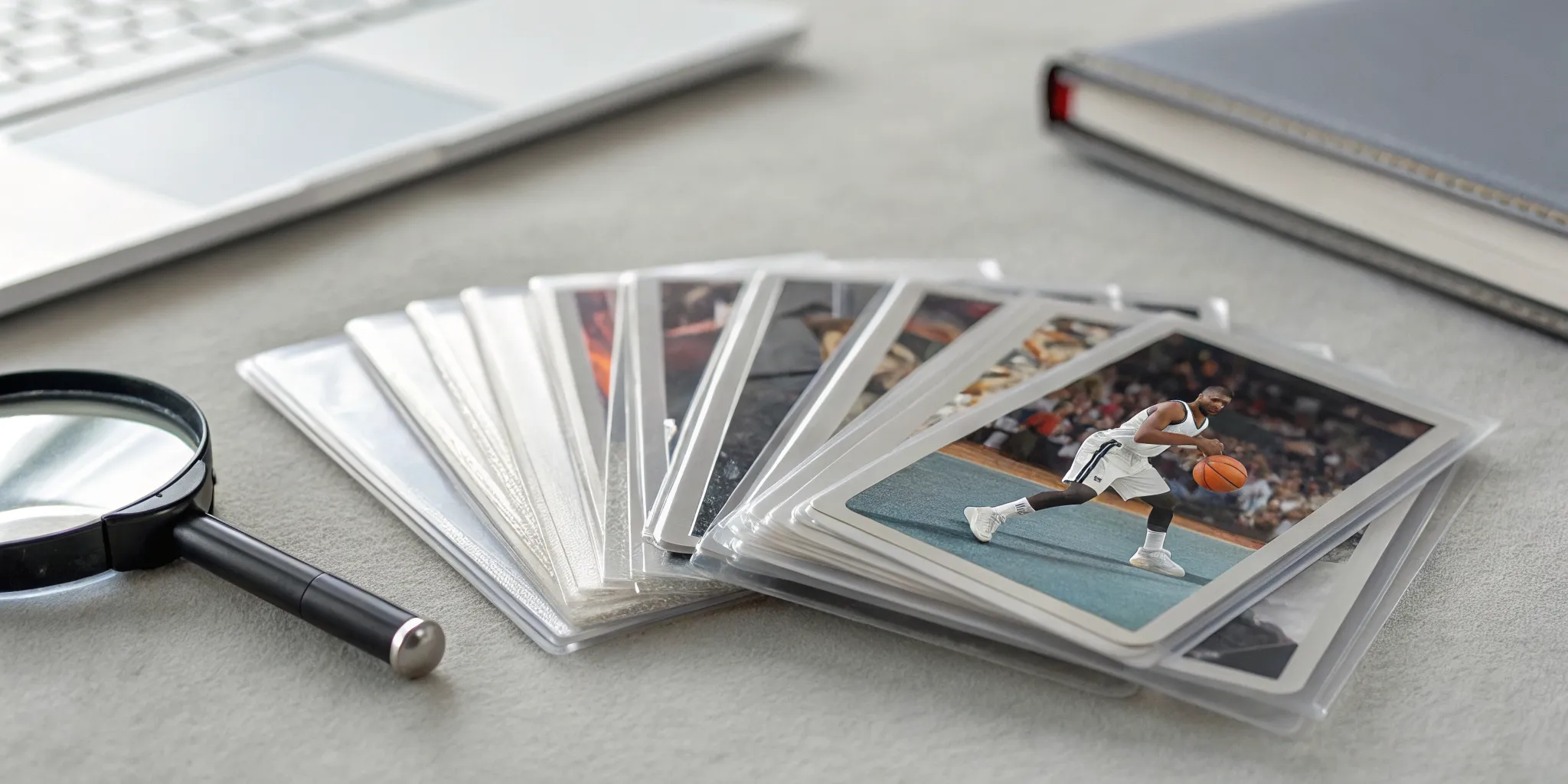
For many collectors, eBay is the default destination for building a collection. It’s a massive platform with an unmatched selection, but that size comes with a cost: your time. The process of hunting for graded basketball cards on eBay involves endless scrolling, vetting sellers, and navigating bidding wars. This guide will give you all the tools you need to master that process. But we’ll also show you why the traditional hunt isn’t the only option. Learning the eBay ropes is essential, but knowing there are simpler, more exciting ways to score graded cards is the real game-changer.
Key Takeaways
- Focus on the Four Value Factors: A card's worth isn't just about the player; it's a combination of the player's market demand, the card's rarity (like serial numbers), its official grade, and special features like rookie status or an autograph.
- Use Sold Listings as Your Price Guide: Don't trust asking prices on eBay. The "Sold Items" filter is your best tool for discovering a card's true market value, giving you the data you need to make a fair offer and spot a real bargain.
- Always Verify and Know Your Options: Protect your investment by using the slab's certification number to confirm its authenticity on the grader's website. If you want to skip the risks of auctions, consider platforms like Packz that provide guaranteed authentic, graded cards.
What Is a Graded Basketball Card?
If you’re getting into the hobby, you’ve probably seen the term “graded card” pop up everywhere. So, what does it mean? Simply put, a graded card is one that has been professionally evaluated for its condition. A third-party company inspects the card, assigns it a score, and seals it in a protective plastic case, often called a “slab.”
This process takes the guesswork out of assessing a card’s quality. Instead of relying on a seller’s opinion of “near mint,” you get an objective grade from a trusted source. This standardization is what gives graded cards their stability and value in the market, making them a cornerstone of serious collecting. It’s the difference between buying a used car as-is and buying one with a full inspection report.
How Does Card Grading Work?
The grading process turns a raw card into a certified collectible. It starts when a collector decides which cards to submit, usually focusing on rare, vintage, or potentially high-value modern cards. You send your cards to a grading company, where experts put them under a microscope. They meticulously examine four key criteria: the centering of the image, the sharpness of the corners, the smoothness of the edges, and the quality of the card’s surface. After the inspection, the card is assigned a final grade on a 10-point scale. It’s then encapsulated in a tamper-proof slab with a label detailing the card’s information and its official grade, solidifying its place in the sports card grading process.
PSA vs. BGS vs. SGC: What's the Difference?
You'll notice a few different company names on those slabs. The "big three" in the grading world are PSA (Professional Sports Authenticator), BGS (Beckett Grading Services), and SGC (Sportscard Guaranty Corporation). PSA is the oldest and largest service, and many collectors consider it the industry standard, especially for vintage cards. BGS is known for its detailed subgrades on the back of the label, which rate the four main criteria (centering, corners, edges, surface) individually. SGC is praised for its sharp-looking black slabs, often called "tuxedos," and has a strong reputation for grading pre-war and vintage cards. Each company has its own loyal following, but a high grade from any of them adds significant credibility and value to a card. This graded sports cards buying guide can help you get familiar with their labels.
How Grade Affects a Card's Value
The grade is everything when it comes to a card’s price. A card graded "Gem Mint 10" is considered perfect and can sell for multiples of what the same card graded a 9 would. The difference between a PSA 9 and a PSA 10 can be thousands, or even tens of thousands, of dollars for the right card. This is because high-grade cards are exceptionally rare. For example, if only a handful of a specific vintage card have ever achieved a PSA 9, that scarcity dramatically increases its market price. The PSA grading scale provides a clear benchmark, and the higher the number, the more valuable the card becomes to collectors who want the best of the best.
What Makes a Graded Basketball Card Valuable?
Figuring out what a graded basketball card is worth can feel like a puzzle, but it really comes down to a few key factors. It’s not just about the player on the card. The true value is a mix of the player's legacy, the card's rarity, its condition, and whether it has special features like an autograph. A card that ticks all these boxes can be worth a small fortune, while a similar card might be worth just a few dollars. Understanding these value drivers is the first step to becoming a savvy collector who can spot a great deal from a mile away.
Player Hype and Market Demand
A player’s star power is one of the biggest drivers of a card's value. It’s simple supply and demand: everyone wants a piece of the legends. Cards of iconic players like Michael Jordan, LeBron James, and the late Kobe Bryant are consistently highly sought after, which keeps their market value high. It’s not just about their stats, but their cultural impact and the demand from a global fanbase. When a player has a major career moment, like winning a championship or breaking a record, you’ll often see a surge in their card prices. This hype creates a dynamic market where a player's performance directly influences the wallets of collectors.
Rarity, Prints, and Serial Numbers
Beyond the player, a card’s rarity is what truly sets it apart. The fewer copies of a card that exist, the more valuable it becomes. Manufacturers create this scarcity in several ways. You’ll see cards with special attributes like "Short Print" (SP) or "Super Short Print" (SSP), indicating a limited production run. Many modern cards are also serial-numbered, stamped with a unique number like 25/99, showing it’s one of only 99 in existence. The ultimate prize is a "1/1" (one of one), the only card of its kind. These Limited Edition cards are exceptionally desirable among collectors.
The Power of Rookie Cards and Autographs
For many collectors, the ultimate goal is to own a player's rookie card (RC). These are the first cards produced for a player during their debut professional season, capturing the very beginning of their journey. Rookie cards for Hall of Fame players are often the most valuable cards in the hobby, representing a bet on a player's future that paid off. An autograph adds another layer of value and personal connection. A "hard-signed" or "on-card" autograph, where the player physically signed the card, is typically more desirable than a sticker autograph. A rookie card with a pristine on-card autograph is often considered a cornerstone of any serious collection.
The "Gem Mint" Premium: Why a PSA 10 Is King
Condition is everything in the world of graded cards. A card’s grade reflects its physical state, and a top grade can multiply its value exponentially. The highest grade on the widely used PSA scale is "Gem Mint 10," indicating a card that is virtually perfect. It has sharp corners, clean edges, flawless surfaces, and perfect centering. Even a common card can become highly valuable if it achieves this grade. A PSA 10 commands a significant premium because it’s so difficult to achieve. Pulling a card straight from a pack doesn’t guarantee a 10, making Gem Mint copies the pinnacle for collectors who demand the best of the best.
How to Find Graded Basketball Cards on eBay
eBay is a treasure trove for graded basketball cards, but it can also feel like digging through a massive, disorganized bin. The key is knowing how to search smart. With a few simple strategies, you can zero in on the exact cards you want, stay ahead of the competition, and buy with confidence. Let's walk through how to turn eBay from an overwhelming marketplace into your personal card-finding machine.
Master eBay Filters: Grade, Player, and Set
eBay’s search filters are your best friend. Instead of just typing “LeBron James rookie card” and scrolling through thousands of results, you can get specific. On the left-hand side of the search results, you’ll find a menu of options. Start by filtering for the grading company (PSA, BGS, SGC) and the exact grade you’re looking for, like a gem mint 10. You can then narrow it down by player, team, and even the specific card set, like Prizm or Optic. Using these filters helps you cut through the noise and find the exact graded cards you’re hunting for without wasting time on irrelevant listings.
Set Up Saved Searches and Price Alerts
You don’t have to spend hours every day refreshing eBay. Once you’ve perfected your search filters for a specific card, you can save that search. eBay will then notify you whenever a new listing that matches your criteria pops up. This is a game-changer for finding rare cards or good deals before anyone else. You can also get familiar with the different buying options. "Buy It Now" is straightforward, while "Auction" can sometimes land you a deal if you’re patient. Don’t forget the "Best Offer" option, which lets you negotiate directly with the seller. Setting up these alerts lets the deals come to you, so you can act fast when the right card appears.
What Is eBay's Authenticity Guarantee?
Buying a high-value card online can be nerve-wracking, which is why eBay’s Authenticity Guarantee is so important. For many graded cards that sell for over $250, this program adds a crucial layer of protection. When you buy an eligible card, the seller ships it to a team of third-party authenticators first. They verify that the slab is authentic and hasn't been tampered with and that the card matches the listing description. Only after it passes inspection is the card sent to you. This service gives you peace of mind, ensuring that the expensive gem mint card you paid for is exactly what you get. You can learn more about how the Authenticity Guarantee works directly on their site.
What to Look for in an eBay Listing
Once you’ve found a card you’re excited about, it’s tempting to hit “Buy It Now” right away. But hold on for just a minute. The key to a successful purchase on eBay isn’t just finding the right card; it’s finding the right listing. A great listing gives you confidence in what you’re buying and who you’re buying from. Before you commit, take a few moments to review the seller’s profile, the item details, the return policy, and the shipping information. These four checks will help you avoid surprises and ensure the card that arrives is exactly what you expected.
Check the Seller's Reputation and Feedback
The first thing you should do is vet the seller. Think of their feedback score as their report card. A high percentage of positive feedback means they have a history of happy customers. You can find this score right on the listing page. For a deeper look, click on their username to see their full feedback profile. Don’t just look at the score; read the recent comments to see what other buyers are saying. Sellers with established eBay stores often have a long track record you can review. A seller with a 99.5% positive rating has proven they are reliable. Look for consistency and a pattern of successful transactions, especially with items similar to the one you’re considering.
Scrutinize Photos and Descriptions
The photos and description are your best tools for evaluating the card remotely. Insist on high-quality images. You should be able to see the card clearly from the front and back, with close-ups of the corners, edges, and the slab itself. Look for any scratches or cracks on the case. Next, read the description carefully. It should confirm the player, year, set, and exact grade. A good seller will be transparent and note any important details. While browsing, you’ll find many kinds of graded basketball trading cards, so a detailed description helps you confirm you’ve found the right one. If the photos are blurry or the description is vague, it’s a red flag.
Understand Return Policies and Protections
Knowing your options if something goes wrong is crucial. Before you buy, check the seller’s return policy. Some sellers offer 30-day returns, while others list items as "final sale." Also, look for eBay’s Authenticity Guarantee. This service, offered for many higher-value cards, means the card will be inspected by third-party experts before it’s shipped to you. This adds a powerful layer of protection and helps you feel more confident in your purchase, especially when buying high-value items like PSA 10 grade cards. If a listing has the blue Authenticity Guarantee checkmark, you can buy with greater peace of mind.
Review Shipping and Packaging Details
Finally, don’t overlook the shipping details. The cost of shipping can turn a good deal into an average one, so factor it into your total price. Many sellers offer free shipping to stay competitive, which is a great perk to look for. Beyond the cost, consider how the card will be packaged. A graded card is durable, but the slab can still be damaged in transit. Look for sellers who mention secure packaging, like using a bubble mailer or a box. A seller who takes care in their shipping description is likely to take care of your card, ensuring it arrives safely at your doorstep.
How to Spot a Good Deal
Finding a true bargain on eBay feels like hitting a game-winning shot. It’s not just about luck; it’s about having a smart strategy. With thousands of listings for graded basketball cards, knowing how to sift through the noise is your key to finding undervalued gems. It comes down to doing a little homework, understanding market value, and timing your purchase just right. Let’s walk through the exact steps you can take to become a pro at spotting great deals.
Use "Sold" Listings to Find Market Value
The single most powerful tool for finding a card's true value is eBay's "Sold" filter. Asking prices can be aspirational, but sold prices are reality. This feature shows you what cards actually sold for, not just what sellers hope to get. To use it, simply search for your card and then scroll down the filter menu on the left side of the page and check the "Sold Items" box. The prices will turn green, giving you a clear, data-backed range for that specific card and grade. This is your baseline. Any deal you consider should be measured against this real-world data.
Compare Active vs. Completed Listings
Once you have a solid grasp of the market value from sold listings, you can start analyzing the active ones. Your goal is to see how much similar items are selling for right now and identify any outliers. Are most PSA 9s of a certain card selling for around $100? Then you can quickly dismiss the listings priced at $150 and pay close attention to any listed for $85. Remember to compare apples to apples. Look at the seller's feedback, shipping costs, and the quality of the photos. A slightly lower price might not be a deal if it comes from a brand-new seller with zero feedback.
Know When to Buy
Patience is a virtue in card collecting. Prices can fluctuate based on player hype, season performance, and even changes within the hobby itself. For example, when eBay expands its partnership with PSA, it can shift market dynamics and create new opportunities. Buying a player's cards during their off-season can often be cheaper than buying at the peak of their playoff run. Setting up saved searches and alerts for cards you’re watching allows you to wait for the right price to come to you instead of making an impulsive purchase you might regret later.
How to Negotiate a Better Price on eBay
Finding the perfect graded basketball card is one thing; getting it at the right price is another. Many prices on eBay aren't set in stone, and that little "Best Offer" button is your open invitation to start a conversation. But there's an art to negotiating. A ridiculously low offer might get you ignored or even blocked by the seller, while a thoughtful one can save you a significant amount of money and help you build your collection faster. It's a skill that separates casual buyers from serious collectors who consistently find great value.
Think of it less as aggressive haggling and more as a strategic discussion. A successful negotiation comes down to three key things: knowing the card's true market value, using eBay's features correctly, and communicating like a professional. By mastering these steps, you can make offers with confidence, knowing they are both fair to the seller and fantastic for your wallet. It’s about finding that sweet spot where both you and the seller feel good about the transaction. This approach not only helps you secure a better price but also builds your reputation as a savvy and respectful collector. After all, many sellers are collectors themselves and appreciate buyers who have done their homework and approach the process with respect.
Use the "Best Offer" Feature Wisely
When a seller enables the "Best Offer" option, they're telling you they are open to negotiation. As one collector put it, "If you want the item, make an offer that's what the make offer feature is there for." It’s a clear signal to engage. However, your first offer sets the tone. Sending an offer that's 80% below the asking price is more likely to offend than to open a dialogue. A good rule of thumb is to start with an offer that is reasonably below the asking price but still shows you're a serious buyer. This demonstrates respect for the seller and the card, making them much more likely to send a counteroffer and work with you to find a price you can both agree on.
Do Your Homework Before Making an Offer
The most powerful tool in any negotiation is information. Before you even think about clicking "Make Offer," you need to do your homework. The best way to do this is to research how much similar items are selling for on eBay. Use the "Sold Items" filter to see what the exact card, in the same grade, has actually sold for recently. This gives you a real-world market value, not just what sellers are asking for. Once you have that data, you can "figure out where your item fits into the price range (taking into account the completeness and condition)." An offer backed by recent sales data is far more compelling and likely to be accepted than a random number you just came up with.
Communicate Clearly With the Seller
Remember, there’s a real person on the other side of the screen. Clear, respectful communication can make all the difference. Instead of sending a message like, "What's your lowest price?" make a specific offer. It’s "not on the seller to negotiate against themself." If you want, you can add a short, polite note with your offer, such as, "Hi, I'm very interested in this card. Would you consider this offer based on recent sales?" This shows you've done your research and are serious about buying. Being courteous and professional not only increases your chances of getting a deal but also makes the entire process smoother and more enjoyable for everyone involved. A little bit of good communication goes a long way.
Common Risks When Buying on eBay
eBay is a fantastic place to find graded basketball cards, but it’s also a massive marketplace with thousands of sellers. That means you need to be smart and careful to protect yourself. While most transactions go smoothly, knowing the common pitfalls can save you from a bad purchase. From fake cards to misleading photos, a little bit of caution goes a long way. Let’s walk through the biggest risks and how you can avoid them.
Fakes and Tampered Slabs
Unfortunately, fake cards and tampered slabs are a real concern in the hobby. Scammers might try to pass off a counterfeit card in a fake slab or even crack open a legitimate slab to replace a high-grade card with a lower-quality one. Before you buy, always inspect the photos of the slab itself. Look for any signs of damage, like cracks, deep scratches, or frosting around the edges, which could indicate it has been opened. Most importantly, a legitimate graded card will have a certification number you can verify. A seamless grading process is the foundation of a card's value, so confirming its authenticity is a crucial first step.
Inaccurate Descriptions and Photos
A picture is worth a thousand words, but sometimes sellers hope you don’t look too closely. A common issue on eBay is listings with blurry photos or descriptions that conveniently leave out details about a card’s flaws. Always look for listings with multiple, high-resolution images showing the front, back, and corners of the card. Be wary if the seller only uses stock photos. Before you even think about making an offer, it's smart to research how much similar items are selling for to make sure the card's condition matches its price. Read the entire description carefully for any notes on condition that might not be visible in the photos.
The Risk of Overpaying
It’s easy to get caught up in the excitement of a bidding war or see a high "Buy It Now" price and assume it's fair. Overpaying is one of the biggest risks for buyers who haven't done their homework. The key is to know a card's current market value before you bid or buy. Use eBay’s "Sold" filter to see what the card has recently sold for in the same grade. This gives you a realistic price range. If you're interested in a card, decide on your maximum price beforehand and stick to it. If the listing has a "Best Offer" option, don't be afraid to make an offer that reflects the card's true market value.
How to Verify a Card's Authenticity
Verifying a graded card’s authenticity is your best defense against fakes. Every slab from a reputable grader like PSA, BGS, or SGC has a unique certification number or QR code. You can use this number to confirm the card is legitimate. Simply go to the website of the grading company and find their certification lookup or database tool. When you enter the number, the database should show you the card’s details, including the player, set, year, and grade. Many of these recognized third-party card grading companies also include a high-resolution scan of the exact card in their database. Compare this online record to the card in the listing to ensure they match perfectly.
Top Tools for Tracking Card Values
Knowing what your cards are worth is a huge part of collecting. It helps you make smart buys on eBay, decide when to sell, and simply appreciate the value of what you’ve built. Manually tracking price fluctuations for every single card would be a full-time job, but thankfully, you don’t have to. A number of excellent tools can help you manage your collection’s value with just a few clicks, taking the guesswork out of the equation.
Whether you prefer a comprehensive website or a handy app on your phone, there’s a solution that fits your style. These platforms pull data from recent sales across marketplaces like eBay to give you an up-to-date look at what your cards are selling for. Using them will give you the confidence to identify a great deal, avoid overpaying, and see how your collection’s value changes over time. Think of it as your personal stock ticker for the card market. It’s an essential step for anyone who wants to be strategic about their hobby. Here are a few of the most popular and reliable tools that collectors trust to keep them informed.
SportsCardPro
If you’re looking for a powerful and free way to get organized, SportsCardPro is a fantastic starting point. It offers a comprehensive collection tool that lets you log your entire basketball card portfolio and see its total value at a glance. This is incredibly helpful for managing your collection like the asset it is. The platform provides a free basketball card price guide that includes values for PSA, BGS, and even ungraded cards, giving you a complete picture of the market. It’s a great way to stay on top of trends without spending a dime.
Cardbase
Cardbase is another excellent, user-friendly platform that’s perfect for collectors of all levels. What makes it stand out is how well it handles a diverse collection. Many collectors find Cardbase is a user-friendly platform that works especially well for tracking lower-value raw cards, which some other trackers can overlook. If your collection includes a mix of high-end graded slabs and raw cards you’re hoping to grade later, Cardbase makes it easy to manage everything in one place. Its seamless experience makes it a versatile and popular choice in the collecting community.
PSA Card Scanner and Grading App
For collectors who are serious about graded cards, going straight to the source is always a good move. The PSA Card Scanner and Grading App is an essential tool for building a digital inventory of your collection, whether it’s Panini, Topps, or Pokémon cards. The app lets you track value changes over time, but its best feature is the instant verification. You can scan the barcode on any PSA-graded card’s label to instantly pull up its information in PSA’s database. This is perfect for verifying a card’s authenticity before you buy and for quickly adding new cards to your digital collection.
Beyond eBay: A Simpler Way to Score Graded Cards
Let’s be real: hunting for deals on eBay can feel like a part-time job. While it’s a massive marketplace, that’s also its biggest challenge. You spend hours sifting through listings, vetting sellers, and comparing prices, all while hoping you don’t miss out on a good deal or accidentally buy a dud. If you love the thrill of collecting but could do without the grind of auction sites, there’s a more direct way to get your hands on high-quality graded cards.
The key is to find a trusted source that does the heavy lifting for you. No matter where you buy, you should always focus on cards graded by reputable companies. Sticking with the big three, PSA, BGS, and SGC, ensures the grade is reliable and the card will hold its value. Cheaper grading services might seem like a bargain, but they can cost you when it’s time to sell.
This is where a platform like Packz changes the game. Instead of scrolling through endless listings, you can buy a digital mystery pack that contains a professionally graded card. You get the same rush of excitement as opening a physical pack, but you know whatever you pull is already authenticated and slabbed. It cuts out the guesswork and the risk of dealing with unknown sellers.
The best part is what happens after the reveal. If you pull a card you love, you can have the physical copy shipped directly to you. But if it’s not a fit for your collection, you don’t have to go through the hassle of relisting it on eBay. With Packz, you can sell the card back instantly for 100 percent of its value. The credit goes right into your account, so you can keep the fun going and open another pack. It’s a modern, streamlined approach that puts the focus back on the thrill of the find.
Related Articles
Frequently Asked Questions
Is it really worth the cost to get my basketball cards graded? That’s a great question, and the honest answer is: it depends. Grading isn’t necessary for every card in your collection. It makes the most sense for cards that are rare, feature a star player (especially rookie cards), or are in exceptional condition. The process costs money and time, so you want to be strategic. Think of it as an investment. If the potential increase in value from a high grade outweighs the grading fees, it’s a smart move. For more common cards or those with visible wear, it might be better to enjoy them as they are.
Why is a PSA 10 worth so much more than a PSA 9? They both seem almost perfect. This is where the collector mindset really comes into play. A PSA 9 is a "Mint" card, which is fantastic, but it might have a tiny, almost invisible flaw like a micro print dot or being a fraction off-center. A PSA 10, or "Gem Mint," is considered flawless even under magnification. That level of perfection is incredibly rare, even for a card fresh from a pack. Collectors are willing to pay a huge premium for the absolute best, so that single point difference represents the jump from "excellent" to "perfect," and that rarity is what drives the massive price gap.
I’m still nervous about buying expensive cards online. Is eBay’s Authenticity Guarantee enough to protect me? eBay's Authenticity Guarantee is a fantastic safety net and a huge step in the right direction for buyer protection. It ensures the graded slab is legitimate and the card matches the listing before it ever gets to you. However, it doesn't eliminate the work on the front end. You still have to do the research, vet the seller, and navigate the bidding or negotiation process. The guarantee protects your purchase, but it doesn't save you from the time and effort it takes to hunt for deals on a massive marketplace.
If I get a valuable card, should I sell it right away or hold onto it? This really comes down to your personal collecting goals. Selling a player’s card during a period of intense hype, like a championship run, can be very profitable. This is often a good strategy for short-term gains. On the other hand, key rookie cards of legendary players tend to appreciate in value over the long term, making them great assets to hold. There’s no single right answer. It helps to decide if you’re collecting for long-term value, quick profit, or simply the love of the card.
Hunting for cards on eBay feels like a lot of work. Are there simpler ways to get graded cards? You’re right, it can be a grind. If you love the thrill of collecting but want to skip the hours of searching and negotiating, there are more direct options. Platforms like Packz are designed to focus on the excitement of the find. Instead of scrolling through listings, you open a mystery pack knowing a professionally graded card is inside. If you love what you pull, you can have it shipped to you. If not, you can sell it back instantly without the hassle of creating your own listing, which lets you keep the fun going.
Recommended Reading
Cash for Graded Sports Cards: The Fastest Ways to Sell
Get cash for graded sports cards faster. Compare auction houses, marketplaces, and instant buyback options to pick the route that fits your timeline.
How to Compare Value in Sports Card Packs
Learn how to compare sports card packs using card quality, available pulls, pricing clarity, and Packz’s 100% buyback option.
How to Buy Pokemon Packs Online for Ripping
Ready to buy pokemon packs online for ripping? Get transparent pack value and clear pull odds so you never overpay for the thrill of the hunt. Start collecting safely.