
December 30, 2025
The 5 Best Card Centering Tools for Grading
Find the best card centering tool for grading your collection. Compare top picks and learn how to choose the right tool for accurate card grading results.
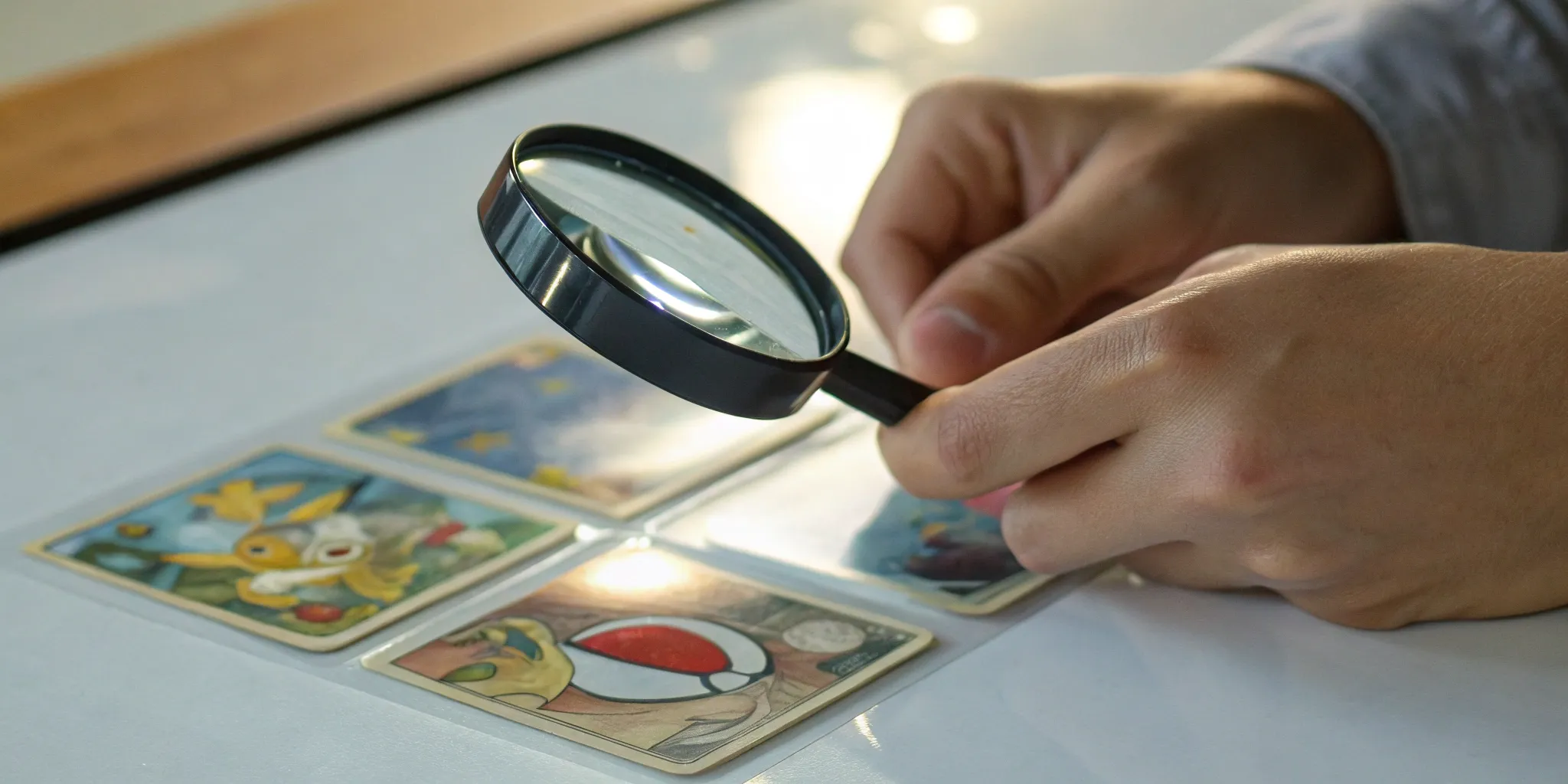
You know the feeling. You pull a beautiful card, inspect it under a light, and see sharp corners and a clean surface. Convinced you have a future Gem Mint 10 on your hands, you send it off for grading, only for it to come back a 9. The culprit is often the one thing that’s hardest to judge with the naked eye: centering. A card can look perfect, but a slight shift in the print can be the difference-maker. This is where a card centering tool becomes essential. It’s a simple, inexpensive gadget that takes the guesswork out of the equation, giving you a precise measurement of your card’s alignment and a realistic preview of its grading potential.
Key Takeaways
- Centering is often the deciding factor for top grades: A card that looks perfect can be held back from a Gem Mint 10 score by poor alignment, which dramatically impacts its value.
- Make smarter financial decisions about grading: A centering tool acts as a filter, helping you invest your grading budget only on cards with the highest potential and avoid wasting money on submissions that are likely to disappoint.
- A tool provides data, not a guaranteed grade: It only measures one of the four grading criteria—centering, corners, edges, and surface—and doesn't account for the different standards between grading companies.
What Is a Card Centering Tool?
If you’ve ever submitted a card for grading hoping for a Gem Mint 10, only to get a lower score back, you know how frustrating it can be. Often, the culprit is something you might have overlooked: the centering. A card centering tool is a simple yet powerful gadget that helps you measure a card's alignment before you even think about sending it off. It takes the guesswork out of evaluating one of the most critical factors in card grading, giving you a clearer picture of your card’s potential. By getting a precise measurement, you can better predict your card’s grade, make smarter decisions about which cards to submit, and avoid spending money on grading cards that won’t score well.
First, what is card centering?
Ever notice how some cards just look more balanced and symmetrical than others? That’s centering in action. Card centering refers to how well the main image or design is positioned within the card's borders. Professional grading companies like PSA and BGS consider it one of the four pillars of a card's condition, right alongside its corners, edges, and surface. Even if a card has sharp corners and a flawless surface, poor centering can significantly lower its grade. A card with nearly perfect 50/50 alignment from top to bottom and left to right is what every collector hopes for, as it’s a key ingredient for achieving a top grading score and maximizing the card's value.
How do these tools work?
A card centering tool is essentially a specialized ruler designed for trading cards. Most are transparent overlays made of durable plastic that you place directly on top of your card. These tools have marked lines, often in percentages or fractions, that allow you to measure the width of the borders on all four sides. You simply align the tool with the card’s edges and read the measurements. This gives you a clear ratio, like 60/40 left-to-right, showing you exactly how off-center a card might be. Using a centering tool helps you make an informed decision on whether a card is a strong candidate for grading, potentially saving you from a disappointing result.
Why Does Card Centering Matter?
When you’re examining a card for its condition, it’s easy to get hyper-focused on sharp corners and a clean surface. But one of the most critical factors for a high grade is also one of the most overlooked: centering. The way a card’s artwork is framed by its borders can dramatically impact its final score and, ultimately, its value.
Understanding centering is a game-changer. It helps you evaluate your cards like a professional, make smarter decisions about which ones to send for grading, and manage your collection with more insight. Think of it as your secret weapon for handling the grading process.
Maximize your grading score
Centering is a huge deal for a card's final grade and how much money it's worth. Even a card with flawless corners, edges, and surface can get a lower grade if its centering is off. Professional grading services have incredibly strict criteria for what qualifies as a perfectly centered card. For example, a Gem Mint 10 typically requires centering that is 55/45 or better.
A card that looks perfect to the naked eye might not meet these precise professional grading standards. A slight shift in the image can be the difference between that coveted 10 and a 9, a distinction that can impact the card’s value by hundreds or even thousands of dollars. Using a tool helps you see what the grader sees, giving you a realistic view of your card’s potential.
Save money on submissions
Let’s be real: grading isn’t cheap. Between the submission fees, shipping, and insurance, the costs add up quickly. The last thing you want to do is spend money grading a card that has no chance of getting the score you’re hoping for. This is where a centering tool becomes an essential part of your toolkit.
Using a tool can save you a lot of money by helping you avoid sending in cards that are clearly off-center. It acts as a pre-screening filter, allowing you to identify which cards are worth the investment and which are better kept raw. By focusing your grading budget only on cards with strong potential, you ensure your money is well-spent and avoid the disappointment of paying for a low grade on a card you had high hopes for.
Submit your cards with confidence
Waiting for your grades to come back can be a nerve-wracking experience. A centering tool helps remove some of that guesswork and anxiety from the equation. It will help you determine the centering of your favorite collectible card, allowing you to make more accurate predictions on the grade it will receive.
Instead of just crossing your fingers, you can submit your cards with a solid, data-backed idea of their potential. This empowers you to set realistic expectations and feel more in control of the process. Knowing your card’s measurements beforehand gives you the confidence to decide which cards to grade, which to sell raw, and which to hold. It’s about making informed decisions for your collection, not just leaving it all up to chance.
How to Choose the Right Centering Tool
With so many centering tools on the market, picking the right one can feel like a mini-quest in itself. But don't worry, it's simpler than it looks. The best tool for you comes down to a few key factors that will make your pre-grading process smooth and effective. Think of it as choosing the right gear before a big game—the right equipment sets you up for success. A great tool doesn't just give you numbers; it gives you the confidence to decide which cards are worth sending off for grading and which ones are better kept as is.
Before you add one to your cart, consider what you really need. Are you grading hundreds of cards a month or just a few special ones? Do you collect standard Pokémon cards, or do you have a mix of vintage sports cards with unique dimensions? Answering these questions will help you zero in on the perfect fit. The goal is to find a reliable partner in your grading journey, one that removes guesswork and adds a layer of certainty. A poorly chosen tool can give you false hope or, worse, cause you to pass on a card that was actually a contender for a high grade. Let's break down the four most important things to look for in a card centering tool so you can make a smart purchase.
Precision and accuracy
This is the big one. The whole point of a centering tool is to get an accurate measurement, so precision is non-negotiable. A reliable tool will help you see if your card’s centering aligns with the strict requirements set by grading companies like PSA. Getting a clear reading on the border ratios (like 60/40 or 55/45) is crucial. This step alone can save you a significant amount of money on grading fees by helping you weed out cards that simply won't score high due to poor centering. It’s your first line of defense against a disappointing grade.
Quality and durability
You'll be using this tool a lot, so you want something that can handle regular use without getting scratched, bent, or smudged. Look for tools made from sturdy, high-quality materials like clear acrylic. Flimsy plastic tools might be cheaper, but they can warp over time, leading to inaccurate readings. A durable, well-made tool is a smart investment that will provide consistent and trustworthy measurements for years. You won't have to second-guess if the tool is the problem or if it's the card, which is a huge relief when you're preparing a submission.
Ease of use
A centering tool should simplify your life, not complicate it. The best ones are intuitive and let you measure your card's borders quickly and without any fuss. Look for a user-friendly design with clear markings and guides for centering percentages. Some tools even have diagrams printed right on them to make the process foolproof. You shouldn't need an engineering degree to figure out if your Charizard is off-center. A tool that’s easy to use means you’ll actually use it, making the pre-grading step a seamless part of your collecting hobby instead of a chore.
Card compatibility
Your collection probably isn't limited to just one type of card, so your centering tool shouldn't be either. Before you buy, double-check that the tool is compatible with the cards you own. Most modern Pokémon and sports cards follow a standard size (2.5 by 3.5 inches), and most tools are designed for this. However, if you collect vintage cards, TCGs with different dimensions, or even postcards, you'll want to find a more versatile tool. A tool that works across your entire collection saves you money and space in your toolkit.
The Best Card Centering Tools for Your Collection
Finding the right centering tool comes down to your personal preference and how you like to work with your collection. Whether you prefer a physical tool you can hold in your hand or a convenient app on your phone, there’s an option out there that will fit your needs perfectly. The goal is to find a reliable method that helps you assess your cards accurately before you send them off for grading. Let's look at some of the best options available, from hands-on tools to digital solutions.
Our top physical tool picks
If you’re a hands-on collector, a physical centering tool is a fantastic addition to your toolkit. These are typically transparent overlays with precise markings that you place directly on your card. They give you an immediate visual measurement of the borders. The Legends Card Grading Centering Tool is a popular choice because it’s designed to help you see if your cards meet the strict centering requirements for major graders like PSA and BGS. Another great option is the Kraftex tool, which is known for being incredibly user-friendly. These tools take the guesswork out of the equation and can save you from submitting a card that’s destined for a lower grade.
The best digital apps
For those who prefer a more modern approach, a digital app can be a game-changer. Instead of a physical overlay, you use your phone’s camera to analyze the card. The Card Centering Calculator is a solid choice that lets you quickly measure your card’s centering ratios. You just snap a picture, and the app does the heavy lifting, giving you the percentages for the top-to-bottom and left-to-right borders. It’s a fast and convenient way to get a solid reading on your card’s centering without needing any extra equipment. This is perfect for when you’re evaluating cards on the go or want a quick second opinion.
Pro-level options
For collectors aiming for the highest grades, the best tool is knowledge of professional standards. Understanding what graders are looking for is key. For example, knowing the specific centering standards for a Gem Mint 10 from different companies like SGC and PSA can make all the difference. SGC requires 55/45 or better centering for a Gem Mint 10, which is a bit tighter than PSA’s 60/40 allowance. Internalizing these details helps you evaluate your cards with a professional eye. This approach, combined with a physical or digital tool, gives you the most comprehensive assessment of your card’s potential.
Great budget-friendly tools
You don’t have to spend a lot of money to get an accurate centering tool. There are plenty of affordable options that work just as well as their more expensive counterparts. You can find a complete Sports Card Centering Tool Kit on sites like eBay that provides everything you need for precision grading without breaking the bank. Many collectors in online communities have shared their success with these budget-friendly tools, confirming that you can find options with perfect accuracy. The most important thing is that the tool is clear, precise, and easy for you to read.
How to Use a Card Centering Tool
Getting the hang of a card centering tool is easier than you might think, and it’s a game-changer for prepping your cards for grading. Think of it as your secret weapon for spotting potentially high-grade cards and saving money on submitting ones that just won’t make the cut. Let’s walk through how to use it, what the results mean, and a few common slip-ups to watch out for.
A step-by-step guide to measuring
First, find a clean, flat, and well-lit surface to work on. Gently place your card down, preferably inside a soft penny sleeve to protect its surface. Next, lay your transparent centering tool directly on top of the card, aligning the tool's edges with the card's edges. Most tools have lines or boxes that help you measure the borders effectively. Your goal is to see how much space is on the left versus the right, and the top versus the bottom. Take your time to ensure the tool is perfectly square with the card for an accurate reading. This simple process gives you a clear, data-driven look at your card's symmetry.
How to read the results
Once the tool is aligned, you’ll see lines or percentages that show the border ratios. For example, you might see that the top-to-bottom centering is 55/45, meaning one border is slightly thicker than the other. The key is to compare these numbers to the standards of grading companies. For a Gem Mint 10 from PSA, a card’s front centering must be 60/40 or better. Understanding these grading standards is crucial, as it helps you translate the measurements from your tool into a realistic grade prediction. A card that measures 70/30, for instance, is unlikely to receive a top grade for centering.
Common mistakes to avoid
A few simple mistakes can throw off your measurements, so keep an eye out for them. The most common one is forgetting to remove the thin protective film that many new centering tools ship with—it can make the lines blurry and hard to read. Another pitfall is not having the tool perfectly aligned with the card's edges, which will skew your results. Finally, remember that a centering tool is just one piece of the puzzle. Don't get so focused on perfect centering that you overlook other critical factors like surface scratches, corner wear, or edge chipping. A holistic card evaluation is always the best approach before submitting.
What a Centering Tool Can't Do
A card centering tool is an incredible asset for any collector, but it’s important to have realistic expectations. Think of it as a high-quality guide, not a crystal ball that can predict a card’s final grade with 100% certainty. Measuring your card’s centering is a huge step toward understanding its potential, but it’s just one piece of the grading puzzle. Professional graders look at the entire card, and so should you. Let’s break down what a centering tool can’t do, so you can use it effectively and make the smartest submission decisions.
Why a tool won't guarantee a Gem Mint 10
Centering is a massive factor in a card's final grade and value. As one collector put it, "Even a perfect card can get a lower grade if its centering is bad." However, the reverse is also true: a card with perfect 50/50 centering won't get a Gem Mint 10 if it has other flaws. A centering tool is only designed to measure one of the four key criteria of card grading: centering, corners, edges, and surface.
A tool can’t spot a microscopic print line, a slightly soft corner, or a tiny bit of silvering on an edge that a professional grader will catch under magnification and specialized lighting. So while your tool might show that your card’s centering is within the Gem Mint range, it’s still on you to meticulously inspect the rest of the card for any imperfections that could lower the grade.
Handling borderless and unique cards
Most physical centering tools are designed with one type of card in mind: one with clear, defined borders. This works great for the vast majority of Pokémon and sports cards. But what about full-art cards, or special inserts with designs that bleed all the way to the edge? For these, a standard tool is often useless. As one product description bluntly states, "This tool does not work with cards that don't have borders."
For borderless cards, you’ll have to rely on your own eye and your knowledge of the card’s design. You can look for reference points within the artwork to gauge symmetry, but it’s much more subjective. Some digital apps offer features that can help, but even they can struggle without clear borders to measure.
How grading standards differ
Perhaps the most important thing to remember is that not all grading companies are the same. A card that meets the centering requirements for a Gem Mint 10 at one company might not at another. Each grader has its own set of grading standards and tolerances. For example, SGC’s standard for a Gem Mint 10 is 55/45 or better, which is a bit tighter than PSA’s typical 60/40 allowance.
These nuances can make a huge difference. A card with 65/35 centering on the front might still pull a PSA 9, but it won’t hit the Gem Mint mark. The back of the card matters, too, though it’s usually given more leeway. The bottom line is that a centering tool gives you the raw data—the measurements. It’s your job to take that data and compare it to the specific standards of the company you plan to submit your card to.
Are There Any DIY Alternatives?
If you don’t have a specialized tool handy, don’t worry. You can still get a solid idea of your card’s centering with a couple of simple methods. These alternatives are perfect for a quick check before you decide which cards are worth a closer look or a professional grading submission. They’re great for when you’re just starting out, sorting through a big collection, or simply want to save a few bucks. Whether you prefer a more hands-on approach or a quick digital scan, here are a couple of great DIY options to get you started.
The ruler method
For those who like to get hands-on, the ruler method is a simple and effective way to check your card’s centering. All you need is a ruler with clear markings. The process involves measuring the borders and figuring out the ratio. As one helpful guide on centering explains, you can do this by "taking the larger number and dividing it by the smaller." This gives you a centering ratio, like 60/40 or 55/45. While it might not be as precise as a dedicated tool, it’s a fantastic way to quickly assess your cards and weed out any that are obviously off-center without spending a dime.
Free apps for a quick check
If you’d rather use your phone, several apps can give you a fast centering analysis. A popular option is the Card Centering Calculator app, which uses AI to do the work for you. You can either scan your card directly or upload a photo, and the app automatically measures the borders and gives you the centering percentages. This is incredibly useful for getting a consistent reading, which is a huge factor in professional grading. Users seem to love it, with one review calling it "the best app in the market for centering." It’s a great way to leverage technology for a quick and accurate check.
Where to Buy a Card Centering Tool
Once you’ve decided which type of centering tool is right for you, the next step is finding where to buy it. Luckily, these handy gadgets are pretty easy to find. Whether you prefer the convenience of online shopping or want to support a local business, you’ve got options.
Our favorite online stores
If you want the widest selection, online marketplaces are your best bet. Amazon is a great starting point, offering a variety of card centering tools for every budget. You can find popular options like the Legends Card Grading Centering Tool, which often comes with a cleaning cloth, or even sets designed for specific card types like anime and sports cards. Reading through customer reviews can also give you a good sense of a tool’s accuracy and ease of use before you buy.
Another fantastic online resource is eBay. It’s a great platform to explore for both new and used tools, and you might even find exclusive offers or bundles from other collectors. Because sellers are often collectors themselves, you can sometimes find specialized tools that aren't available on larger retail sites.
Checking your local card shop
Don’t forget about your local card shop! Popping into a nearby store is a great way to see a tool in person before you commit. You can hold it, check the quality, and ask the staff for their recommendations. Plus, you get to support a small business in your community, which is always a win.
Keep in mind that some collectors have shared their experiences online, noting that some physical tools might not be as precise as they’d like. Seeing one in person can help you judge its quality for yourself. Having a reliable tool is key, especially since ordering single cards online can be a gamble—it’s always a risk you take that the centering might be off when it arrives.
Related Articles
- 7 Best Card Display Frames to Protect Your Cards | Packz Blog
- Card Sorting Tray: A Collector's Essential Guide | Packz Blog
Frequently Asked Questions
Is a centering tool really worth it, or can I just eyeball it? While your eye can spot a card that's obviously off-center, it's nearly impossible to judge the precise ratios that professional graders look for. A card that looks great to you might fall just outside the strict 60/40 or 55/45 standards required for a Gem Mint 10. A centering tool removes the guesswork and gives you hard data, which helps you make smarter, more cost-effective decisions about which cards are truly worth the grading fees.
What centering percentage should I be looking for to get a Gem Mint 10? This depends on the grading company, but a good rule of thumb is to aim for 55/45 or better. PSA, for example, generally allows up to 60/40 centering on the front of the card for a Gem Mint 10. SGC is a bit stricter, requiring 55/45 or better. Knowing these benchmarks helps you use your tool to see if your card is even in the running for a top score before you send it in.
Does the centering on the back of the card matter as much as the front? The front of the card is definitely the main event and is judged more strictly. However, the back still matters. Grading companies are usually more lenient with the back's centering, often allowing a ratio of up to 75/25 or even 90/10 and still considering the card for a high grade. So, while you should check both sides, put most of your focus on how the front measures up.
My card has perfect centering. Does that mean it's guaranteed a high grade? Unfortunately, no. Perfect centering is a huge plus, but it's only one of the four pillars of grading. A professional grader will also meticulously inspect the card's corners, edges, and surface for any flaws like soft corners, edge wear, or print lines. A card needs to excel in all four areas to get a Gem Mint 10, so think of perfect centering as clearing the first major hurdle.
What do I do if I have a borderless card? Can I still check its centering? Most physical centering tools won't work on borderless or full-art cards since there are no clear borders to measure. For these cards, you have to rely more on your eye. Look for key elements in the artwork and see how they align with the card's edges to gauge the overall balance and symmetry. Some digital apps may offer features to help, but it's a much more subjective process than with a standard card.
Recommended Reading
Cash for Graded Sports Cards: The Fastest Ways to Sell
Get cash for graded sports cards faster. Compare auction houses, marketplaces, and instant buyback options to pick the route that fits your timeline.
How to Compare Value in Sports Card Packs
Learn how to compare sports card packs using card quality, available pulls, pricing clarity, and Packz’s 100% buyback option.
How to Buy Pokemon Packs Online for Ripping
Ready to buy pokemon packs online for ripping? Get transparent pack value and clear pull odds so you never overpay for the thrill of the hunt. Start collecting safely.