
January 23, 2026
The 5 Best Michael Jordan Graded Cards for Sale
Find the top Michael Jordan graded cards for sale, with tips on choosing authentic, high-value options to start or grow your basketball card collection.
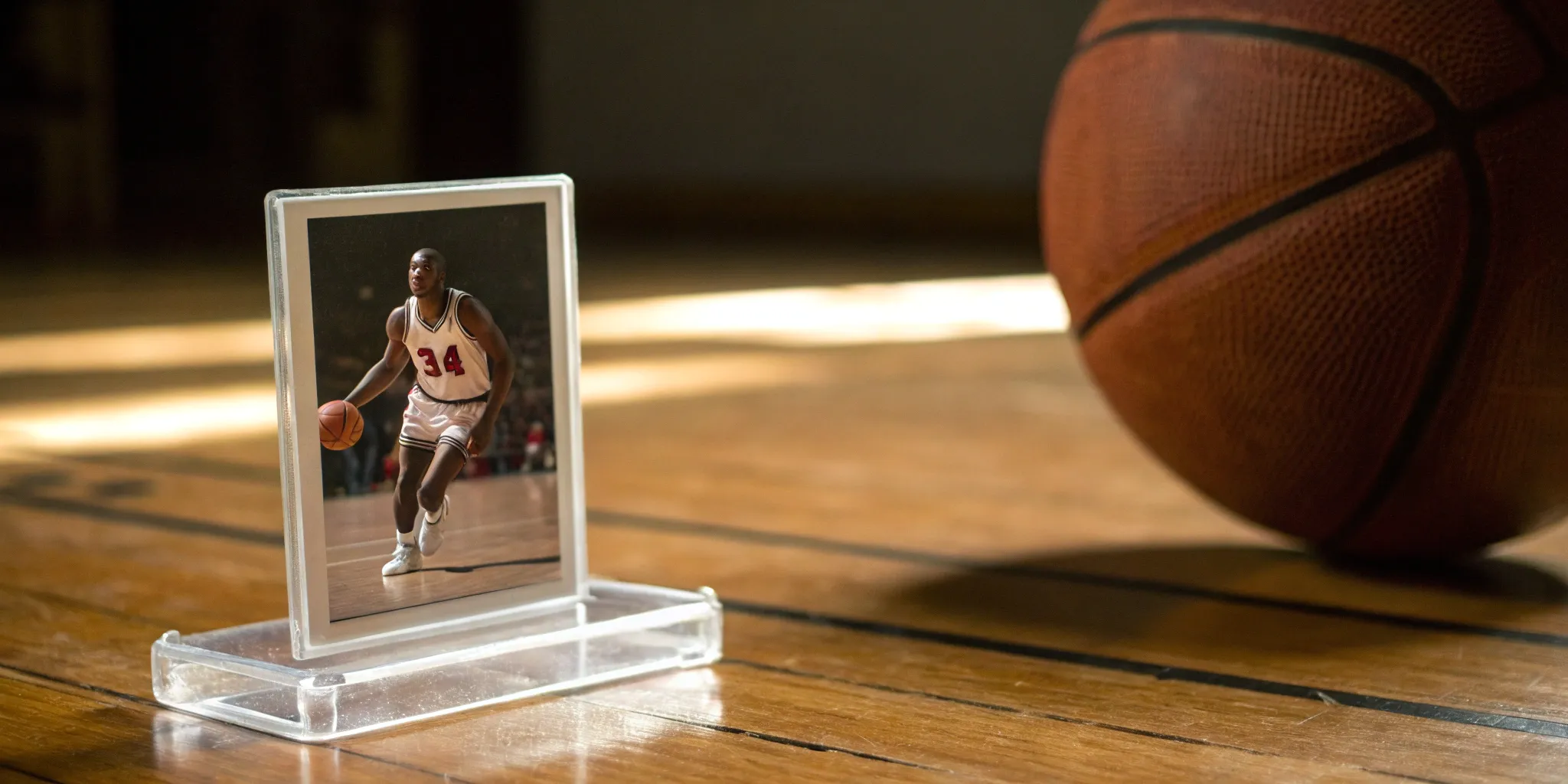
You see the headlines: a Michael Jordan card sells for a jaw-dropping seven-figure sum. It’s easy to wonder what makes a small piece of cardboard so incredibly valuable. The answer is a perfect storm of factors: his unmatched legacy, the card's historical significance, its rarity, and—most importantly—its professionally graded condition. A high grade can multiply a card's value exponentially, turning a common card into a grail. Before you start your search for michael jordan graded cards for sale, it’s crucial to understand these market dynamics. This article will explain everything, giving you the confidence to identify true value and make smart collecting decisions.
Key Takeaways
- Prioritize Professionally Graded Cards: A card's grade is the biggest driver of its value. Sticking to cards authenticated by top-tier companies like PSA, BGS, or SGC is the best way to ensure you're getting an authentic card with a verified condition.
- Define Your Collecting Goals: Decide if you're building a collection for fun, for investment, or a bit of both. Setting a clear goal and a realistic budget helps you focus your search on the right cards and make smarter purchasing decisions.
- Focus on "Blue-Chip" Cards for Long-Term Value: For the most secure investments, target cards with historical significance and proven rarity. This includes iconic rookie cards, sought-after 90s inserts, and cards with verified autographs, as these consistently hold their value.
What Makes a Graded Michael Jordan Card So Valuable?
It’s no secret that Michael Jordan is a global icon. His on-court dominance and cultural impact created a legacy that keeps fans and collectors coming back decades later. This enduring popularity is the foundation of his card market, but it’s not the only thing that makes a specific card valuable. The price of a graded MJ card comes down to a perfect storm of factors: his lasting legacy, the card's historical importance, its rarity, and—most importantly—its condition.
While rarity and significance are baked into the card itself, condition is the variable that can turn a cool collectible into a life-changing asset. This is where professional grading comes in. A graded card has been officially authenticated and evaluated by a third-party company, which assigns it a score based on its physical state. For Jordan cards, especially those from the 80s and 90s, finding one in pristine condition is incredibly difficult. This combination of high demand, low supply of mint-condition cards, and a certified grade creates the high valuations you see today.
How Does Card Grading Work?
Card grading is the process of having a card’s condition and authenticity verified by an expert. Companies like PSA, Beckett (BGS), and SGC are the gold standard in the industry. When you submit a card, an expert grader meticulously inspects it, looking at four key areas: the centering of the image, the sharpness of the corners, the smoothness of the edges, and the quality of the surface.
Based on this assessment, the card receives a score on a 1-to-10 scale. A 10, or "Gem Mint," is a virtually perfect card. This third-party verification is crucial because many vintage cards, like Jordan’s iconic rookie card, were printed on cardstock prone to chipping and printing defects, making high grades exceptionally rare.
How Grading Impacts a Card's Price
The grade a card receives has a massive impact on its price. A higher grade doesn't just increase a card's value by a little—it can multiply it exponentially. Think of it this way: thousands of a particular card might exist, but only a tiny fraction will earn a top grade. This scarcity is what drives the market. For example, only about 2% of all 1986 Fleer Michael Jordan rookie cards submitted to PSA have ever received a PSA 10.
This is why a PSA 8 version of a card might sell for a few thousand dollars, while a PSA 9 could fetch tens of thousands, and a PSA 10 could command hundreds of thousands or even millions. A higher grade significantly enhances a card's marketability, giving buyers confidence in its quality and authenticity.
Where to Find Graded Michael Jordan Cards
Once you know what you're looking for, the next step is finding it. Graded Michael Jordan cards are available through various channels, each with its own perks. Whether you prefer the vast selection of the internet or the hands-on experience of a local shop, there are plenty of places to hunt for your next grail card. The key is knowing where to look and how to verify you’re getting exactly what you pay for.
Online Marketplaces
The internet has made it easier than ever to find specific cards from the comfort of your home. Platforms like eBay are a treasure trove for collectors, with specialized stores like 'Graded Sports Cards' offering a huge selection of high-quality options. For guaranteed authentic memorabilia, retailers like Steiner Sports are another great place to look for both signed and unsigned MJ cards. The main advantage of online marketplaces is the sheer volume and variety, but always be sure to check a seller’s reputation and return policy before you commit.
Local Card Shops
Don't underestimate the value of your local card shop. There's nothing quite like examining a card in person before you buy, and building a relationship with a knowledgeable dealer can pay off in the long run. Since professional grading is now standard practice in the hobby, you can trust that local shops will have a solid inventory of authenticated cards. Visiting a shop allows you to inspect the slab for any imperfections and get expert advice on the spot. It's a great way to learn more about the market and connect with other collectors in your community.
How to Spot a Trusted Seller
Whether you’re buying online or in person, the seller is just as important as the card itself. A reputable seller will provide clear, high-resolution images of the card and be transparent about its history and condition. When you're ready to buy, it's crucial to focus on factors like the card's condition, rarity, and authentication. Always check a seller’s reviews and transaction history. Prioritizing sellers who offer certified cards from top grading companies is a smart move, as these cards are verified for authenticity and often have a higher grade, which significantly impacts their market value.
What to Expect to Pay for Graded MJ Cards
Figuring out what to budget for a Michael Jordan card can feel like a big question, but the market has a spot for everyone. Whether you’re just starting out or you’re a seasoned collector hunting for a centerpiece, there’s a graded MJ card that fits your goals. The price of a card depends on its rarity, condition (the grade), and overall demand in the market. Understanding these tiers is the first step to building a collection you’re proud of.
From affordable options that let you own a piece of basketball history to iconic cards that command millions, the price range is wide. Let’s break down what you can expect to pay as you find the perfect cards for your collection.
Entry-Level Cards for New Collectors
If you’re just getting into the hobby, you don’t need a massive budget to get started. You can find fantastic entry-level Michael Jordan cards for as little as $20, with many great options falling under $200. These cards are perfect for new collectors because they offer an accessible way to own an authentic, graded piece of memorabilia from a basketball legend. They allow you to learn the ropes of collecting, understand grading, and experience the thrill of owning a Jordan card without a huge financial commitment. It’s the best way to dip your toes in the water and begin your collecting journey.
Mid-Range Cards for Serious Collectors
Once you’ve got a few cards under your belt, you might be ready to invest in some mid-range options. This is where the card’s grade becomes incredibly important. For serious collectors, securing a card in excellent condition is key, as a higher grade directly increases its value and marketability. A card graded as a 9 or 10 will always sell for significantly more than the same card with a lower grade. Focusing on high-grade cards is a smart strategy for anyone looking to build a collection that not only looks impressive but also holds strong long-term value.
Grail Cards and Record-Breaking Sales
At the very top of the market are the "grail" cards—the legendary, ultra-rare pieces that collectors dream of owning. These are some of the most expensive Michael Jordan basketball cards in existence and are seen as serious investment assets. For example, a PSA 7 version of his iconic 1986-87 Fleer rookie card sold for an incredible $1.44 million. Even more staggering, the 1997-98 Upper Deck Game Jerseys Autograph card, featuring a piece of his game-worn jersey and his signature, reached $2.7 million at auction. These record-breaking sales show just how valuable and sought-after the rarest MJ cards are.
The Best Michael Jordan Cards to Invest In
When you're talking about sports card investing, Michael Jordan is in a league of his own. His on-court legacy translates directly into a blue-chip market for his cards, where certain pieces are seen as legitimate alternative assets. But what separates a binder-filler from a centerpiece investment? It comes down to a few key traits: historical significance, rarity, eye-catching design, and, of course, a high grade from a reputable company. The most valuable cards tell a story, capturing a pivotal moment in MJ's career or representing a landmark in card design.
Think of it like scouting a player—you're looking for that perfect combination of factors that signals greatness. A card's population report, which tells you how many copies exist at each grade, is your stat sheet. A low population of high-grade examples means you've found something truly special. This is why understanding the market for sports cards as assets is so important. From his iconic rookie card that started it all to incredibly rare 90s inserts and cards featuring his actual signature or a piece of his jersey, the world of MJ investing is deep and exciting. Let's look at some of the most sought-after cards that every serious collector should have on their radar.
The 1986 Fleer #57 Rookie Card
This is it—the card that started it all. The 1986 Fleer #57 is arguably the most iconic basketball card in existence. Its classic red, white, and blue border framing a soaring Michael Jordan is instantly recognizable to any fan or collector. Because this set was prone to printing defects and centering issues, finding a high-grade copy is incredibly difficult. Of the more than 23,000 examples submitted to PSA for grading, only a few hundred have earned a perfect Gem Mint 10. A higher grade significantly enhances the card's value, so focusing on certified cards is the only way to go. For many, owning an MJ rookie isn't just an investment; it's owning a piece of sports history.
1997-98 Metal Universe Precious Metal Gems
If the '86 Fleer is the classic rookie, the Precious Metal Gems (PMGs) are the flashy, ultra-rare grails of the 90s. These cards feature a stunning etched foil design that makes them stand out in any collection. The set's rarity is legendary; the Green PMGs are limited to just 10 copies, while the Red versions have a print run of 90. The '97 Metal Universe Michael Jordan PMG Green is one of the most coveted basketball cards ever made, a true "holy grail" for advanced collectors. Its unique look and scarcity make it a top-tier investment piece that captures the bold energy of 90s basketball.
Championship Era and "Last Dance" Cards
Michael Jordan’s dominance during the Chicago Bulls' six championship runs created a legendary status that fuels the market for cards from this era. The release of "The Last Dance" documentary introduced his story to a new generation and sent prices for his 90s cards soaring. Cards from iconic sets like Upper Deck, Skybox, and Topps Finest that feature MJ during his peak are always in high demand. While not as rare as a PMG, high-grade inserts and key cards from this period are fantastic additions to any collection. They represent the pinnacle of MJ's career and are a tangible connection to one of the greatest dynasties in sports history.
Autographed and Game-Worn Cards
What’s better than a Michael Jordan card? A Michael Jordan card he actually touched. Cards featuring a piece of a game-worn jersey or an on-card autograph create a direct link to the legend himself. One of the most famous examples is the 1997 Upper Deck Game Jersey card, which includes an autograph and a swatch of his 1992 All-Star Game jersey. A graded copy of this card sold for $1.44 million, showing the massive premium these cards command. When buying these types of cards, authentication is everything. A card graded and authenticated by a top company ensures you’re getting the real deal, making it a secure and highly valuable investment.
How to Buy Graded Cards with Confidence
Jumping into the world of high-value graded cards is exciting, but it can also feel a little intimidating. When you’re investing your hard-earned money, you want to be absolutely sure you’re getting an authentic, high-quality card. The good news is that with a little knowledge, you can learn to buy with total confidence. It all comes down to trusting the grade, understanding what it means, and knowing how to spot red flags. Let’s walk through the key steps to protect your investment and ensure you’re adding a genuine piece of history to your collection.
Identify Reputable Grading Companies
The first step in buying a graded card is to trust the grader. Professional grading provides a crucial third-party verification of a card's authenticity and condition. While many companies offer this service, a few have established themselves as the gold standard. The most reputable names in the industry are PSA (Professional Sports Authenticator), Beckett Grading Services (BGS), and SGC (Sportscard Guaranty). These companies are trusted by collectors and investors because of their long history, consistent standards, and detailed evaluation processes. When you buy a card graded by one of these top-tier companies, you’re not just buying the card; you’re buying the assurance that comes with their expert opinion.
Learn to Read a Grading Report
Once you’ve confirmed a card was graded by a reputable company, you need to understand what the grade actually means. Graders assess cards on a scale of 1 to 10, with 10 being a flawless "Gem Mint" card. This number is determined by evaluating four key criteria: the sharpness of the corners, the condition of the edges, the quality of the surface, and how well the image is centered. The plastic case, or "slab," will display the final grade, the card’s details, and a unique certification number. You can almost always use this number to verify the card’s authenticity on the grading company’s website, which adds another layer of security to your purchase.
Spot Fakes and Avoid Common Scams
While buying a slabbed card from a top grader is your safest bet, it’s still smart to know what to look for. Start with the card itself. For example, the 1986 Fleer Michael Jordan rookie card is known for its chip-prone red borders and lower-quality cardstock. Pay close attention to the card’s edges, corners, and surface for any signs of wear or alteration that don’t match the grade. It’s also wise to inspect the slab for any signs of tampering, like cracks or frosting around the edges. Learning to spot the tell-tale signs of a fake or a compromised case will help you avoid common scams and ensure your collection is filled with genuine treasures.
What Trends Are Driving the Michael Jordan Card Market?
The market for Michael Jordan cards is more active than ever, and it’s not just about nostalgia. Several key trends are shaping how collectors and investors approach MJ’s cards, influencing their value and driving demand. Understanding these forces can help you make smarter decisions as you build your own collection. From the intense focus on card condition to the impact of headline-grabbing auction results, here’s what’s currently moving the market.
The Hunt for High-Grade Cards
In the world of card collecting, condition is everything—especially for vintage cards. The 1986 Fleer Michael Jordan rookie card, for example, is notorious for its red borders that are prone to chipping and its lower-quality cardstock. This makes finding a copy in pristine condition incredibly difficult. As a result, collectors are laser-focused on acquiring high-grade cards. A card’s grade, assigned by a professional service like PSA or BGS, directly impacts its value. A higher grade doesn't just add a small premium; it can mean the difference between a card worth a few thousand dollars and one worth hundreds of thousands. This is why the collector's guide to a card's value always emphasizes its condition.
Why Collectors Are Treating Cards Like Stocks
The hobby has seen a significant shift in mindset. Many people are now treating sports cards as tangible assets, much like fine art or stocks. Instead of simply collecting for fun, they’re building portfolios with an eye on long-term growth. This investor mentality means focusing on cards with historical importance, rarity, and a player with an undeniable legacy—all boxes that Michael Jordan checks. The strategy has also changed. Many investors believe that acquiring a single, high-grade iconic card offers a better return than buying multiple cheaper cards. This quality-over-quantity approach concentrates value and has pushed prices for top-tier Jordan cards to new heights.
How Record Sales Affect the Entire Market
Every time a Michael Jordan card sells for a record-breaking price, it sends ripples throughout the entire market. For instance, when a PSA 7 version of his rookie card sold for over $1.4 million, it made headlines everywhere. These massive sales do more than just set a new ceiling for a specific card; they validate the market as a whole and attract a new wave of interest from serious investors and collectors. This "rising tide lifts all boats" effect increases demand and perceived value across the board. The excitement generated by the most expensive Michael Jordan cards can drive up the prices of even more accessible MJ cards, making the entire category more valuable.
How to Build Your Michael Jordan Collection
Starting a Michael Jordan collection can feel like a huge undertaking, but it doesn’t have to be. With a clear plan, you can build a collection that you’re proud of, whether you’re just starting out or looking to add a centerpiece to your display. The key is to be intentional with your approach. Let’s walk through how to create a game plan that fits your personal style and budget.
Set Your Goals and Budget
First, decide what kind of collector you want to be. Are you chasing the iconic rookie cards, or are you more interested in the flashy inserts from the 90s? Maybe you want to focus on cards from his championship seasons with the Bulls. Setting a specific goal helps you filter out the noise and focus your search. Once you have a goal, establish a firm budget. Knowing what you’re willing to spend will guide your decisions and prevent you from overextending. When you choose your cards, always consider the four pillars of value: condition, rarity, authentication, and market demand. A clear goal and budget are your best tools for building a meaningful collection.
Develop Your Buying Strategy
With your goals in mind, it’s time to think about how you’ll buy. The smartest move is to focus on professionally graded cards. Buying cards certified by reputable companies like PSA or BGS removes any doubt about authenticity and condition. A higher grade almost always translates to a higher value, so you know exactly what you’re getting. If a PSA 10 is out of your budget, don’t worry. You can often get the same iconic card in a lower grade for a fraction of the price. A collector's guide can be a great resource for understanding how different grades affect a card's price. Be patient, watch the market, and wait for the right card at the right price.
Build a Diversified MJ Portfolio
Think of your collection as an investment portfolio. You wouldn’t put all your money into one stock, and the same logic applies here. A diversified collection is often more stable and interesting. Consider building a portfolio that includes a mix of cards. You could aim for one cornerstone piece, like his 1986 Fleer rookie card, which is famous for its condition-sensitive red borders. Then, add some mid-range cards from his peak playing years and a few unique inserts or autographed cards that you personally love. This approach not only spreads your investment but also tells a more complete story of MJ’s legendary career.
Related Articles
Frequently Asked Questions
Why is getting a card graded such a big deal? Think of professional grading as the ultimate seal of approval. It confirms that a card is authentic and provides an objective, expert opinion on its physical condition. This is crucial because a card's value is tied directly to its condition, and a tiny difference in quality can mean a huge difference in price. A graded card in its protective case, or "slab," removes all the guesswork for both buyers and sellers, creating a trusted standard for the entire hobby.
I'm just starting out. Do I need to spend thousands on a rookie card? Absolutely not. While the iconic rookie card gets all the headlines, you can start a fantastic Michael Jordan collection on a much smaller budget. There are countless graded cards from his championship years with the Bulls that are both historically significant and affordable. Starting with these allows you to learn the market and find what you truly love without a massive financial commitment. The goal is to own a piece of history, and you can always work your way up to a grail card later.
Besides the famous rookie card, what other types of MJ cards hold their value? The 1986 Fleer rookie is legendary, but the world of MJ collecting is incredibly deep. Cards from the 1990s, especially the rare and flashy "inserts," are highly sought after for their unique designs. Cards that feature a certified autograph or a piece of a game-worn jersey are also top-tier collectibles because they create a direct connection to the man himself. Focusing on cards from his championship seasons is another great strategy, as they capture him at the peak of his powers.
Does it matter if a card is graded by PSA, BGS, or SGC? While there are many grading companies, PSA, BGS, and SGC are considered the "big three" in the industry. You can't go wrong with a card graded by any of them. PSA is the largest and most popular, BGS is often preferred for modern cards due to its detailed sub-grades, and SGC is respected for its classic black slabs and quick service. Each has a slightly different reputation, but all are trusted to provide accurate and consistent grades.
How can I track a card's value to know if I'm making a good purchase? The best way to get a feel for a card's current market value is to look at recent sales data. Online marketplaces like eBay have a filter that allows you to see what a specific card has actually sold for in recent weeks, not just what sellers are asking for. There are also several sports card pricing websites that track this data for you. Watching these trends over time will give you the confidence to know when you're getting a fair price.
Recommended Reading
Cash for Graded Sports Cards: The Fastest Ways to Sell
Get cash for graded sports cards faster. Compare auction houses, marketplaces, and instant buyback options to pick the route that fits your timeline.
How to Compare Value in Sports Card Packs
Learn how to compare sports card packs using card quality, available pulls, pricing clarity, and Packz’s 100% buyback option.
How to Buy Pokemon Packs Online for Ripping
Ready to buy pokemon packs online for ripping? Get transparent pack value and clear pull odds so you never overpay for the thrill of the hunt. Start collecting safely.