
May 26, 2026
The Ultimate Graded Football Card Price Guide
Find accurate values with this graded football card price guide. Learn how grading, rarity, and market trends affect what your football cards are worth.
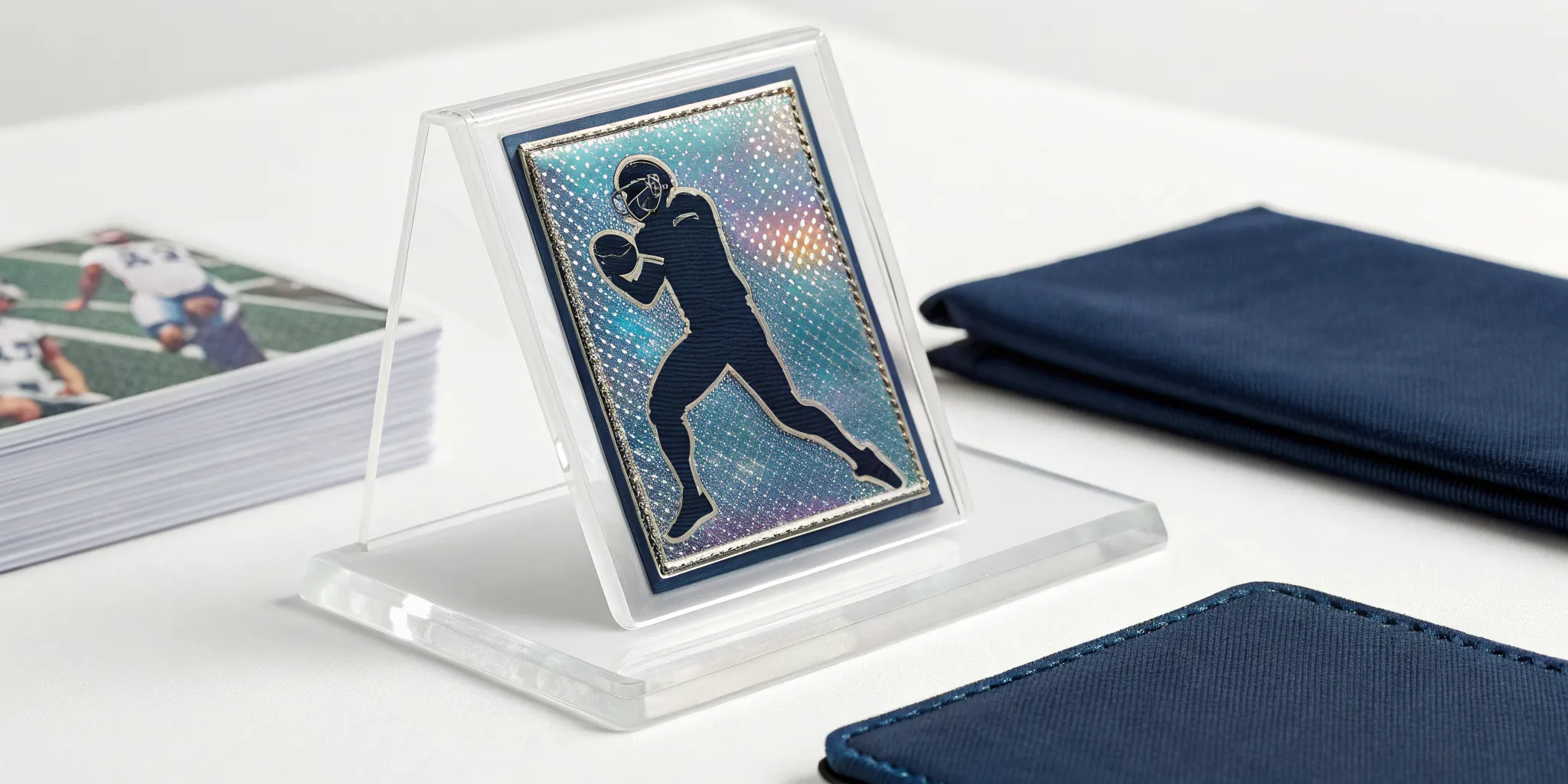
There’s no feeling quite like pulling a monster card from a pack. Whether you land a top quarterback’s rookie card or a rare insert of a Hall of Famer, the excitement is immediate. But after that initial rush, the next question is always the same: "What is this thing actually worth?" That’s where the real fun begins. Understanding a card's market value is a skill, and this guide is here to teach you. We'll break down all the factors that determine a card's price, from on-field performance to the card's certified rarity. You'll learn how to use a graded football card price guide like an expert, turning that thrilling pull into a smart investment.
Key Takeaways
- Trust the grade, not just the card: A professional grade from a company like PSA or BGS provides a certified guarantee of a card's authenticity and condition. This removes subjective opinions and creates a stable, trusted value for your collection.
- Look beyond the grade to see the full picture: A card's value isn't just its condition score; consider the player's popularity, the card's rarity (check population reports), and its historical importance to understand its true market potential.
- Do your homework to buy and sell smart: Before making a move, check a card's recent sales history on eBay's sold listings or use a price guide to find its current market value. Always verify a slab's certification number on the grader's website to confirm it's the real deal.
What Is a Graded Football Card?
A graded football card is a card that has been professionally evaluated for its condition and authenticity. Think of it as getting an official inspection for your most prized collectibles. Companies like PSA (Professional Sports Authenticator) and BGS (Beckett Grading Services) are the industry leaders in this space. Their experts meticulously examine each card, assigning it a numerical grade based on a strict set of criteria.
This evaluation isn't just a quick glance. Graders assess four key attributes: the centering of the image on the card, the sharpness of the corners, the smoothness of the edges, and the quality of the surface. Any imperfections, like print defects, scuffs, or soft corners, will affect the final grade. Once graded, the card is encapsulated in a tamper-proof plastic slab, often called a "slab," which displays the card's details and its official grade. This protective case not only preserves the card's condition but also clearly labels it with its unique certification number and grade, making it easy to verify. This process removes the subjectivity from assessing a card's condition, creating a universal standard that collectors and investors can trust. You can see how these grades impact prices by looking at a football card price guide, which often lists values for different grades of the same card.
How the grading process works
Getting a card graded involves sending it to a professional service for a detailed inspection. Once your card arrives, trained experts examine it for quality and condition. They look for any flaws, no matter how small, that could impact its value. After the assessment, the card receives a grade on a scale, usually from 1 to 10. A grade of 10, known as "Gem Mint," is the highest possible score, reserved for cards in virtually perfect condition.
This entire process is built on strict standards that ensure consistency and fairness. Each grading company has its own detailed rubric, but the core principles of evaluating a card's physical attributes remain the same. You can learn more about the specifics by checking out a football card price guide from one of the major grading services.
Why graded cards are more valuable
Graded cards almost always command higher prices than their ungraded, or "raw," counterparts. The primary reason is trust. The grade provides a third-party guarantee of the card's authenticity and condition, removing doubt for the buyer. Collectors are willing to pay a premium for this peace of mind, especially when purchasing high-value cards online. A graded card is seen as a safer and more stable asset.
This grading system also helps standardize the market. Instead of buyers and sellers haggling over subjective opinions of a card's condition, the grade provides a clear benchmark. This makes it much easier to determine a card's fair market value. By creating a common language for condition, grading helps the entire hobby function more smoothly, allowing you to confidently check football card prices and know you're comparing apples to apples.
Who Are the Top Grading Companies?
When you get a card graded, you’re not just paying for an opinion on its condition. You’re paying for a trusted company to authenticate your card, assign it a grade that collectors will recognize, and encase it in a protective slab. This process adds a layer of security and legitimacy that directly translates to higher and more stable values. While dozens of companies offer grading services, only a handful have earned the market’s trust. Think of these top-tier graders as the gold standard in the collecting world.
The three biggest names in the game are PSA, BGS, and SGC. Each one has a distinct reputation, a unique slab design, and specific strengths that appeal to different types of collectors. Understanding the differences between them is crucial because the company that grades a card can have a massive impact on its final sale price. Choosing a grader isn't just a matter of preference; it's a strategic decision that affects your investment. Knowing who these companies are and what the market thinks of them will help you make smarter choices, whether you’re submitting your own cards or buying cards that are already graded.
PSA (Professional Sports Authenticator)
If there’s a king of the card grading world, it’s PSA. Founded in 1991, Professional Sports Authenticator is the most established and widely recognized service in the industry. Collectors often see the simple red-and-white PSA label as the benchmark for grading. Because of its long-standing reputation for consistency, PSA graded cards frequently command the highest prices on the open market. Their extensive database, known as the Population Report, allows you to see exactly how many cards have received a specific grade, which helps determine rarity. For many collectors, PSA is the default choice for maximizing a card’s value.
BGS (Beckett Grading Services)
Beckett Grading Services, or BGS, is another giant in the hobby and a favorite among collectors who love details. What sets BGS apart is its use of sub-grades. In addition to the overall grade, BGS scores the card on four key attributes: centering, corners, edges, and surface. This detailed report gives you a clear picture of the card’s strengths and weaknesses. Founded in 1999, BGS is particularly popular for modern cards. Achieving a BGS 10 "Pristine" grade is a huge accomplishment, but the ultimate prize is the elusive BGS 10 "Black Label," reserved for cards that are perfect across all four sub-grades. You can learn more directly from Beckett’s grading services overview.
SGC (Sportscard Guaranty)
Sportscard Guaranty, or SGC, has been a trusted name since 1998 and has seen a major surge in popularity. Known for its sleek black encapsulation, often called the "tuxedo," SGC has built a strong following for its consistent grading and quick turnaround times. While it’s highly respected for vintage cards, SGC is now a go-to for modern cards as well. Many collectors appreciate SGC's straightforward approach and competitive pricing. As its market share grows, the value gap between SGC and other top graders continues to shrink, making it a fantastic and reliable option. SGC grading is a hot topic for good reason.
How a grader's reputation affects card value
The name on the slab matters, a lot. A card’s value is directly tied to the grading company’s reputation. A card graded a 9 by PSA will almost always sell for more than the same card graded a 9 by a lesser-known company. Why? Trust. The top companies have spent decades building credibility, so buyers are confident in the authenticity and grade of the card. This market confidence is a huge factor in understanding grading and its impact on card values. When you buy a graded card, you aren’t just buying the card; you’re also buying the assurance that comes with the grader’s brand.
What Factors Influence a Graded Card's Price?
Figuring out a graded card's price can feel like a mystery, but it’s not as random as you might think. Several key factors work together to determine a card's value in the market. Think of it like a recipe: a card’s final price is a mix of the player’s star power, its rarity, its physical condition, and its place in football history. Understanding these elements is the first step to becoming a savvy collector. Whether you're looking to invest, sell, or just appreciate your collection, knowing what drives value will help you make smarter decisions. Let's walk through the main ingredients that make a card a budget-friendly find or a high-dollar treasure.
Player popularity and career status
A player's performance and public image are huge drivers of their card value. It makes sense: the more popular and successful a player is, the more people want to own a piece of their legacy. Cards for top-tier quarterbacks and skill players, especially those with MVP awards or Super Bowl rings, will almost always command higher prices. A player’s career trajectory matters, too. A breakout season can cause a rookie card's value to skyrocket, while an unexpected retirement can freeze or change the market for a player's cards. Keeping an eye on a player's on-field success and off-field marketability is a great way to anticipate how their football card prices might move.
Card rarity and print runs
The basic rule of supply and demand is king in the card world. The rarer a card is, the more valuable it’s likely to be. Rarity is often determined by the card's print run, which is the total number of copies produced. In the modern era, manufacturers often create intentional scarcity with limited edition sets and serial-numbered cards. You might see cards stamped with numbers like /99, /25, or even 1/1, meaning it’s the only one of its kind. These short print (SP) or super short print (SSP) cards are highly sought after by collectors trying to complete a set or own a truly unique item, which naturally drives up the price.
Grade and condition
The grade is arguably one of the most critical factors for a card’s value. A card’s condition is assessed by a grading company on a scale of 1 to 10, based on four criteria: centering, corners, edges, and surface. A card in perfect, or "gem mint," condition will receive a 10 and is worth significantly more than the exact same card with a lower grade. Even a small flaw, like a soft corner or an off-center image, can dramatically reduce the price. This is why getting a card graded is so important; it provides a standardized, objective measure of quality that gives buyers and sellers confidence in its value.
Card age and era
The age of a card plays a big role in its value, often tying back to rarity and historical context. Vintage cards, typically those produced before 1980, are often valuable because they were printed in smaller quantities and fewer have survived the years in good condition. On the other hand, cards from the late '80s and early '90s, known as the "Junk Wax Era," were mass-produced, making most of them less valuable today. Modern cards have entered a new era of manufactured scarcity, but the historical significance of vintage cards gives them a unique and lasting appeal for many collectors.
Historical significance
Some cards are valuable because they capture a piece of football history. A player's rookie card is the most classic example, as it represents the very beginning of their professional journey. These are often the most coveted and valuable cards for any given player. Beyond rookie cards, other historically significant cards might commemorate a record-breaking season, a Super Bowl victory, or a player's final game. These cards act as tangible souvenirs of iconic moments, and that nostalgic connection adds a premium that goes beyond just the player's stats or the card's condition. Owning one is like owning a small piece of sports history.
Market trends
The trading card market is dynamic, with prices that can change based on a variety of factors. Player performance during the season, offseason hype, and even broader economic conditions can cause values to fluctuate. A player having a great week can lead to a short-term price spike, while a new class of rookies can shift collector attention. To make informed decisions, it’s essential to follow market trends by using price guide websites and sales data trackers. Watching how prices move over time helps you understand the market's rhythm, spot good deals, and know when it’s the right time to buy or sell.
Where to Find Graded Football Card Prices
Knowing a graded card’s true market value is the foundation of smart collecting. A card is only worth what someone is willing to pay for it, so looking up prices isn’t about finding a single, static number. It’s about gathering data to understand what your cards are worth right now. Luckily, there are several fantastic resources that pull data from actual sales and expert analysis. Using a combination of these tools will give you the most accurate picture of a card's value, helping you buy, sell, and trade with confidence.
eBay sold listings
For real-world, up-to-the-minute pricing, eBay is your best friend. Active listings show what sellers are asking, but the real data is in the "Sold Items" filter. This shows you the exact price a card sold for, giving you a direct look at market demand. Many price guide sites actually pull their data from eBay sales. Learning to search sold listings yourself is a fundamental skill for any collector. It’s the most straightforward way to see what the community is currently paying for a specific graded football card.
PSA Card Facts
If you’re dealing with PSA-graded cards, going straight to the source is a great move. PSA’s website has a massive database called PSA Card Facts that is packed with information. You can look up a specific card and see recent auction prices realized for it across different grades. Even more importantly, it includes population reports, which tell you exactly how many cards have received a certain grade. A card might seem common, but if you discover yours is one of only a handful to get a PSA 10, you’ll know you have something special. This is essential context that a simple price tag can’t provide.
Beckett Online Price Guide
Beckett has been a household name in the card hobby for decades, and for good reason. While many remember their classic print magazines, the Beckett Online Price Guide is now the go-to resource for many collectors. Beckett’s prices are determined by their team of experts who analyze sales data and market trends. This provides a stable, curated value that can be a great starting point, especially for cards that don’t sell as frequently. While some features require a subscription, their trusted reputation makes it a valuable tool for getting a baseline price on your graded football cards.
SportsCardsPro
If you want a free and easy-to-use tool that does a lot of the heavy lifting for you, check out SportsCardsPro. The site aggregates sales data from eBay for cards graded by PSA, BGS, and other companies, then presents it in a clean format. Their system is designed to filter out bad listings and match sales to the correct card, saving you time and effort. The football card price guide is a fantastic resource for quickly looking up a card’s recent sales history and current estimated value without having to manually sift through dozens of listings yourself.
Card Ladder
For collectors who approach the hobby with an investor’s mindset, Card Ladder is an indispensable tool. This platform tracks sales data from multiple marketplaces and presents it in easy-to-understand charts, showing a card's value over time. You can see if a player’s cards are trending up or down, compare the performance of different cards, and track your own collection’s total value. Card Ladder aims to be a complete data resource for the hobby, making it perfect for identifying market trends and making informed decisions on when to buy or sell your most valuable graded cards.
Market Movers
Similar to Card Ladder, Market Movers is another powerful data platform for tracking the sports card market. It provides detailed insights into sales volume and price changes, helping you understand which players and cards are hot. You can filter by sport, player, and specific card to get granular data on market performance. While it’s a growing platform, Market Movers offers robust tools for serious collectors who want to analyze trends and stay ahead of the curve. It’s an excellent way to get a data-driven perspective on the value and momentum of your graded football card collection.
How to Know if a Price Is Fair
So, you’ve found a card you’re excited about, but you’re not sure if the price is right. Determining a fair market value is one of the most important skills you can develop as a collector. It’s not about finding one single, perfect price, because that doesn’t exist. Instead, it’s about understanding the current price range for a card so you can buy and sell with confidence. A few minutes of research can be the difference between snagging a great deal and overpaying by a wide margin.
Think of it like being a detective. You need to gather clues from different sources to build a complete picture of a card’s worth. By looking at recent sales, understanding a card’s true rarity, and identifying market trends, you can feel secure in the offers you make and the prices you set. It’s the best way to protect your investment and ensure you’re building a collection you can be proud of without any buyer’s or seller’s remorse. Let’s walk through the three key steps to figuring out if a price is fair.
Compare prices across multiple platforms
The first and most crucial step is to check what a card has recently sold for. A seller can ask for any price they want, but the card’s true market value is determined by what people are actually willing to pay. Websites like eBay are invaluable for this, as you can filter for "Sold Items" to see real transaction histories. Some price guides even use technology to track every football card sale, filter out confusing or inaccurate listings, and record the final price based on the card’s specific grade. By comparing data across a few platforms, you’ll get a solid baseline for the card’s current value.
Understand population reports
A card’s grade is important, but the rarity of that grade is what truly drives value. This is where population reports come in. Think of a pop report as a census for graded cards. Grading companies like PSA and BGS publish this data, showing exactly how many of a particular card they’ve graded and how many received each grade (PSA 10, BGS 9.5, etc.). A PSA 10 of a card with a low population is far more valuable than a PSA 10 of a card with thousands of copies in circulation. Resources like Beckett’s price guides can help you connect this data to a card’s market value.
Spot undervalued cards
Once you’re comfortable with checking comps and pop reports, you can start looking for cards that might be undervalued. This involves looking at a card’s price history to identify trends. Is the card’s value slowly climbing, or has it recently dipped? A temporary dip could signal a great buying opportunity. Tools like Card Hedge’s price guide offer features like price history charts that let you track a card’s value over time. By spotting these trends, you can make more informed decisions and find cards that have the potential to grow in value, allowing you to buy smart and build a more valuable collection.
Tips for Buying and Selling Graded Cards
Whether you’re looking to add a grail card to your collection or cash in on a player’s hot streak, knowing how to approach the market is key. Buying and selling graded cards isn’t just about luck; it’s about strategy. With the right approach, you can find fair prices, attract serious buyers, and protect yourself from common pitfalls. These tips will help you make smarter moves on both sides of the transaction.
Verify authenticity before you buy
Before you even think about price, your top priority should be confirming the card is legitimate. Start with the slab itself. Every graded card from a reputable company has a unique serial or certification number on its label. You can use this number to look up the card in the grading company’s online database. This check confirms that the slab is real and that the card inside matches the description on the label. Also, buy from sellers and platforms that have a strong reputation. Scrutinize listings carefully and be wary of any seller who is hesitant to provide clear images of the certification number.
Use high-quality images when you sell
When you’re the one selling, your photos are your most important tool. Buyers want to see exactly what they’re getting, so high-quality images are non-negotiable. Use a clean, well-lit space and take clear shots of the card’s front and back. Capture close-ups of the corners, edges, and surface so potential buyers can inspect the card’s condition through the slab. A blurry or poorly lit photo can make buyers suspicious or cause them to pass on your listing altogether. Think of it this way: great photos build trust and show that you’re confident in the card you’re selling.
Time your sale with the NFL season
A player’s performance on the field can have a huge impact on their card values. Prices often rise during the NFL season, especially if a player is having a breakout year, hitting major milestones, or generating MVP buzz. If you’re looking to sell, timing your listing to coincide with this hype can lead to a much higher return. You can use a football card price guide to track how a card’s value has changed over time. This data can help you spot upward trends and decide on the perfect moment to list your card for sale.
Choose the right platform
Where you buy and sell matters. Large marketplaces like eBay offer a massive audience, but they also come with significant competition and seller fees. Specialized auction houses might be better for extremely high-end cards, while social media groups can be great for direct deals (though they carry more risk). When choosing a platform, consider the fees, audience, and level of buyer/seller protection. For acquiring new cards, don’t forget about platforms like Packz that offer a completely different and exciting way to land your next big hit.
Avoid common red flags and scams
Unfortunately, where there’s money to be made, there are people looking to take advantage. Learn to spot the common red flags to protect yourself. Be cautious of deals that seem too good to be true, as they often are. Scrutinize seller profiles and avoid those with little to no feedback. When buying a graded card, inspect the slab for any signs of tampering, like unusual frosting along the edges or cracks in the case. Relying on well-known sources for price information can also help you avoid overpaying or falling for a scam.
Join collector communities for insider tips
You don’t have to go it alone. The card collecting hobby has a vibrant community of passionate experts who are often willing to share their knowledge. Joining online forums or the r/sportscards subreddit can give you access to insider tips, market analysis, and second opinions on potential purchases. These communities are a fantastic place to ask questions, learn from the experiences of others, and stay current with the latest trends. Engaging with other collectors is one of the best ways to sharpen your instincts and become a more confident buyer and seller.
Should You Get Your Football Cards Graded?
This is the million-dollar question for every collector, isn't it? You pull a great card, or you’ve been holding onto a childhood favorite, and you wonder if it’s worth sending it off to be graded. The short answer is: sometimes. Grading is an investment of both time and money, so it’s not a decision to take lightly. It’s about making a calculated choice to potentially increase a card’s value and make it easier to sell.
Think of it this way: an ungraded card’s condition is a matter of opinion, but a graded card’s condition is a certified fact. That certainty is what buyers pay a premium for. The real question is whether that premium will be high enough to cover the costs and effort of grading. Let’s break down how to figure that out for your collection.
When does grading make financial sense?
Grading makes the most sense when you have a card that is likely to receive a high grade. As you might expect, cards in mint condition are worth more than cards with flaws like soft corners, bad centering, or surface creases. Grading authenticates that top-tier condition, removing any doubt for a potential buyer and justifying a higher price tag. If you’re holding a card of a popular player, a key rookie, or a rare vintage card that looks flawless, grading is almost always a smart move. The goal is to turn a "looks like it's in great condition" card into a "certified Gem Mint 10" card, which can multiply its value.
Weighing submission costs vs. potential value
Before you send anything off, you need to do a little homework. Grading isn't free; you have to account for submission fees, shipping, and insurance. The key is to weigh these costs against the card's potential increase in value. Start by giving your card an honest assessment. Compare it to the grading standards published by a top company like PSA to estimate the grade it might receive.
Next, research the market. Use a football card price guide to see what your card sells for in its raw, ungraded state versus what it sells for at different graded levels. If a raw card sells for $50 but a PSA 9 version sells for $300, and you think your card has a great shot at a 9, grading is a no-brainer. The potential profit easily covers the cost. If the value jump is minimal, you might be better off keeping the card raw or selling it as-is.
Get Your Next Graded Card with Packz
If you’re looking for a more exciting way to acquire graded football cards, Packz offers a unique and simple experience for collectors. Our platform lets you browse a huge selection of digital mystery packs, all filled with graded cards from reputable companies like PSA and BGS. This means every card you find has already been professionally evaluated for condition and authenticity, which is essential for building a valuable collection. You get the thrill of the rip combined with the security of a graded investment.
Even with the excitement of a mystery pack, knowing the market value of your cards is part of the fun. That’s why smart collectors use price guides to stay informed. A free guide to find out how much your football cards are worth can make it easier to recognize a great pull. Using a guide helps you make informed decisions, whether you’re holding, selling, or trading.
Staying on top of market trends is also crucial. You can get current market prices for many types of NFL cards, including rookie cards and cards of legendary players. This kind of insight helps you spot which graded cards are hot and which ones might be a good long-term addition to your collection. When you pull a big card from a Packz pack, you’ll know exactly what you have in your hands.
By pairing these resources with the Packz experience, you can confidently grow your collection. After opening a pack, you can have the physical cards shipped directly to you or sell them back to us instantly. This gives you the flexibility to either build your personal collection or use your credit to keep the fun going. It’s a modern way to collect that puts you in control.
Related Articles
Frequently Asked Questions
Which grading company should I use for my cards? There isn't one single "best" company for every card; it really depends on your goal. If you're looking to maximize the resale value, PSA is often considered the industry leader and its graded cards frequently fetch the highest prices. If you have a modern card and appreciate a detailed breakdown of its condition, BGS is a fantastic choice because of its sub-grades. For a combination of fast turnaround times, a great reputation with vintage cards, and a sleek slab design, many collectors turn to SGC.
Is a "Gem Mint 10" grade the only one worth getting? Not at all. While a Gem Mint 10 is the ultimate goal and will bring the highest value, it's an incredibly difficult grade to achieve. A grade of 9 (Mint) is still an exceptional score that makes a card highly desirable and valuable. For older vintage cards, even grades of 7 or 8 can be very valuable because finding them in high-grade condition is so rare. The context of the card's age and scarcity matters just as much as the number on the slab.
I looked up my card's price, but the values are all over the place. Which one is right? This is a common and perfectly normal situation. A card doesn't have one single, official price but rather a market value range. Price guides give you a great estimate, but the most accurate picture comes from looking at what the card has actually sold for recently. Use the "sold listings" filter on eBay to see real transaction prices for your specific card and grade. This shows you what people are currently willing to pay, which is the truest measure of its value.
What's the biggest mistake new collectors make when submitting cards for grading? The most common mistake is not doing the financial math beforehand. Many people get excited and send in cards without first researching the potential value increase. It's crucial to compare the grading fees (including shipping and insurance) to the card's potential value at different grades. If a card is only worth $10 raw and might sell for $30 as a PSA 9, spending $25 on grading doesn't make sense. Always check the numbers to make sure the investment is sound.
Does grading a card guarantee its value will go up? No, it's not a guarantee. Grading provides authentication and an objective assessment of a card's condition, which usually increases the value of cards that are in good shape. However, if you submit a card that you believe is perfect and it comes back with a lower grade (like a 6 or 7), its value might not increase enough to cover your grading costs. In some cases, a low grade can make a card harder to sell than when it was raw, so it's important to assess your card's condition honestly before submitting.
Recommended Reading
Cash for Graded Sports Cards: The Fastest Ways to Sell
Get cash for graded sports cards faster. Compare auction houses, marketplaces, and instant buyback options to pick the route that fits your timeline.

How to Compare Value in Sports Card Packs
Learn how to compare sports card packs using card quality, available pulls, pricing clarity, and Packz’s 100% buyback option.

How to Buy Pokemon Packs Online for Ripping
Ready to buy pokemon packs online for ripping? Get transparent pack value and clear pull odds so you never overpay for the thrill of the hunt. Start collecting safely.