
February 24, 2026
The Right Way to Start Double Sleeving Cards
Learn the right way to start double sleeving cards for maximum protection, card value preservation, and peace of mind in your trading card collection.
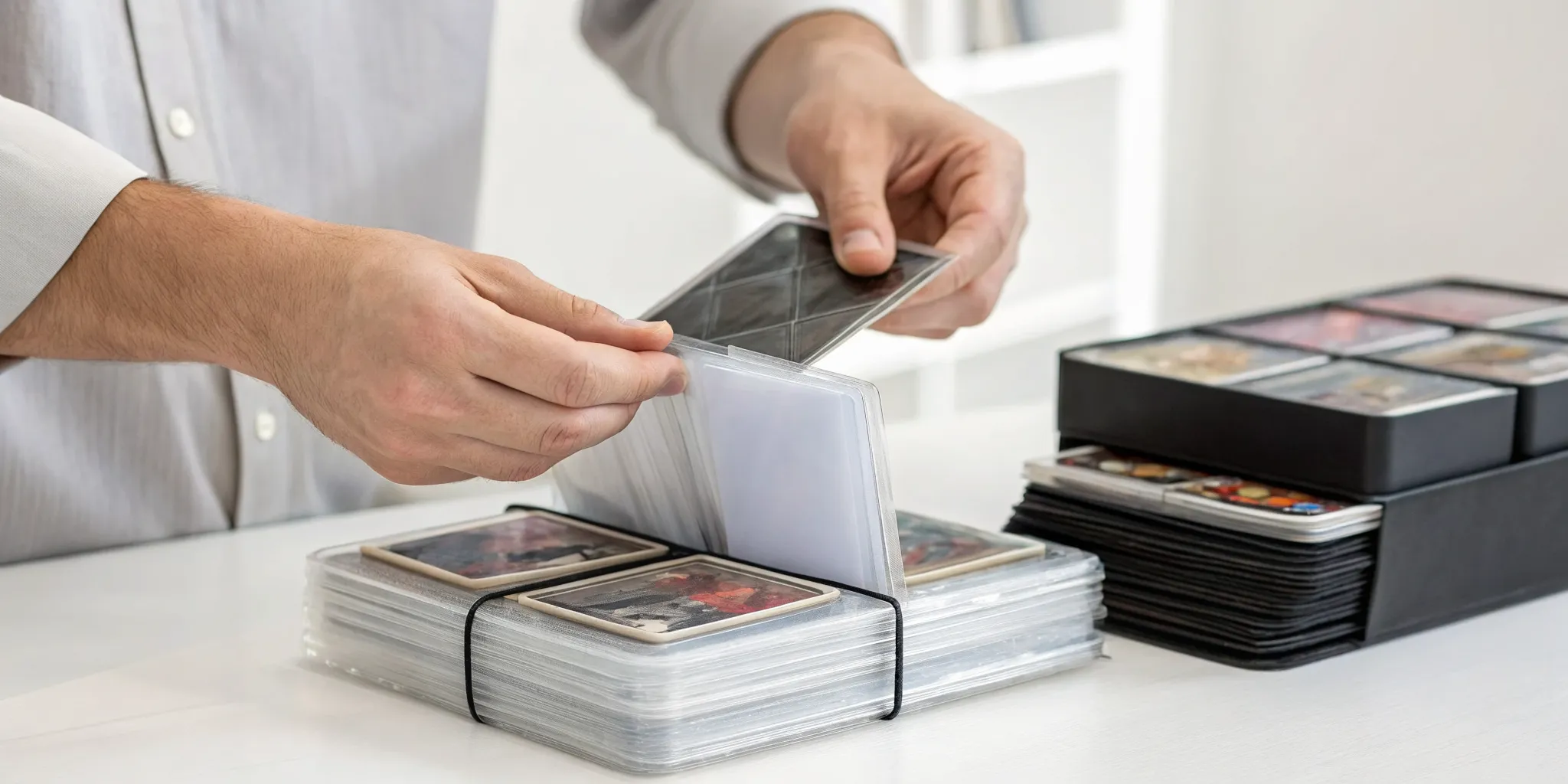
You just pulled the one card you’ve been chasing for months. The centering is perfect, the corners are sharp, and the holo is flawless. Now what? Before you even think about putting it in a binder or toploader, you need to protect it. For serious collectors, a single sleeve just doesn’t cut it. The gold standard for preserving a card’s mint condition is double sleeving. This simple technique provides a nearly airtight seal against the elements that can ruin a card’s value: dust, humidity, and oils from your hands. The process of double sleeving cards is the ultimate insurance for your investment. In this guide, I’ll walk you through exactly how to do it, which sleeves work best, and the common mistakes to avoid.
Key Takeaways
- Preserve Card Value with a Two-Layer System: Double-sleeving is the best way to protect your cards from elements that degrade their condition, like dust, humidity, and oils. This method creates a secure seal that helps maintain a card's pack-fresh quality, which is essential for its long-term value.
- Master the Correct Sleeving Technique: To create a proper seal, slide your card into the inner sleeve so the opening is at the bottom of the card. Then, place the inner-sleeved card into the outer sleeve so its opening is at the top, effectively sealing the card from both ends.
- Focus on High-Value and High-Use Cards: You don't need to double-sleeve every card you own. Reserve this extra protection for your most valuable collectibles, cards you use frequently in tournaments, and any cards you plan on sending for professional grading.
What Is Double Sleeving and Why Should You Do It?
So, you’ve pulled a high-value card from a pack and want to keep it in mint condition. What’s the next step? For serious collectors, the answer is double sleeving. Simply put, double sleeving is the practice of putting your card into two sleeves instead of one for maximum protection. Think of it as the ultimate armor for your most prized Pokémon or sports cards. The process is straightforward: a smaller, snug-fitting inner sleeve goes on the card first (usually upside down), and then both are placed inside a standard, larger outer sleeve.
This two-layer system offers comprehensive protection from all angles, creating a nearly perfect seal against dust, moisture, and oils from your hands. It’s the go-to method for anyone serious about keeping their cards safe, whether you’re sorting your collection at home, building a deck for your next tournament, or just want to preserve the value of your investments. It might sound like a small step, but it makes a huge difference in the long-term health and value of your collection, giving you peace of mind that your best cards are safe from everyday hazards.
Protect Your Cards From Damage
The main reason to double sleeve is for unparalleled protection. A single sleeve is good, but it leaves the top of your card exposed to dust, dirt, and the occasional dreaded drink spill. Double sleeving seals the card completely. The inner sleeve is placed on the card upside down, creating a barrier at the top. When you slide it into the outer sleeve (which opens at the bottom), you’ve created a nearly airtight seal. This method is the best way to keep your TCG cards safe from the elements. And don't worry, when done correctly, double sleeving absolutely does not damage your cards. It’s a protective measure trusted by collectors and pro players everywhere.
Preserve Your Collection's Value
Your card’s condition is directly tied to its value. Even the smallest nick or bit of grime can lower its grade and, consequently, its price. Double sleeving is your best defense against this kind of depreciation. The tight inner sleeve acts as a first line of defense against humidity and moisture, which can cause cards to warp over time. The outer sleeve handles the wear and tear of shuffling and handling. Together, they ensure your card stays as close to pack-fresh as possible. This is especially important for any card you might want to get professionally graded or sell in the future. A little extra protection now can mean a lot more value later.
Common Myths About Double Sleeving
If you’re hesitant to start double sleeving, you might have heard a few common myths. Let’s clear them up. First, some people think it makes shuffling difficult. While a double-sleeved deck is thicker, most players find they get used to it very quickly. The added security is well worth the slight adjustment in how you shuffle. Another myth is that it takes too much time. Once you get the hang of it, sleeving a card takes just a few extra seconds. For the level of protection you get, it’s a tiny time investment that pays off by keeping your most valuable cards in pristine condition for years to come.
The Best Sleeves for the Job
With so many brands on the market, choosing the right sleeves can feel like a quest in itself. Think of it as finding the perfect armor for your prized cards. To make it easier, I’ve narrowed it down to the top three brands trusted by collectors and players everywhere.
Dragon Shield
Dragon Shield is a top-tier choice if you’re serious about protection. They design their card sleeves specifically with multi-layering in mind, offering a fantastic fit for both inner and outer sleeving. Known for their durability and tough seams, these sleeves are built to withstand frequent shuffling and handling. They do a great job of protecting your cards from scratches, dust, and the occasional spill, making them a solid investment for cards you plan on keeping for a long time.
Ultra Pro
You’ve probably seen Ultra Pro sleeves at your local game store, and for good reason. They are a reliable and widely accessible option for any collector. Their Eclipse line is particularly popular for double sleeving because of its durability and snug fit, which helps prevent cards from shifting around. This double sleeving guide often recommends them as a go-to for players who need consistent quality without breaking the bank.
KMC
KMC is another fan favorite, celebrated for its precision. They are especially famous for their "Perfect Fit" inner sleeves, which are designed to hug your cards snugly without adding excess bulk. This tight fit is exactly what you want for that first layer of defense, as it keeps out dust and moisture effectively. When paired with one of their standard outer sleeves, you get a secure, two-layer system that feels great in your hands and offers excellent protection.
What to Look for in a Quality Sleeve
When you’re shopping, always look for sleeves made for double sleeving. A quality inner sleeve should be snug, while the outer sleeve needs to be slightly wider to accommodate the inner-sleeved card without a struggle. The material matters, too; look for acid-free and non-PVC plastic to prevent long-term chemical damage. Ultimately, the best choice depends on your needs for protection and how easy you want the sleeving process to be.
How to Double Sleeve Your Cards: A Step-by-Step Guide
Double sleeving might sound complicated, but it’s a simple technique that offers serious protection for your most prized cards. Once you get the hang of the process, you’ll be able to sleeve your cards quickly and confidently. The key is to create a seal that keeps out dust, dirt, and moisture. Let’s walk through the process step-by-step to make sure you get it right every time.
Step 1: Choose Your Inner Sleeve
First things first, you need the right inner sleeve. These are often called "perfect fit" or "pro-fit" sleeves because they hug the card snugly. Brands like Dragon Shield offer a few different types. Toploading sleeves are the standard choice and provide a great seal. Sideloading sleeves are a bit faster if you're sleeving an entire deck for a tournament, but they can leave a small gap on the side. For maximum protection, especially for your high-value cards, I always recommend a standard toploading inner sleeve. It creates the most secure barrier against the elements when paired with an outer sleeve.
Step 2: Slide the Card In
Now that you have your inner sleeve, it’s time to put your card in. This is the most important part to get right. You want to slide your card into the inner sleeve from the top, so the opening of the sleeve ends up at the bottom edge of your card. Think of it as putting a hat on your card. This orientation is crucial because it ensures the opening will be sealed off in the next step. Be gentle as you slide the card in to avoid any accidental bends or corner dings. A slow, steady motion is all you need.
Step 3: Add the Outer Sleeve
With your card safely in its inner sleeve (with the opening at the bottom), you’re ready for the outer sleeve. This is your standard, everyday trading card sleeve. Take your inner-sleeved card and slide it into the outer sleeve from the bottom, just like you normally would. The opening of the outer sleeve should be at the top of the card. This way, the closed end of the outer sleeve covers the opening of the inner sleeve, creating a nearly perfect seal. This simple "top-down, bottom-up" method is the foundation of proper double sleeving.
How to Avoid Air Pockets and Slipping
Sometimes, you’ll notice a bit of air trapped between the sleeves, creating a puffy look. To fix this, gently squeeze the card from the bottom toward the opening of the outer sleeve to push the air out. Storing your freshly sleeved cards snugly in a good deck box also helps press out any remaining air over time. If you find the card slipping out of the inner sleeve as you push it into the outer one, don’t force it. Instead, try holding the top edge of the inner sleeve with your finger as you guide it in, or use two other cards to sandwich it and keep it straight.
Common Double-Sleeving Mistakes to Avoid
Double-sleeving is a fantastic way to protect your cards, but only if you do it correctly. A few simple mistakes can undo all your hard work and even end up damaging the very cards you’re trying to protect. It’s all about being patient and paying attention to the details. Let’s walk through some of the most common slip-ups so you can avoid them and keep your collection in pristine condition.
Using the Wrong Size Sleeves
This one might seem obvious, but it’s a surprisingly common pitfall. Card sleeves aren't one-size-fits-all. Using an inner sleeve that’s too tight can squeeze the card’s corners and edges, causing wear over time. On the other hand, a sleeve that’s too loose won’t provide a snug fit, allowing the card to shift around and potentially get dinged. The goal for the inner sleeve is a "perfect fit." For the outer sleeve, you want a standard size that allows the inner-sleeved card to slide in smoothly without force. Always check the sleeve dimensions against your card’s size to ensure you’re getting the right fit for both layers of protection.
Handling Cards Too Roughly
Even with the best sleeves, you can cause damage if you’re not careful. Remember, you’re handling delicate pieces of cardboard. Pushing a card into a sleeve too quickly or with too much force can easily bend a corner or scratch the holographic foil. I always recommend working on a clean, flat surface and taking your time. Make sure your hands are clean and dry to avoid transferring oils or dirt onto the cards. Gently pinch the sleeve open and guide the card in slowly. It’s a process that requires a bit of patience, but the long-term safety of your prized Charizard or Mickey Mantle card is absolutely worth the extra minute of careful card handling.
Buying Cheap, Low-Quality Sleeves
I get it, saving money is great. But when it comes to protecting valuable collectibles, this is not the place to cut corners. Cheap, off-brand sleeves are often made with materials like PVC that can degrade over time and release acids, which will damage your cards. They also tend to split easily, fit poorly, and have a cloudy appearance that dulls your card’s art. You’ve invested in your collection, so it makes sense to invest in good protection. Stick with trusted brands like Dragon Shield, KMC, or Ultra Pro. The small extra cost for quality, acid-free, and non-PVC sleeves is a tiny price to pay for peace of mind and preserving your card’s value.
Positioning the Inner Sleeve Incorrectly
This is the mistake that can defeat the entire purpose of double-sleeving. The key is to create a seal that protects your card from all angles. To do this, you need to orient the inner sleeve correctly. Here’s the method: slide your card into the inner sleeve from the top, so the sleeve’s opening is at the bottom of the card. Then, you’ll slide the inner-sleeved card into the outer sleeve with the opening at the top. This way, both openings are on opposite ends, creating a nearly airtight barrier against dust, humidity, and even accidental spills. This double-sleeving technique ensures there are no gaps for debris to sneak in and damage your card.
Which Cards Should You Double Sleeve?
Deciding to double sleeve your cards is a strategic choice. You probably don’t need to give every common card in your collection the full treatment, as the time and cost can add up. Instead, think of double sleeving as premium protection for the cards that matter most. It’s the best way to guard against dust, moisture, and accidental spills that can sneak past a single sleeve.
When you’re sorting through your collection, think about a card’s value, its purpose, and its future. Is it a high-value collectible you just pulled? Is it a key player in your competitive deck? Or is it a mint-condition card you’re hoping to get graded? If you answer yes to any of these, it’s a prime candidate for double sleeving. This extra layer of security ensures your most important cards stay in top condition, whether they’re sitting in a binder, being shuffled for a match, or getting prepped for submission to a grading company. It’s a simple step that offers significant peace of mind for any serious collector.
Your Most Valuable Cards
Any card that holds significant monetary or sentimental value deserves the best protection you can give it. This includes that chase rare you finally pulled from a pack or a vintage card you’ve had since childhood. Some collectors worry that the tight fit of an inner sleeve might cause harm, but let’s clear that up: double sleeving does not damage cards when you do it correctly. In fact, it’s one of the best ways to protect valuable cards. The inner sleeve creates a nearly airtight seal, preventing dust, humidity, and oils from your hands from reaching the card’s surface and edges, preserving its condition and value for years to come.
Cards for Tournament Play
If you’re an active player, your deck sees a lot of action. Constant shuffling, handling, and table contact can quickly lead to worn edges and surface scratches, even with standard sleeves. Double sleeving is the best way to keep your TCG cards safe and in great shape through rigorous play. The second sleeve provides an extra barrier against corner dings and the kind of wear and tear that comes from repeated shuffling. This is especially important for holographic or foil cards, which can be more susceptible to scratching. By double-sleeving your TCG cards, you can play with confidence, knowing your deck is shielded from the hazards of competitive gaming.
Cards You Plan to Get Graded
When you’re preparing a card for professional grading, its condition is everything. Even the slightest bend or corner flaw can lower the final score. Double sleeving is a crucial step in preserving a card’s pristine state before you send it off. The combination of an inner and outer sleeve adds significant structural integrity, helping the card resist the minor bending and warping that can happen over time or during transit. This added rigidity keeps the card flat and its corners sharp, maximizing your chances of getting a high grade. Think of it as the final layer of defense to ensure your card arrives at the grading company looking just as perfect as when you pulled it.
Does Double Sleeving Affect Grading and Tournaments?
This is where the rubber meets the road for many collectors. You’ve spent time and money protecting your cards, but how does that extra layer of protection play out in official settings? It’s a valid question, and the answer depends entirely on whether you’re heading to a tournament or sending your cards off to be graded. Let’s break down what you need to know for both scenarios.
What Grading Companies Think
The relationship between double sleeving and grading companies is a bit complicated. While your intention is to provide maximum protection, some graders and long-time collectors are skeptical. The main concern is that the friction between the inner and outer sleeve could potentially cause microscopic wear on the card’s surface or edges over time. Some even argue that double sleeving does little to protect a card beyond what a single, high-quality sleeve can do.
Ultimately, grading companies want to see the card as clearly as possible. An extra sleeve is just another barrier they have to remove, and it can sometimes trap dust or create a glare that obscures their view during initial inspection.
Is It Legal in Tournaments?
Here’s some good news: double sleeving is almost always allowed in official tournaments. In fact, for high-stakes games, it’s a smart move to protect your valuable deck. The key is to follow the specific tournament rules for card sleeves. Generally, this means all your outer sleeves must be identical and completely opaque to prevent any card markings from showing through.
As long as your sleeved deck doesn’t become difficult to shuffle and meets the event’s guidelines, you’re good to go. This practice is widely accepted in communities for games like Pokémon and Magic: The Gathering, so you can play with confidence knowing your cards are safe from spills and aggressive shuffling.
Why You Must Remove Sleeves Before Submission
This is the most important rule to remember: always remove all sleeves before sending your cards for grading. Every major grading company, including PSA and Beckett, has specific submission guidelines that require cards to be sent without sleeves or, at most, in a penny sleeve inside a semi-rigid holder. Double-sleeved cards will not be accepted as is.
The reason is straightforward. Graders need to handle the raw card to accurately assess its condition, including the texture of the surface, the sharpness of the corners, and the quality of the edges. Sleeves obstruct this crucial evaluation. Submitting a card in a double sleeve will, at best, slow down the grading process. Always check the submission requirements for your chosen company before you pack your cards.
Are There Any Downsides to Double Sleeving?
While double sleeving is fantastic for protecting your cards, it’s not without a few minor trade-offs. But don't worry, they’re all easy to manage. The main things to consider are the increased thickness of your deck, your storage options, and the small investment of time and money. Knowing what to expect makes the process smooth and simple.
A Thicker Deck and Harder Shuffling
The most immediate change you’ll notice is that your deck will be thicker. This added bulk can make shuffling feel a little awkward at first, especially if you have smaller hands. However, most players find they get used to the new feel very quickly. In fact, the added stiffness can make your cards feel more substantial and secure during a mash shuffle. It’s a small adjustment for a huge gain in protection. A little practice is all it takes to get comfortable with the new size and weight of your deck.
Will Your Deck Still Fit in Its Box?
A thicker deck means you need to think about storage. Your old deck box might be a tight squeeze for a double-sleeved deck. Many standard boxes are designed for single-sleeved cards, so you might need an upgrade. The good news is that this is an easy fix. You can either choose thinner sleeves to reduce bulk or simply get a new deck box designed to hold double-sleeved cards. Many brands even label their products as being compatible with double-sleeved decks, making it easy to find the right fit.
The Extra Time and Money Involved
Finally, let's talk about the investment. Double sleeving does take a little extra time and money, but it’s less than you think. You can sleeve a 75-card deck in about five minutes, which is a tiny time commitment for long-term peace of mind. As for the cost, when you're ready to buy card sleeves, you'll see that inner sleeves are very affordable, often just a few dollars for a pack of 100. Considering the value of the cards you’re protecting, spending a couple of extra cents per card is a smart investment.
How to Care for Your Double-Sleeved Cards
You’ve gone to the trouble of double-sleeving your most prized cards, which is a fantastic first step. But the job isn’t quite done. To truly protect your collection for the long haul, you need to adopt a few simple habits for storing, maintaining, and handling your newly protected cards. Think of it as the final layer of security for your investment, ensuring that all the time and care you've already put in pays off. This isn't about being overly precious; it's about being smart and preserving the value and history of your cards.
Proper care ensures your sleeves continue to do their job, preventing dust, moisture, and oils from reaching the card itself. It also protects against the physical wear and tear that can happen during gameplay or even just from moving your collection around. A bent corner or a scuffed surface can significantly lower a card's value, and these are exactly the kinds of things that good habits prevent. By paying a little attention to how you store and handle your cards now, you’re making sure they stay in pristine condition for years to come, whether you plan to play with them, display them, or eventually get them graded. These next few tips will help you build the right habits to keep your collection safe and sound.
The Right Way to Store Them
Once your cards are double-sleeved, they’re naturally thicker. This means your old storage solutions might not be the best fit anymore. Forcing a thicker deck into a standard deck box can put pressure on the cards, potentially bending them or damaging the corners over time. Instead, you’ll want to invest in storage solutions designed specifically for sleeved cards.
Look for deck boxes, binders, or cases that advertise extra room for sleeved or double-sleeved decks. Many brands create products with these needs in mind. Using the right storage prevents unnecessary compression and keeps your cards perfectly flat and secure. It’s a small adjustment that makes a huge difference in preserving the condition of both your cards and their protective sleeves.
When to Check and Replace Your Sleeves
Sleeves are your cards' first line of defense, but they aren’t invincible. Over time, especially with cards you play with often, sleeves can get grimy, cloudy, stretched, or even start to split at the seams. It’s a good practice to periodically inspect your sleeves for signs of wear. A damaged sleeve can’t protect your card properly and might even cause harm if it’s too tight or has rough edges.
Set aside some time every few months to look over your most-used cards. Are the sleeves still crystal clear? Are the corners starting to peel or bend? Do you see any small splits along the edges? If you notice any of these issues, it’s time to replace the sleeve. It’s a quick and inexpensive bit of maintenance that keeps your collection looking its best.
Handling Tips for Long-Term Protection
How you handle your cards matters, even when they’re double-sleeved. While double-sleeving does a great job of preventing bends and warping, rough handling can still cause problems. When shuffling, try to avoid aggressive riffle shuffles that can bend corners and stress the sleeves. Instead, a gentle mash shuffle is a much safer shuffling technique for sleeved cards.
When inserting a card into its final sleeve, be gentle. Guide it in slowly to avoid catching a corner or creating a bend. The goal is to minimize stress on the card at all times. Being mindful during gameplay, storage, and sleeving itself ensures that your protective layers are working for you, not against you. Proper handling is the easiest way to guarantee your cards stay in mint condition.
Where to Find the Best Deals on Sleeves
Protecting your cards is an important investment, but it doesn’t have to be an expensive one. Once you know which brands you like, the next step is finding them at a good price. Whether you prefer shopping from your couch or supporting a local business, there are great deals to be found if you know where to look. By being a savvy shopper, you can get high-quality protection for your entire collection without overspending.
Shopping Online vs. In-Store
When it comes to buying sleeves, both online and brick-and-mortar stores have their perks. Online retailers typically offer a massive selection and more competitive pricing. You can easily compare different brands and hunt for bulk discounts from the comfort of your home. Major retailers often run promotions that make it affordable to stock up. For example, you can frequently find deals on popular options like Ultra Pro penny sleeves, especially when buying hundreds at a time.
Shopping in-store, on the other hand, offers instant gratification. You can see and feel the sleeves before you buy them, and you don’t have to wait for shipping. This is perfect for when you pull a high-value card and need to protect it immediately.
Checking Your Local Game Store
Don’t overlook your local game store (LGS) in your search for sleeves. While their prices might sometimes be slightly higher than online giants, they offer unique benefits. Many stores have loyalty programs that reward repeat customers with discounts or store credit. Plus, the staff are usually collectors themselves and can offer firsthand advice on which sleeves work best for certain cards or games.
Supporting your LGS also means you’re investing in your local collector community. It’s a place to trade, play, and connect with people who share your passion. Stopping by for a pack of sleeves could lead to a great conversation or a tip on a new card to watch out for.
How to Spot a Good Sale
A good deal on sleeves almost always comes down to one thing: the price per sleeve. To figure this out, simply divide the total cost by the number of sleeves in the pack. This makes it easy to compare a 100-pack from one brand to a 250-pack from another. Buying in bulk is usually the most cost-effective strategy. You might find a seller on eBay or a specialty site offering 2,500 sleeves for around $90, which works out to just 3.6 cents per sleeve.
Keep an eye on collector forums and social media groups, as members often share discussions about bulk deals they’ve found. Before you commit to a large purchase, take a few minutes to compare prices across two or three different websites to ensure you’re getting the best value.
Related Articles
Frequently Asked Questions
Is one sleeve really not enough protection for my best cards? A single sleeve is a great start, but it leaves the top of your card open to dust, humidity, and accidental spills. Double sleeving creates a nearly complete seal by covering that opening. Think of it as the difference between a good jacket and a truly waterproof one; for your most valuable cards, you want the extra security that keeps everything out.
I'm worried the tight inner sleeve will damage my card's corners. Is that a real risk? This is a common concern, but you can relax. When you use a quality, correctly sized "perfect fit" sleeve and guide the card in gently, it won't cause any damage. The key is to never force it. The snug fit is designed to prevent the card from shifting around, which actually protects the corners from getting dinged inside a looser, standard sleeve.
If I only remember one thing from the how-to guide, what should it be? The most critical step is the orientation of the sleeves. You must slide the card into the inner sleeve so the opening is at the bottom of the card. Then, you slide that into the outer sleeve the normal way, with the opening at the top. This top-down, bottom-up method is what creates the protective seal. Get that right, and you've mastered the most important part of the process.
Do I really need to double sleeve every rare card I own? Not at all. That would take a lot of time and sleeves. It's best to be strategic. Focus on your most important cards: the ones with high monetary value, the ones you play with in tournaments, or any card in mint condition that you might want to get graded someday. For everything else, a single quality sleeve is usually fine.
Can I just send my double-sleeved cards straight to a grading company for convenience? Absolutely not. This is a crucial rule to follow. Grading companies like PSA require you to remove all sleeves before submission. They need to handle the raw card to accurately assess its surface, edges, and corners. Sending a card in a double sleeve will only delay the process, and they will just remove them anyway. Always follow the specific submission guidelines for your chosen grader.
Recommended Reading

Cash for Graded Sports Cards: The Fastest Ways to Sell
Get cash for graded sports cards faster. Compare auction houses, marketplaces, and instant buyback options to pick the route that fits your timeline.
How to Compare Value in Sports Card Packs
Learn how to compare sports card packs using card quality, available pulls, pricing clarity, and Packz’s 100% buyback option.
How to Buy Pokemon Packs Online for Ripping
Ready to buy pokemon packs online for ripping? Get transparent pack value and clear pull odds so you never overpay for the thrill of the hunt. Start collecting safely.